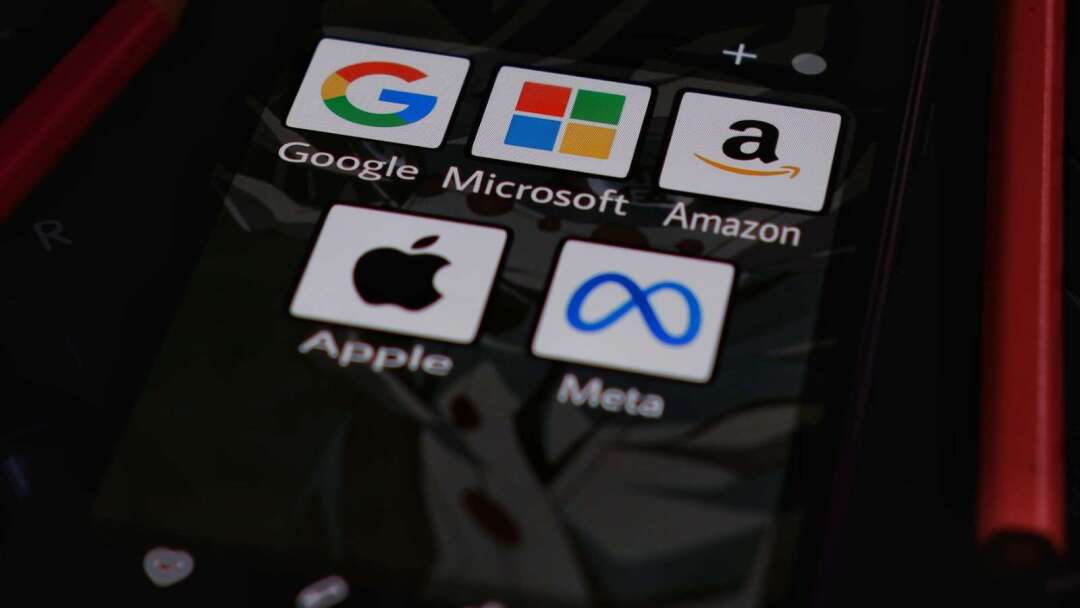
Microsoft, Meta, Amazon, and Apple—four tech giants with trillion-dollar market capitalizations—are set to release their latest quarterly financial reports this week. In the shadow of Alphabet's recent post-earnings plunge—triggered by its capital expenditure hike to $205 billion and its first-ever negative free cash flow since going public—market attention has fully pivoted from 'profit growth' to whether AI spending is delivering tangible returns. Microsoft and Meta will report on Wednesday (29th), followed by Amazon and Apple on Thursday (30th).
According to forecasts compiled by Goldman Sachs and LSEG, the combined capital expenditure of the world’s top five cloud service providers will exceed $725 billion this year, a roughly 77% surge from $412 billion in 2025. However, under accounting standards, only about $211 billion of that will be recognized as depreciation on the income statement this year, with over $500 billion booked as long-term asset write-offs.
This distorted structure—'shiny profits on paper but massive cash outflows'—is precisely why even companies posting over 20% profit growth are being sold off. Some analysts argue that betting on long-term deterioration in free cash flow is equivalent to wagering that the best capital allocators of the past 20 years have lost their investment edge. But a deeper concern looms: if the effective commercial lifespan of GPUs is only 2 to 3 years—shorter than the 5 to 6 years assumed by management—then a 'depreciation tsunami' could hit earlier than expected in 2027–2028, squeezing the recovery window. This is a far greater risk than mere 'spending worries.'
Microsoft’s annual capex plan is around $190 billion, and its free cash flow has already slipped from $25.7 billion to $15.8 billion last quarter. Whether Azure’s growth rate holds at 39% to 40% will determine the justification for that $190 billion investment. Amazon’s nearly $200 billion in spending has left it with just $1.2 billion in free cash flow over the past year, but AWS growth rebounding to 28% and an unfulfilled order backlog exceeding $360 billion serve as a hedge against pessimism.
Meta, lacking its own cloud infrastructure, has seen its operating margin retreat from peak levels. If AI fails to boost ad ARPU (average revenue per user), it could become the most vulnerable among the four in terms of valuation support.
Apple, meanwhile, remains largely insulated, still generating massive free cash flow each quarter. The real variables are the elongating iPhone product cycle, pressure in the Chinese market, and the leadership transition as Tim Cook hosts his final earnings call as CEO, with Turchi set to take over.
Yet demand is not without solid underpinnings. Google Cloud posted 82% year-on-year growth in Q2, with a backlog of $514 billion. Microsoft’s commercial RPO (remaining performance obligations) exceeds $600 billion, and Amazon’s exceeds $360 billion—clear evidence that 'supply cannot keep up with demand.'
On the other hand, FactSet data shows that S&P 500 earnings grew 24.7% year-on-year in Q2, marking two consecutive quarters above 20%, raising the performance bar.
Additionally, Bespoke statistics reveal that stocks missing Q2 earnings expectations fell an average of 4.2%, far exceeding the historical average of 2.9%.
The true focus of this week’s four earnings reports may not be EPS—Microsoft at $4.22, Meta at $7.23, Amazon at $1.82, Apple at $1.89—but rather how each company uses metrics like RPO, Azure/AWS growth rates, and Meta’s ad AI conversion rate to fulfill the 'pay later' promise behind that $725 billion in spending.
FACT BOX
- Source: PR Times
- Category: News
- Organizations: Alphabet / LSEG / FactSet
- Dates in source: Q2
- Products / services: Azure / AWS