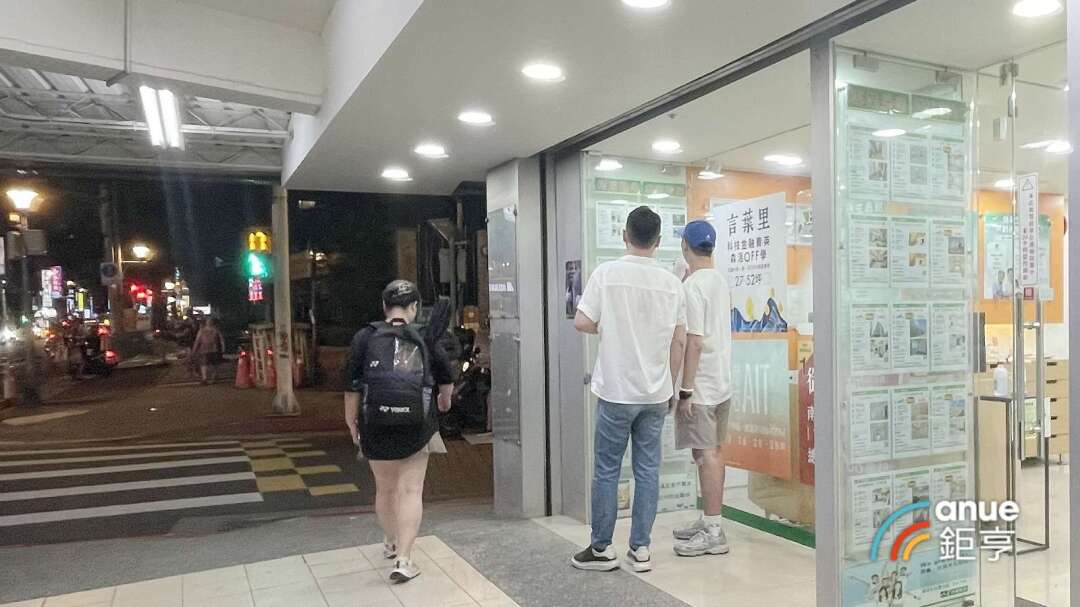
Taiwan's real estate market continues to face headwinds from property cooling policies and credit restrictions, resulting in a sharp decline in homebuying sentiment during the first half of the year. According to data analyzed by real estate agencies from the Ministry of the Interior, the total number of building transfers across Taiwan in the first half of 2026 reached only 124,619 units—the lowest level since 2017. The full-year transaction volume in 2026 may face a critical defense of the 260,000-unit threshold.
Lai Chih-Chang, Assistant Public Relations Director at Da-Jia Housing's Planning and Research Department, explained that the continued impact of the Central Bank of Taiwan's seventh round of credit controls, coupled with banks tightening lending and imposing stricter loan reviews, has significantly dampened buyer confidence. Additionally, the strong performance of the stock market in the first half has created a crowding-out effect, potentially pushing full-year 2026 transaction volumes even lower, possibly triggering a battle to maintain the 260,000-unit level.
According to Ministry of the Interior statistics, Taiwan recorded nearly 125,000 building transfers in the first half of 2026, a 4.8% decrease compared to the 130,000 units in the same period last year. This figure not only falls below the 138,000 units recorded when the revised Average Land Rights Act took effect in 2023 but also dips below the 129,000 units seen during the previous market downturn in 2017, marking the lowest first-half transaction volume in the past decade.
Lai attributes the sudden freeze in market activity primarily to the central bank's credit control policies. Combined with tighter bank lending and stricter loan approvals, the barriers to entry have risen significantly, prolonging buyer hesitation. Moreover, speculative investors who previously relied on high leverage and regional development themes—especially in industrial zones or newly planned districts—have largely disappeared due to loan restrictions. As a result, only刚需 (rigid demand) from owner-occupiers remains to support the market, keeping transaction volumes low.
Analyzing regional data, among Taiwan's 21 counties and cities (excluding Lienchiang County), only six—Taipei City, New Taipei City, Kaohsiung City, Yilan County, Yunlin County, and Chiayi City—showed year-on-year growth in transfer volumes. All other regions experienced declines.
Lai notes that core urban areas in northern and southern Taiwan, such as the Taipei-New Taipei (Shuangbei) region and Kaohsiung, continue to demonstrate strong fundamental demand and location value, maintaining price stability and attracting asset-preserving buyers despite the broader market downturn. Yunlin County and Chiayi City have benefited from the announcement of a major semiconductor firm establishing operations in the Chiayi Science Park, along with a wave of new project handovers by developers, boosting local market activity. Yilan County, in addition to its relatively low baseline housing prices, has seen increased interest from residents in the greater Taipei area due to ongoing discussions about the Yilan High-Speed Rail extension.
Hsu Chia-Hsin, Executive Director of the Planning and Research Department at Jih-Cheng Real Estate, warns that the property market has fully entered a phase of volume contraction and consolidation. Whether the market can bottom out and stabilize in the second half will depend on the central bank's policy direction, post-election government stance, and the performance of the Taiwan stock market. If current policies remain unchanged, the full-year transaction volume is likely to face a defense of the 260,000-unit mark, potentially setting a 10-year low. At the same time, financially stable buyers or first-time homebuyers eligible for the 'Youth Safety 3.0' loan program are advised to take advantage of the cooling market, as sellers and developers may be more willing to negotiate, offering opportunities to secure desirable properties.
FACT BOX
- Source: PR Times
- Category: Survey