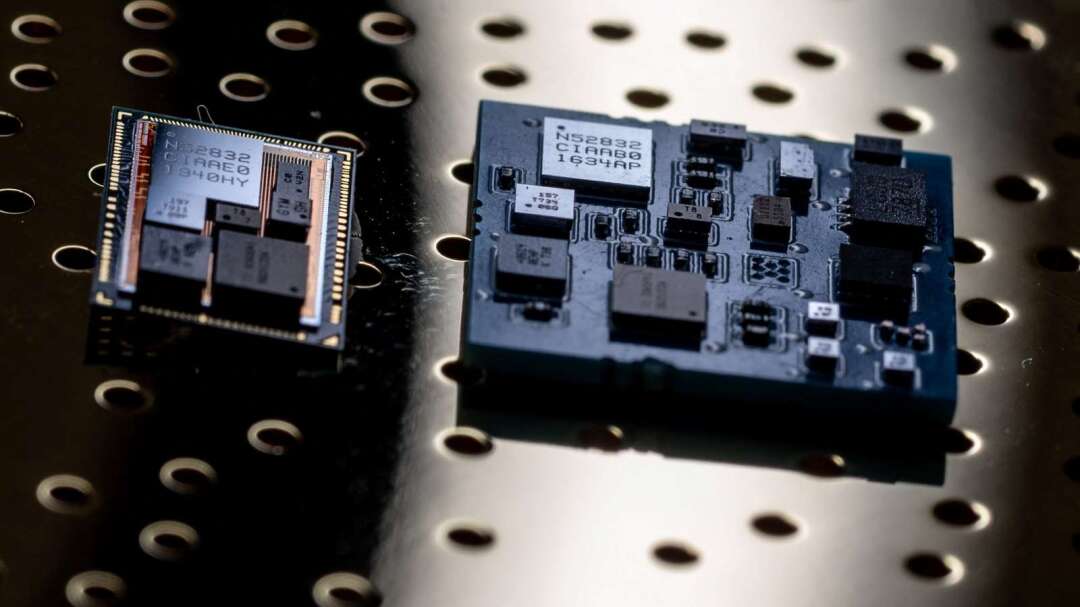
TrendForce today (27) indicated that as NVIDIA (NVDA-US) begins shipping its next-generation Spectrum-X CPO switch to select partners, and Broadcom (AVGO-US) continues limited shipments of its 51.2T Bailly CPO switch, co-packaged optics (CPO) has officially entered the mass production phase. However, the supply capacity of core components such as optical engines, silicon photonics chips, and advanced packaging will become key factors affecting the expansion speed of CPO switch production.
TrendForce stated that the Spectrum-X CPO switch was jointly developed by NVIDIA and TSMC, utilizing the COUPE advanced packaging process, achieving a processing capability of 400 Tb/s, with production capacity set to further expand in the second half of 2026. Broadcom’s 51.2T Bailly CPO switch is being brought into mass production with assistance from partners Delta Electronics (2308-TW) and Micas Networks. It reduces power consumption by up to 70% compared to traditional pluggable optical transceivers, and has already been validated through deployment by hyperscalers such as Meta.
CPO integrates optical components near the switch ASIC, reducing power consumption, and has become a core development direction for next-generation high-bandwidth switches. However, according to TrendForce’s observations, CPO switches face three supply bottlenecks. First, optical engines require integration of lasers, modulators, and other components, involving complex processes with high yield requirements and thermal management challenges, limiting mass production capability to only a few suppliers.
Second, silicon photonics wafer foundry and back-end packaging demand high precision and reliability, resulting in long capacity ramp-up cycles and limited short-term supply flexibility. Additionally, CPO switches have significantly increased reliance on advanced packaging processes like COUPE, but AI chips and high-performance computing (HPC) are also competing for the same packaging capacity, leading to ongoing compression of CPO supply chain resources.
In response to supply chain pressures, leading vendors are adopting divergent strategies. Some cloud giants are securing supply through long-term purchase agreements and making strategic investments in upstream silicon photonics companies. NVIDIA is deepening collaboration with TSMC, which controls advanced packaging capacity, achieving vertical integration. Meanwhile, companies like Google are accelerating in-house development of optical components to reduce dependence on external suppliers.
TrendForce expects vertical integration to become the new norm, with companies capable of independently controlling silicon photonics design, optical engine manufacturing, and advanced packaging resources gaining a leading advantage during the CPO switch market ramp-up period from 2027 to 2028.
FACT BOX
- Source: PR Times
- Category: Survey
- Organizations: Micas Networks / Meta / Google