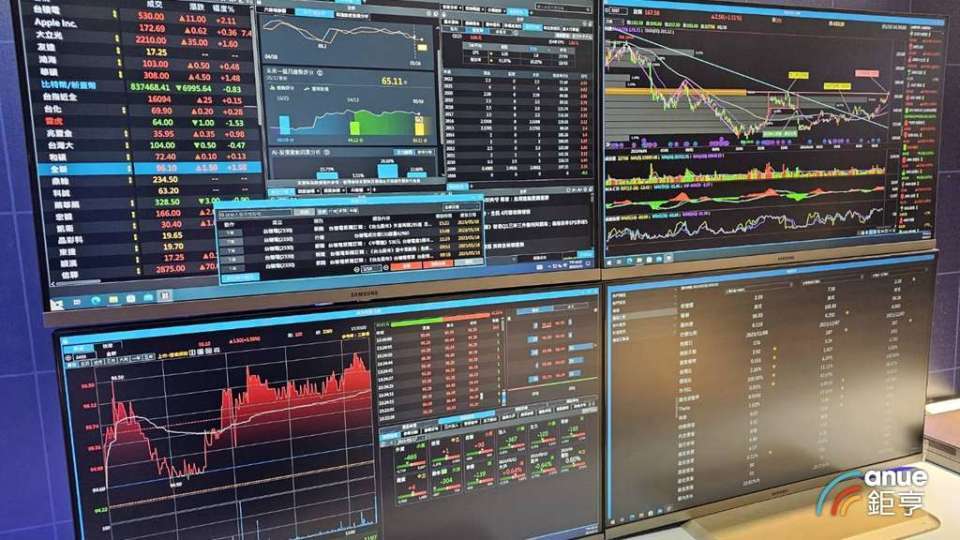
Taiwan's stock market plunged over 1,800 points in early trading today (28), briefly breaking below the 42,000-point threshold. The quarterly moving average, once a support level, has turned into resistance. More than 20 listed and OTC companies hit their daily trading limits. Investors are questioning the cause. Market analysts in Taiwan attribute the sell-off to growing concerns over Chinese firms entering the AI race, high margin debt levels, and rising interest rate pressures from major central banks, triggering a wave of profit-taking and a cascading 'many-killing-many' selling sentiment, with institutional investors rushing to withdraw capital.
Yuanta Investment Consulting warns that the Taiwan index may fall to test support at the previous low of 41,967.75 points set on July 20. Only after finding support there could a technical 'second leg' bottom form.
China's memory chip manufacturer ChangXin Memory Technologies (CXMT) surged 466% on its first trading day in Shanghai. Reports also emerged that China has begun mass-producing self-developed immersion deep ultraviolet (DUV) lithography machines. As a result, South Korea's stock index plunged over 8%, while Taiwan and Japan each fell around 4%. Markets are reassessing the competitive landscape of the global memory and semiconductor equipment industries.
Yuanta notes that technically, the Taiwan index faces resistance at the monthly moving average. Starting this week, the base values for monthly calculations are rising, accelerating the downward slope of the monthly line. If the index fails to reclaim the quarterly moving average in the short term, it may fall to retest the July 20 low of 41,967.75 for support, potentially forming a 'second leg' bottom.
Currently, global equity markets are constrained by geopolitical tensions, and market expectations of Fed rate hikes are suppressing valuations of high-growth, high-multiple stocks.
Uni-President Investment Consulting analyzes that rising yields on U.S. 20-year Treasury bonds, U.S.-China AI competition, market scrutiny of AI-related cash flows, and ongoing global deleveraging are collectively pressuring investor sentiment. Taiwan's market is undergoing a stress test from negative factors. Going forward, investors should closely monitor South Korea's market movements and whether foreign institutional investors begin covering their short futures positions.
Uni-President warns that current buying lacks sustainable momentum. With U.S. tech firms entering their 2026 fiscal earnings season this week and major Taiwanese companies holding earnings calls, the index is expected to oscillate near the 10-day moving average around 42,500 in the short term.
FACT BOX
- Source: PR Times
- Category: News