China's semiconductor self-reliance drive is once again shaking global tech stocks. With Chinese memory manufacturer ChangXin Memory (CXMT) successfully listing and reports of breakthroughs in deep ultraviolet (DUV) lithography technology, markets fear a rapid increase in domestic Chinese chip and memory supply, disrupting the global competitive landscape. U.S., South Korean, and Japanese memory and AI supply chain stocks plunged across the board on Tuesday (28th).
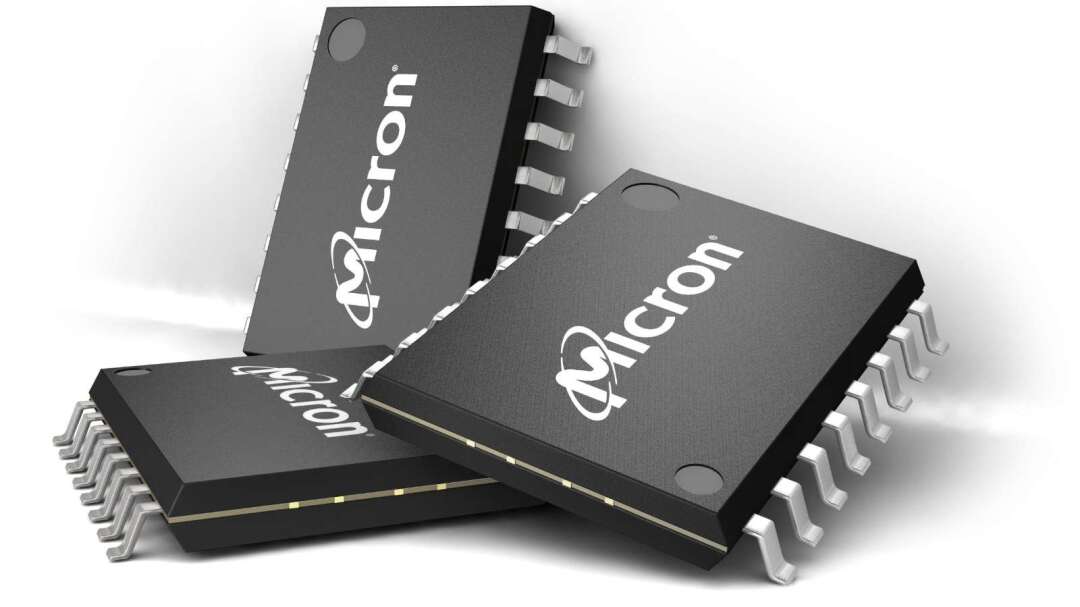
Micron Technology (MU-US) fell as much as 9.6% after opening, widening its July losses to 29.5%—its worst monthly performance since June 2015, when it dropped 32.6% in a single month.
SanDisk (SNDK-US), which only recently spun off from Western Digital (WDC-US) this year, also faced heavy selling pressure, plunging 12.4% during Tuesday’s session. It has now lost 50.9% since July, marking its largest monthly decline since re-listing in February 2025.
Storage-related stocks weakened broadly. Western Digital dropped over 12%, Seagate Technology (STX-US) fell over 12%, and Dell Technologies (DELL-US) briefly declined more than 13%.
Asian memory stocks were similarly affected. SK Hynix ADR (SKHY-US) dropped about 9%, following a 14% plunge in its South Korean-listed shares; Samsung Electronics fell 13% in Korean markets; and Japanese memory giant Kioxia Holdings saw its stock price crash 18%, indicating that market anxiety is spreading across the global memory supply chain.
Gil Luria, Managing Director at D.A. Davidson, noted that global memory valuations are highly correlated, so sharp declines in Korean memory stocks easily drag down U.S. counterparts.
The market selloff was primarily driven by recent positive developments in China’s semiconductor sector.
ChangXin Memory (CXMT) made a strong debut on the Shanghai Stock Exchange on Monday, prompting markets to reassess China’s memory self-sufficiency capabilities. Simultaneously, The Information reported that China has made significant progress in DUV lithography technology, with state-owned semiconductor equipment makers beginning mass production of DUV tools, expected to supply Chinese chipmakers such as SMIC, Hua Hong Semiconductor, and CXMT.
Analysts point out that ASML (ASML-US) of the Netherlands has long dominated the global DUV and EUV lithography equipment market. EUV tools are fully banned from export to China, while DUV equipment is restricted under Dutch export licensing. If China successfully establishes domestic DUV equipment supply, it could reduce reliance on foreign suppliers and further advance semiconductor self-reliance.
ASML’s U.S.-listed shares also fell about 4.7% during Tuesday’s session amid the news.
Nic Puckrin, founder of Coin Bureau and cross-asset analyst, said investors fear low-cost Chinese domestic supply flooding the market. After months of AI-driven stock valuations running high, the market reacted with panic selling.
He noted that beyond Chinese competition, recent reports that NVIDIA (NVDA-US) plans to provide up to $250 billion in financing to OpenAI for AI data center construction have raised concerns about a 'circular financing' model in the AI industry, prompting some capital to take profits early. He believes China’s technological breakthrough was merely the final straw that broke market sentiment.
However, some analysts believe the market reaction may be overdone.
Joseph DeYonker, CEO of PurePlay ETFs, pointed out that even if China successfully mass-produces DUV equipment, it will primarily support mature process nodes and traditional DRAM supply in the short term, with limited impact on the high-bandwidth memory (HBM) and high-end data center memory markets that power AI servers. Micron, in recent years, has primarily benefited from demand in these high-end AI data center memory segments.
He stated that the sharp drop in U.S. memory stocks appears more like an emotional reaction to geopolitical and policy news rather than a significant deterioration in industry fundamentals.
Jefferies analyst Janardan Menon also noted that Chinese-made DUV equipment still lags behind ASML’s equivalent products in performance. However, continued tightening of U.S. semiconductor export controls is pushing Chinese chipmakers to accelerate adoption of domestic equipment.
He highlighted that the U.S. recently proposed the MATCH Act (Multilateral Alignment of Technology Controls on Hardware Act), aiming to coordinate with allies to tighten export restrictions on semiconductor manufacturing equipment. While SMIC and CXMT can still purchase ASML’s NXT:1980i DUV tools via Dutch export licenses, further restrictions could push Chinese firms to more aggressively adopt domestic alternatives, accelerating supply chain self-reliance.
Analysts believe China’s DUV technology still cannot challenge ASML’s leadership in high-end equipment markets or immediately disrupt the AI high-end memory market. However, China’s ongoing push for semiconductor self-reliance has become a key variable in the revaluation of global memory and equipment industries. Future technological progress and export control policies will continue to shape the performance of the global semiconductor sector.
FACT BOX
- Source: PR Times
- Category: News
- Organizations: Micron / Western Digital / Seagate
- Products / services: DRAM / HBM