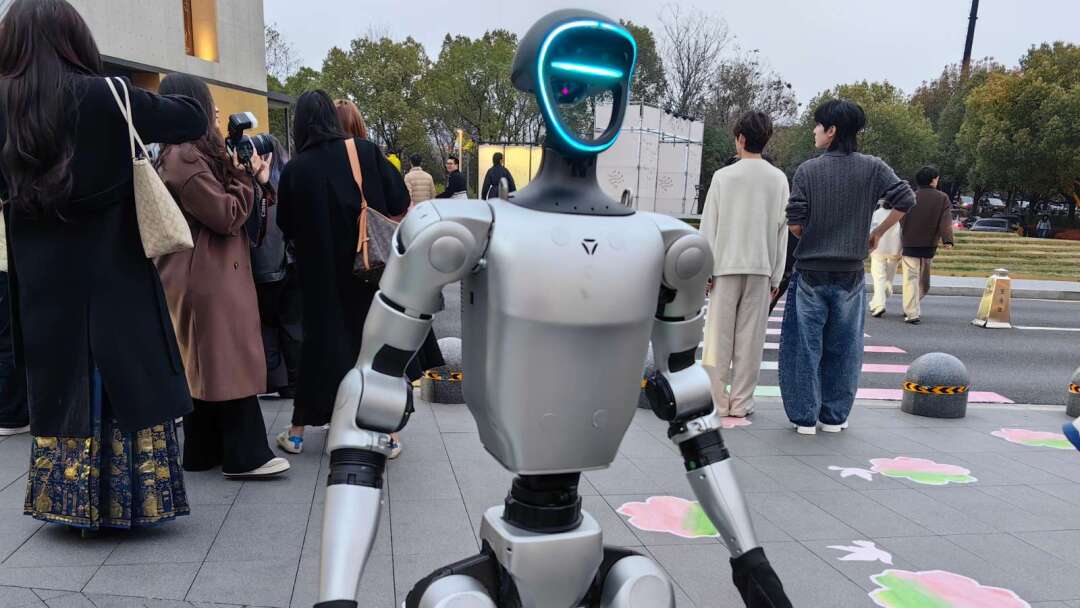
Reuters reported on Tuesday (28th) that the U.S. Federal Communications Commission (FCC) has banned the import of new Chinese humanoid robots, quadruped robots, and grid-tied inverters, aiming to reduce national security and cybersecurity risks posed by Chinese products to U.S. artificial intelligence (AI), data centers, and critical infrastructure, while promoting the reshoring of related manufacturing to the United States.
The measure took effect immediately but currently applies only to new products not yet launched. Existing robots and grid-tied inverters that have already obtained U.S. equipment certification are temporarily unaffected, though the FCC reserves the right to revoke existing certifications.
This restriction targets both robotics and energy equipment, reflecting the U.S. government’s efforts to strengthen AI supply chain security across computing, power, and physical infrastructure.
According to four informed sources, the FCC is expected to follow recent precedents in restricting foreign drones and routers by exempting many non-Chinese suppliers.
The FCC stated that these products could create vulnerabilities in the U.S. supply chain, threatening economic stability, national security, and critical infrastructure. FCC Chair Brendan Carr emphasized that the agency will continue taking measures to strengthen the security of critical U.S. supply chains.
The Chinese Embassy in the U.S., Unitree, Sungrow, and Huawei did not immediately respond to Reuters’ requests for comment.
As the U.S. undertakes large-scale construction of AI data centers, the importance of grid-tied inverters has increased. These devices connect renewable energy, battery storage, power grids, and data center facilities. Any supply disruption or cyber intrusion could affect data center operations and the security of critical infrastructure.
Meanwhile, humanoid robots are gradually entering industrial, research, and consumer markets. Because robots are equipped with cameras, sensors, and AI computing systems, U.S. officials worry that collected data could be exploited by foreign intelligence agencies or remotely hijacked by malicious actors.
The U.S. government also seeks to avoid repeating the situation of over-reliance on China for rare earth supplies in the robotics and energy equipment sectors. China controls global supply chains for many critical minerals and technology manufacturing and has previously used rare earth export controls as leverage in international negotiations.
U.S. Treasury Secretary Besent previously warned that Chinese AI companies involved in stealing U.S. intellectual property could face American sanctions.
This import ban not only responds to national and cybersecurity concerns but also reflects a policy goal of encouraging companies to shift related manufacturing to the United States.
In the robotics industry, Unitree is expected to be hit hardest.
In the robotics sector, Chinese firm Unitree is expected to face direct impact. According to Counterpoint Research data, Unitree holds slightly less than 20% of the global humanoid robot market and is one of the leading Chinese companies in this emerging industry.
The company was recently added by the U.S. Department of Defense to a list of entities linked to the Chinese military, leading to expectations that the U.S. may impose further restrictions.
Unitree has recently partnered with NVIDIA (NVDA-US), using Blackwell chips to power the AI computing systems in its robots. NVIDIA stated that data generated by these robots will remain in the U.S., and Unitree’s primary U.S. customers are universities and research institutions.
However, U.S. China hawks argue that Chinese robots equipped with AI and sensors could still be used to surveil American citizens, collect critical industrial information, or disrupt business and infrastructure operations.
Republican Congressman John Moolenaar, chairman of the House Select Committee on the Strategic Competition Between the U.S. and China, said the FCC’s action helps protect national security and supports the U.S. robotics industry. He previously introduced legislation requiring national security reviews of Chinese robots and calling for bans when necessary.
China dominates the inverter market as the U.S. guards against cybersecurity risks
The grid-tied inverter market is also dominated by Chinese firms. China is the world’s largest inverter producer, with major suppliers including Sungrow (300274-CN) and Huawei, which is already subject to multiple U.S. sanctions. Chinese firms have steadily increased their market share in Western markets in recent years through price advantages.
U.S. concerns about Chinese grid-tied inverters include not only over-concentration of supply but also the potential for malicious software to be embedded in devices or for remote interference. Following recent actions in Europe, U.S. regulators are accelerating plans to impose restrictions.
The U.S. government particularly wants to avoid a repeat of the cyberattack by the hacker group 'Volt Typhoon,' exposed in 2023. Allegedly backed by the Chinese government, the attackers controlled civilian routers to conceal follow-up operations targeting U.S. critical infrastructure.
The U.S. Department of Defense is already prohibited from procuring solar cells, modules, and inverters made by 'foreign entities of concern,' including Chinese companies.
The FCC’s action signifies that such regulations are expanding from government procurement to the broader U.S. market.
FACT BOX
- Source: PR Times
- Category: News