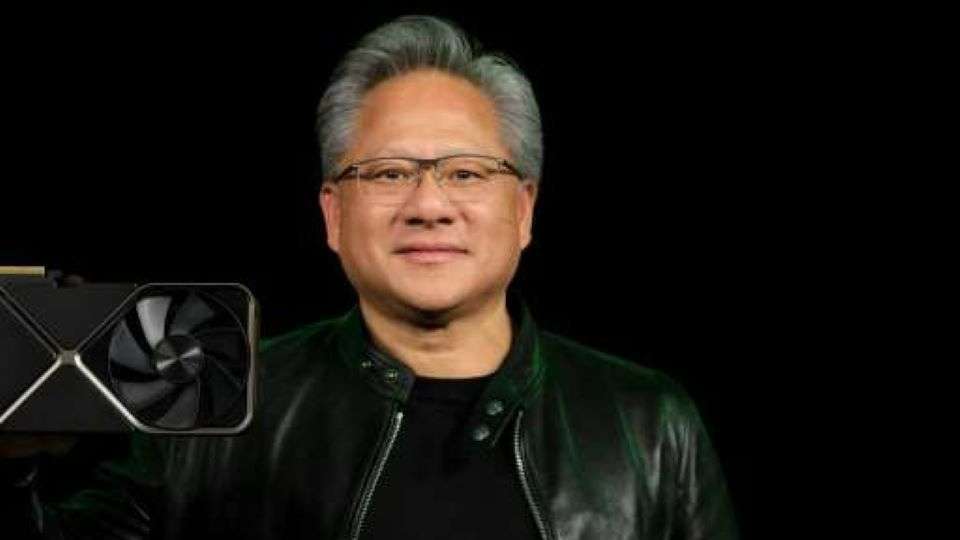
NVIDIA (NVDA-US) CEO Jensen Huang traveled to Washington, D.C. on Tuesday (28th) to meet with multiple U.S. officials and members of Congress, calling on policymakers to support open-weight artificial intelligence (AI) models. He stressed that such models are not only vital for sustaining industry innovation but also form a crucial foundation for U.S. AI safety and cybersecurity defenses.
According to Bloomberg, Huang met with Democratic Senator Mark Warner and Congressman Adam Schiff. After the meetings, he told reporters that U.S. industries require open-weight technology for security and cybersecurity needs, emphasizing its importance for the healthy development of the AI sector.
Open-weight models refer to AI systems where developers allow external users to download model parameters and deploy or customize them according to their own needs.
In contrast, closed models typically keep core technologies proprietary, with users accessing functionality via paid services or application programming interfaces (APIs). Open-weight is conceptually similar to open-source, though the latter usually includes more underlying source code.
Huang’s advocacy comes as the Trump administration and U.S. Congress assess how to respond to breakthroughs by Chinese startup Moonshot AI.
The company opened downloads for its Kimi K3 model on Monday, a system competitive with some offerings from Anthropic and OpenAI, raising concerns in the U.S. tech industry that Washington might tighten regulations on open AI technologies due to rapid Chinese advancements.
In response to these concerns, Huang has recently been defending the open-weight model. Last Friday, he joined Microsoft (MSFT-US) CEO Satya Nadella and dozens of tech companies in issuing a public letter stating that open-weight models increase accessibility and adaptability of advanced AI, enabling broader technological adoption.
On Monday, NVIDIA further joined Microsoft, Palantir (PLTR-US), and Salesforce (CRM-US) in releasing a joint statement asserting that open-weight models enhance cyber defense capabilities.
The statement warns that imposing broad restrictions on open AI systems could weaken cybersecurity defenses and concentrate technological power, industrial dependency, and security risks in the hands of a few closed-model providers.
The wider adoption of open models could also benefit NVIDIA commercially. Since such models typically have lower deployment costs and allow enterprises to choose their own hardware and computing environments, demand for AI-supporting chips, servers, and computing infrastructure is expected to grow.
While U.S. developers like OpenAI offer open-weight models, their primary business remains centered on closed or proprietary systems. In contrast, Chinese firms including DeepSeek have launched multiple lower-priced open models. Though generally less capable than the most advanced U.S. systems, these models remain competitive due to affordability and deployment flexibility.
Senator Mark Warner, a member of the Senate Intelligence Committee, said after the meeting that Huang presented a compelling case for open-weight systems. With Chinese models like Kimi emerging and more U.S. companies adopting open technologies, Warner believes this trend may now be irreversible.
Huang also met with U.S. Commerce Secretary Howard Lutnick. The Department of Commerce is currently finalizing a framework to review the safety of advanced AI models; details of their discussion were not disclosed.
A NVIDIA spokesperson declined to comment on the specifics of Huang’s meeting with Lutnick, stating only that Huang’s visit aimed to discuss the company’s efforts to support U.S. leadership in AI, including the development of open technologies.
FACT BOX
- Source: PR Times
- Category: News
- Organizations: Moonshot AI / OpenAI / Anthropic
- Products / services: GPU