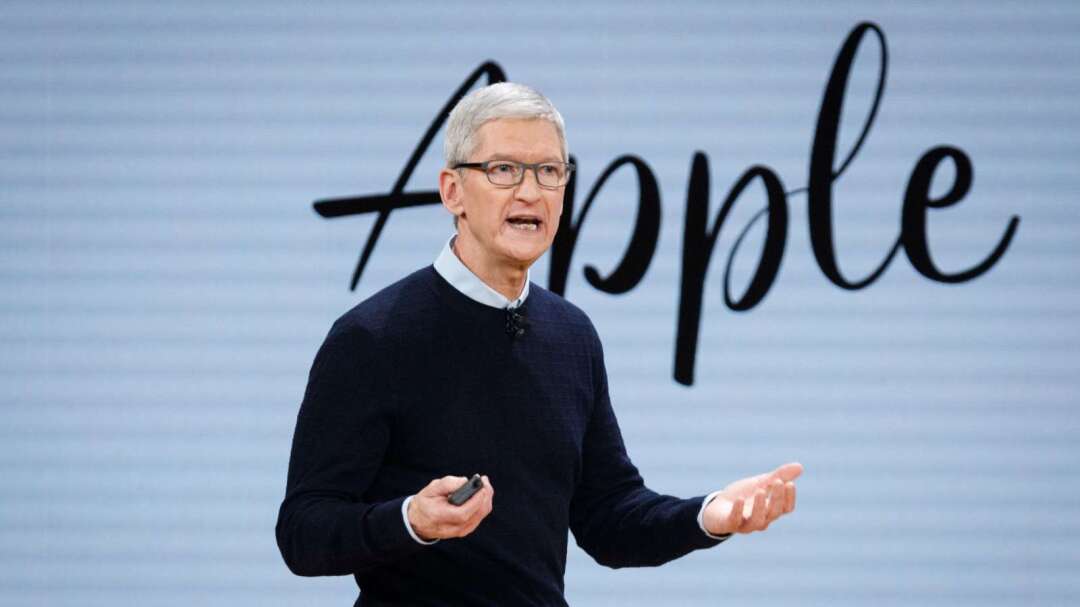
Apple (AAPL-US) will release its fiscal 2026 third-quarter earnings after the U.S. market close on Thursday (30th). According to Visible Alpha consensus estimates, Apple's Q3 total revenue forecast has been slightly raised since late January but remains flat at $108.1 billion compared to the previous quarter. Market sentiment appears to reflect stable iPhone demand, improvement in the Chinese market, and continued upgrade cycles among U.S. users.
This earnings report coincides with the Federal Reserve's interest rate decision and a 'super week' of tech giants releasing results, drawing significant market attention. In the previous quarter, Apple's second fiscal quarter revenue reached $111.2 billion, a record high for the March quarter, up 17% year-over-year. Diluted earnings per share were $2.01, up 22% year-over-year, both exceeding expectations. The iPhone 17 series generated $56.99 billion in quarterly revenue, while the services segment set a new record at $30.98 billion.
According to Zhitong Caijing, entering the third quarter, market expectations have turned more moderate. Visible Alpha consensus estimates project total revenue at approximately $108.1 billion, roughly flat with the prior quarter. Bank of America is more optimistic, forecasting revenue of $109 billion and EPS of $1.89, both slightly above Wall Street consensus, with revenue growth of about 16% year-over-year, nearing the upper end of the company's previously guided 14% to 17% revenue growth range.
The iPhone remains the core growth engine. Since late January, 2026 fiscal year iPhone shipment forecasts have been raised to 258 million units, an increase of 18 million from January 2025. Currently, the market expects iPhone sales in Q3 to reach $53 billion, up approximately 20% year-over-year, with full-year 2026 fiscal revenue projected at $251.2 billion and rising to $274.4 billion in fiscal 2027.
UBS notes that Apple was the only major smartphone manufacturer not to raise prices in the second quarter, helping it gain market share in key markets such as the U.S., Europe, and China. Meanwhile, rising component costs—particularly memory chip price hikes—have instead driven consumer preference toward higher-end models.
Overall, while supply chain uncertainties remain, driven by upgrade cycles, iPhone business is expected to maintain positive momentum this quarter and beyond.
Notably, this will be a milestone leadership transition, as Tim Cook will host his final earnings call as CEO. Starting September 1, hardware engineering veteran John Ternus will officially take over as CEO.
High-margin services are expected to remain stable in Q3, with revenue forecast at $31.4 billion. The services segment's gross margin exceeds 70%, far above the 37% margin of product businesses. Given Apple's massive existing user base, the market is closely watching the company's commentary on services growth and Apple Intelligence's contribution in fiscal 2026. Apple has maintained a relatively cautious approach to AI infrastructure investment, with capital expenditures remaining stable.
Bank of America expects Q3 services revenue to grow 14% year-over-year, noting that App Store revenue growth has slowed from 9.8% last quarter to 3.2%, but strong performance from iCloud and licensing businesses is expected to offset this.
UBS indicates that on a currency-neutral basis, services revenue is expected to grow about 13%, but growth potential is limited due to challenges in App Store revenue and Google search-related payments.
Apple Intelligence to Be a Key Focus
Upgrades to Apple Intelligence features and the new product release schedule are also key points of interest. Apple comprehensively upgraded its AI strategy at the recent WWDC26, and this earnings report will serve as a test of its commercialization and cost control.
At WWDC26, Apple clarified that while core AI functions will be free, high-load features such as image generation and advanced Siri AI interactions, which rely on powerful private cloud servers, will have daily usage limits. Users wishing to unlock higher limits must subscribe to iCloud+ or an Apple One bundle that includes the benefit.
Apple's unique 'capital-light' AI approach is also noteworthy. While tech giants like Microsoft, Meta, and Google face market concerns over profit margins due to tens or even hundreds of billions of dollars in AI capital expenditures, Apple is adopting a 'capital-light' strategy, using a hybrid architecture and external partnerships. By relying primarily on on-device processing with private cloud computing as a supplement—and through deep collaboration with external large language models like Google Gemini—Apple offloads more complex search and generation requests.
Additionally, the outlook for the crucial 'back-to-school' and holiday sales seasons will be an important indicator for each business segment. Moreover, whether Apple will use its over $100 billion in cash reserves for share buybacks, dividend increases, or acquisitions is also being closely watched.
Apple's stock price has risen 11.3% since May and 26.3% since January 2026. The market consensus expects a 34x P/E ratio for fiscal 2027, with a target price of $337, implying a 3.5% return. Whether the Q3 earnings and outlook can validate the upgrade cycle and drive the stock to outperform the broader market remains to be seen.
FACT BOX
- Source: PR Times
- Category: 財務
- Organizations: Google / Meta / Microsoft
- Products / services: iPhone / Apple Intelligence