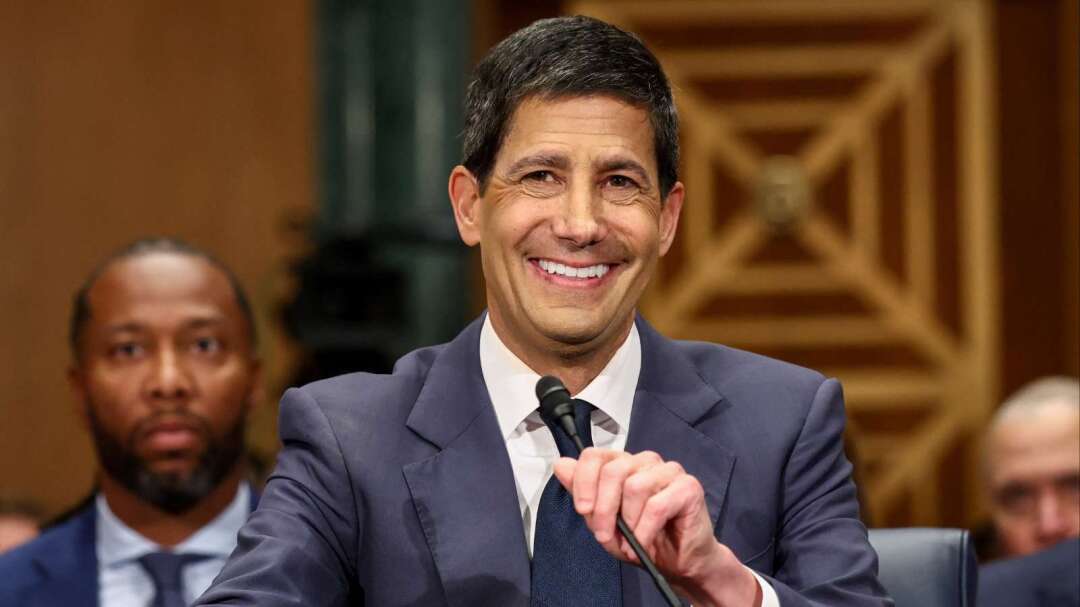
The Federal Reserve (Fed) is holding its interest rate decision meeting this week. Although markets are pricing in a nearly 40% probability of a rate hike, and 3 to 4 members of the Federal Open Market Committee (FOMC) may support an immediate increase, analysis suggests Chair Kevin Warsh has at least three reasons to hold steady: he has not yet personally endorsed the case for a rate hike, raising rates could undermine the significance of his policy reform task force, and such a move might draw him into the political tug-of-war between the Trump administration and the Fed.
Warsh has committed to ending the Fed's "forward guidance," refusing to pre-announce future rate directions, and has therefore not publicly indicated how he will vote in this meeting. However, his past views on how energy and artificial intelligence (AI) investments are pushing up prices suggest his policy response may not be as aggressive as some hawkish officials.
Warsh downplayed the recent sharp rise in U.S. gasoline and diesel prices following the collapse of the U.S.-Iran ceasefire, stating during Senate testimony on July 15 that such price shocks in specific goods often stem from supply-side factors beyond the Fed's control. In other words, raising interest rates cannot quickly increase U.S. refining capacity, which is already operating at full capacity.
The Fed would only be forced to act if energy price increases begin spreading across the broader economy. However, the June Consumer Price Index (CPI), released before Warsh's testimony, showed that prior to the renewed U.S.-Iran tensions, prices for other goods and services were actually declining.
Some Fed officials have also warned that tech companies' massive expansion of AI infrastructure could drive up costs for semiconductors, electricity, and other inputs. Yet Warsh has not expressed strong concern, arguing that one-off price adjustments do not necessarily equate to sustained inflation, as supply-side responses may eventually materialize.
Thus, this meeting will reveal how the Fed under Warsh's leadership assesses whether supply-demand shifts caused by energy and AI constitute an inflation risk severe enough to warrant a rate hike.
The second reason relates to Warsh's reform agenda. He has already established multiple policy task forces, expected to deliver reports by the end of 2026 and beyond, to study whether AI can accelerate economic growth without driving up prices and whether the Fed's current inflation assessment framework is sound.
If Warsh supports a rate hike at his second FOMC meeting as chair, it would effectively mean accepting, before the task forces conclude, the argument that AI and energy prices will cause persistent inflation. Choosing to delay action allows him to buy more time and political capital to advance long-term reforms.
Conversely, if Warsh unexpectedly supports a rate hike, it would send a strong signal that he believes the current inflation threat and risks to the Fed's credibility are severe enough to override his reform agenda.
The third reason is political. While Warsh has repeatedly emphasized that rate decisions are independent of President Trump, he cannot entirely ignore the White House, especially regarding appointments to the Fed Board of Governors.
Former Chair Jerome Powell's term on the Board runs until January 2028, but he may step down early if the Inspector General's investigation into cost overruns from headquarters renovation is completed, confirms no wrongdoing, and the Justice Department under the Trump administration chooses not to pursue further action.
Warsh hopes to increase allies on the Board who support his reforms and may want influence over Powell's successor. However, nomination power rests with Trump. A rate hike now could provoke even harsher criticism from Trump and fuel conservative claims that Powell is still pulling the strings behind the scenes.
Treasury Secretary Scott Bessent previously described Powell as the "shadow Fed chair." Trump also reiterated on Monday his call for lower interest rates and implied that some Fed Board members may have "ulterior motives." If Warsh leads a rate hike now, it could further complicate political dynamics between the Fed and the White House.
Warsh may eventually need to deliver his first rate hike during his tenure, but for this week, he has ample reasons to wait. The real test is not just whether he can persuade a divided FOMC to keep rates unchanged, but how he explains the risks posed by energy, AI, and inflation, and how he balances the Fed's independence against White House pressure.
FACT BOX
- Source: PR Times
- Category: News