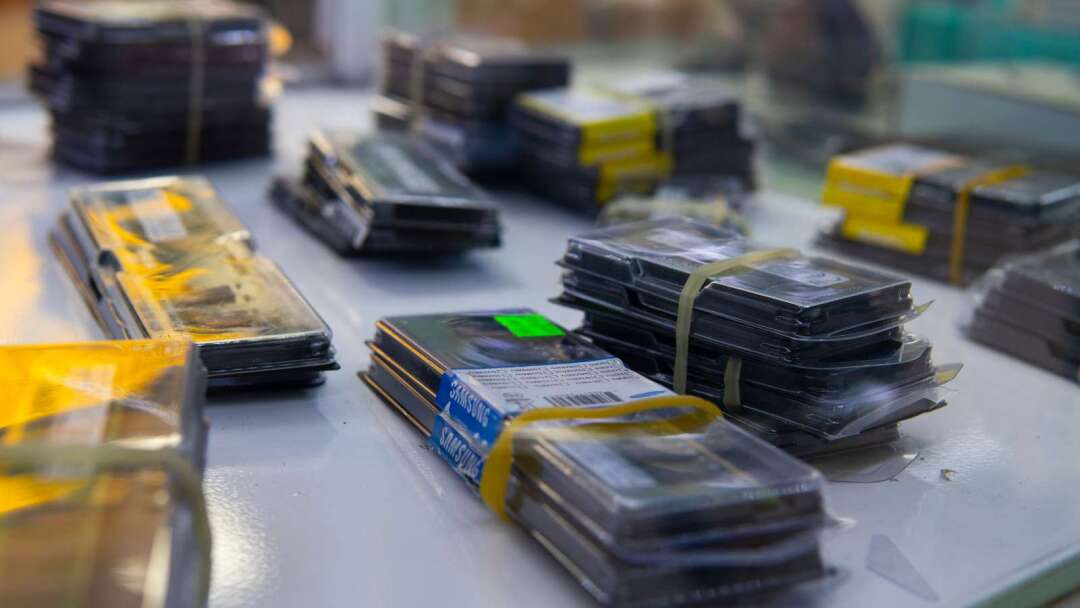
As AI infrastructure investment continues to expand, driving demand for HBM, server DRAM, and enterprise-grade NAND flash memory, the global memory industry stands at the threshold of an AI-driven 'super cycle.' This week's financial reports from the three major memory manufacturers in Japan and South Korea will be seen as a key litmus test for the sustainability of this trend.
Starting tomorrow, SK Hynix (July 29), Samsung Electronics (July 30), and Japan's Kioxia (July 31) will sequentially release their latest quarterly results, expected to show nearly extraordinary figures.
According to the average forecast from 14 brokerages surveyed by South Korea's Yonhap Infomax, SK Hynix is projected to report Q2 2024 revenue of approximately 84.1 trillion won and operating profit of 64.1 trillion won, with an operating margin between 75% and 77%. This single-quarter profit would surpass SK Hynix's full-year 2025 operating profit of 47.2 trillion won. Samsung Electronics, in its preliminary figures released earlier this month, announced revenue of 171 trillion won and operating profit of 89.4 trillion won, representing a year-on-year increase of about 1,800%. Kioxia, meanwhile, estimates Q2 revenue of 1.75 trillion yen and operating profit of 1.298 trillion yen, more than doubling its first-quarter figures. If these numbers are realized, the combined quarterly operating profit of the two South Korean giants alone would exceed 150 trillion won, an unprecedented level of profitability in the manufacturing sector.
However, the more robust the fundamentals, the more pronounced the stock price divergence. On Tuesday (July 28), South Korea's KOSPI index triggered its sidecar circuit breaker mechanism. SK Hynix plunged over 10% in a single day, Samsung fell over 8%, Kioxia dropped 18%, Tokyo Electron declined 9%, and SoftBank fell nearly 5%.
A trans-Pacific semiconductor profit-taking wave is unfolding simultaneously. SK Hynix's ADR closed at $143.02 on Monday (July 27), down approximately 26.6% from its July 14 peak of $194.80, falling below its $149 issue price. Its market capitalization evaporated by over $470 billion in less than a month.
SK Hynix's ADR once traded at a 51% premium to its Korean ordinary shares. Now, that premium has narrowed as leveraged ETF and retail investor buying wanes. In the options market, the put/call open interest ratio for contracts expiring by the end of July reached 5.62, with the $120 put option becoming the largest near-term position, indicating a clear hedging bias toward downside risk.
Since reaching the top of Japan's market capitalization in June, Kioxia's stock price has fallen nearly 60%. The market's 'vote with their feet' logic is not about 'how much they earned this quarter,' but rather 'how long they can keep earning from late 2026 to 2027.'
The core of this divergence revolves around three axes. First, can HBM and long-term agreements (LTAs) truly overcome cyclical nature?
Goldman Sachs, Citigroup, Bank of America, and UBS believe that cloud providers and memory manufacturers signing 3- to 5-year LTAs, coupled with HBM production occupying over 30% of cleanroom space, will reduce traditional DRAM supply growth from 19% to 15% annually, allowing high prices to persist into late 2027 or even 2028.
Internally, Morgan Stanley is divided: Shawn Kim warns that contract prices will peak in Q4 2024, while Joseph Moore claims DRAM prices will rise another 25% in Q3 and shortages will last until 2028. The market is oscillating between valuing memory stocks as 'cyclical' versus 'growth' assets. With customer concentration and pricing power backlash, SK Hynix's revenue from AI data centers and hyperscale cloud providers is expected to rise to 70%. While LTAs lock in profits, they also bind production capacity. If Microsoft, Google, or Amazon scale back AI capital expenditures, or if NVIDIA's 'circular financing' procurement chain comes under scrutiny, inventory and price expectations could reverse instantly.
The Bank for International Settlements (BIS) warned in its latest annual report that LTAs in the AI supply chain could amplify exposure when demand reverses.
Additionally, geopolitical factors and competing products could act as drags. Whether Samsung can regain market share through HBM4 certification, 1b/1c yield improvements, and foundry collaboration, and whether Kioxia's enterprise SSD price hikes can offset weak consumer electronics demand, will all be scrutinized in the earnings reports.
For investors, the earnings calls from Wednesday to Friday are no longer just a numbers show, but a four-part commitment test on 'HBM shipment rhythm, LTA coverage rate, capital expenditure cap, and Q3 ASP guidance.'
If SK Hynix maintains an operating margin above 75% and provides a timeline for HBM4 volume production, it could temporarily quell skepticism about 'AI trade overheating.' If Samsung's Device Solutions division discloses HBM revenue exceeding $10 billion and confirms HBM4 customer adoption, it can counter the narrative of 'falling behind Hynix.' Kioxia must demonstrate the sustainability of NAND price increases and visibility into enterprise SSD orders to prove flash memory is not just a late-cycle catch-up play.
Conversely, any mention of 'demand observation,' 'cautious capacity expansion,' or 'uncertainty in customer capex' could be amplified by high valuations and leverage into another 10%+ swing. The options market already implies a post-earnings one-way range for SK Hynix ADR of approximately $125.6 to $155.1.
Experts argue the longer-term issue is whether the memory industry can escape its cyclical fate as manufacturers shift from a 'highest bidder wins' spot market logic to an 'infrastructure logic' of 'contract fulfillment + premium.'
According to Goldman Sachs' stress test, even if prices decline 30% annually from 2027 to 2028, SK Hynix could still maintain an operating margin of 40%—a 'bullish floor.' However, the same analysis warns that new capacity releases in 2028 could break the tight supply-demand balance. Thus, the next few days' three earnings reports are not determining whether a super cycle exists, but how much discount the market is willing to apply to the 'higher for longer' premium.
Amid growing concerns over AI capital expenditures, ADR premium convergence, and a 20% pullback in the broader semiconductor sector, the financial performance of Japan and South Korea's memory 'triad' has become the frontline indicator of global AI infrastructure confidence.
FACT BOX
- Source: PR Times
- Category: News
- Organizations: NVIDIA
- Products / services: HBM