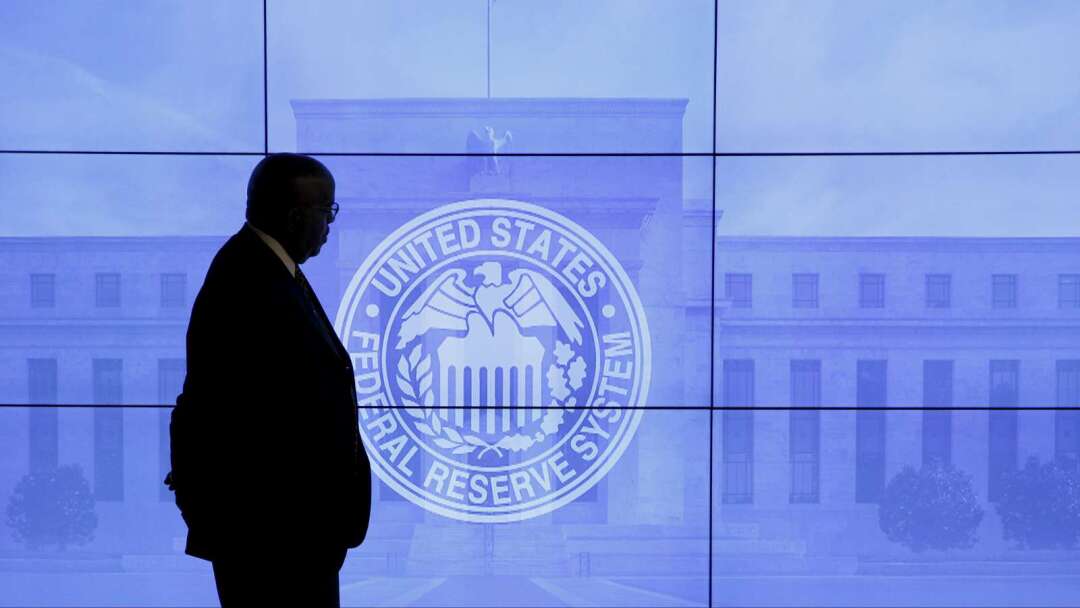
According to Marketwatch, the Federal Reserve (Fed) decided on Wednesday (29th) to keep interest rates unchanged. However, internal policy disagreements have widened, and with Middle East tensions potentially pushing energy prices higher again, Wall Street is shifting its focus to the September meeting. The CME Group's FedWatch tool shows that market participants estimate the probability of a rate hike in September at over 60%.
The Fed's policymaking committee voted 9 to 3 to maintain the benchmark interest rate in the range of 3.5% to 3.75%. This contrasts with the unanimous decision in June to hold rates steady. This time, three officials cast dissenting votes, advocating for a rate hike—a rare occurrence since the fall of 2016.
Interest rate futures markets currently suggest more than a 60% chance that the Fed will raise rates by 25 basis points (one 'tick') in September. If the Fed ultimately hikes, it would further distance the monetary policy under Chair Walsh from President Trump's goal of lowering borrowing costs.
Avery Shenfeld, Chief Economist at CIBC Capital Markets, pointed out that the voting outcome reflects a rare divergence among policymakers. With renewed war concerns pushing energy prices higher, markets need to heighten vigilance for a potential September rate hike.
Shenfeld still forecasts that the Fed will keep rates unchanged for the remainder of the year. However, this assumption hinges on the gradual resolution of disruptions to Middle East oil shipments. If supply interruptions persist or the conflict escalates, rising energy prices could intensify inflationary pressures, potentially altering the Fed's policy path.
Ryan Young, Senior Economist at the Competitive Enterprise Institute, also views the increased number of dissenting votes as a significant signal. Although the Fed did not adjust rates this week, the likelihood of a near-term rate hike is gradually rising.
Nonetheless, Wall Street remains divided on whether a September hike will occur.
Economists at JPMorgan Wealth Management expect that weak wage bargaining power among U.S. workers, coupled with the base-case scenario of no further escalation in U.S.-Iran tensions, will allow the Fed to maintain current rates through the end of 2026.
Trump Continues to Back Walsh
On Wednesday (29th), President Trump stated that he still supports Chair Jerome Walsh, whom he personally appointed, despite Walsh not having initiated any rate cuts since taking office.
Speaking to reporters in the Oval Office, Trump described Walsh as a 'highly talented individual' and expressed confidence that Walsh also wants to see lower interest rates. However, Trump blamed the Federal Reserve Board for keeping rates high and criticized the institution as being politically influenced.
Meanwhile, after the Fed announced its rate decision on Wednesday, Walsh stated that when the labor market is broadly balanced and underlying inflation continues to rise, central bankers typically lean toward tightening monetary policy. A more accommodative stance would only emerge when inflation shows signs of cooling.
These remarks indicate that Walsh is currently more focused on the risk of renewed inflation. With the U.S. labor market and overall economy remaining resilient, the urgency for the Fed to cut rates in the short term remains low.
Since Walsh succeeded Powell as Fed Chair in May, the Fed has held two policy meetings, both of which maintained the benchmark rate in the 3.5% to 3.75% range. Trump previously criticized Powell repeatedly for not cutting rates aggressively, but his tone toward Walsh—despite similar inaction—has been notably more moderate.
FACT BOX
- Source: PR Times
- Category: News
- Organizations: CME Group / CIBC Capital Markets / Competitive Enterprise Institute