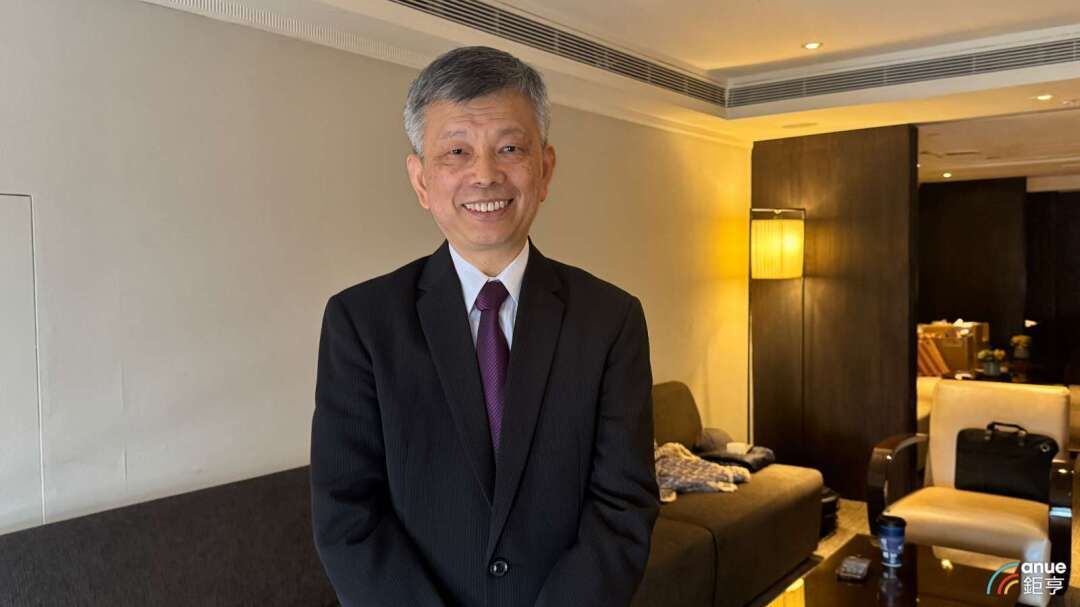
Jing-Test (6510-TW) held its earnings briefing today (29th), where CEO Huang Shui-ke stated that rising demand for AI and HPC testing has pushed existing capacity beyond full utilization. The company is actively expanding production, expecting capacity to double by the end of August 2023 compared to the end of 2022, and triple by the end of March 2024. It anticipates revenue to grow sequentially in the second half of the year, and views 2024 as another year of healthy growth.
Huang said the company has been steadily expanding capacity since the end of 2022, with around 50% of the new capacity already operational. The remaining 50% is expected to be completed by the end of August 2023, bringing total capacity to twice the 2022 year-end level. To meet strong customer demand, the company will add further capacity equivalent to the 2022 year-end level, aiming to triple overall capacity by March 2024. Future expansion will be evaluated based on customer demand and progress on new projects.
Jing-Test emphasized that its current capacity is not just near full, but already overloaded. Therefore, the recent expansion is primarily to meet growing demand from existing customers. The company has leased a second factory in Longtan and continues to evaluate other available facilities to accelerate capacity ramp-up.
In its expansion strategy, Jing-Test will not increase capacity fivefold or tenfold at once. Instead, it will gradually add capacity in increments of 1x based on clearer customer orders. While this involves some risk of early investment, it avoids overexpansion and balances customer needs with operational stability.
As new capacity comes online, Jing-Test expects product delivery times to gradually return to the normal range of 5 to 8 weeks seen in the past. However, new products and new customer projects require validation, and it will take about one quarter for capacity expansion to fully reflect in revenue.
Looking ahead to the second half, Huang expressed optimism that Q3 revenue will exceed Q2, and Q4 will surpass Q3, progressing toward the goal of sequential quarterly revenue growth. The overall outlook is more positive than at the beginning of the year. For 2024, with new capacity coming online and continued growth in demand for AI ASICs, TPUs, and HPC-related chips, customer information currently in hand indicates it will remain a year of healthy growth.
On the ASIC front, engineering samples of automotive AI ASIC test cards have been shipped, with certification progress reaching about 85%. Related engineering revenue has been recognized in Q2 and Q3, with significant revenue contribution expected after volume production begins next year. For the next-generation TPU project, the company is actively discussing technical specifications and shipment schedules with customers.
To support rapidly growing order demand, Jing-Test has raised its 2023 capital expenditure from the initial 350 million TWD to 500 million TWD. Equipment investment has increased from 300 million to 400 million TWD, more than tripling last year's 120 million TWD. Excluding one-time costs such as land and construction, this marks a record high in equipment investment for the company.
In addition to short-term leased facilities, Jing-Test is also planning to build a third factory, with construction costs estimated at over 2.5 billion TWD and initial equipment investment around 1 billion TWD. The company noted that the third factory is part of a larger-scale, long-term capacity plan, supporting not only existing test boards and probe cards but also introducing new products, with benefits expected to materialize gradually after 2028.
Huang stated that since the third factory cannot meet current and next year’s demand in time, short-term expansion through leasing existing facilities remains essential. With equipment delivery times extending from the previous 3–6 months to 12–18 months, the company may place advance orders to ensure future capacity comes online as scheduled.
Huang believes the AI computing market is evolving from model training toward inference and diversified applications, driving rapid growth in demand for ASICs, TPUs, and various HPC chips. As testing requirements advance toward high speed, high current, and advanced packaging, the company will continue to expand capacity and R&D resources to capture the next wave of AI chip testing opportunities.
FACT BOX
- Source: PR Times
- Category: News