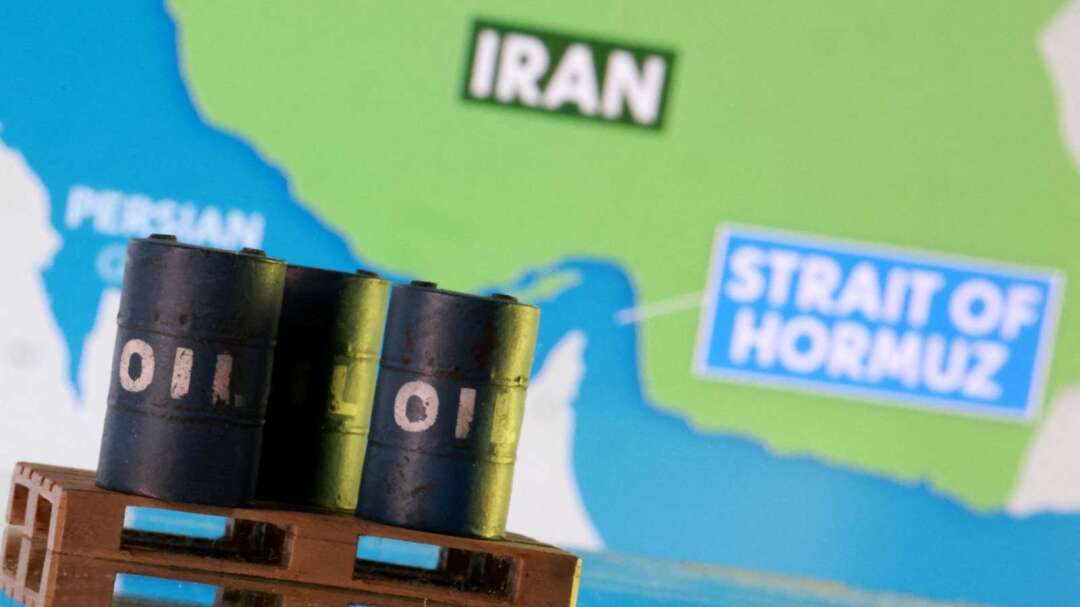
International oil prices surged over 6% on Wednesday (29th), as U.S. President Trump vowed a strong strike against Iran in retaliation for the Iranian Revolutionary Guard's ballistic missile attack on a U.S. military base in Jordan. The brief U.S.-Iran ceasefire collapsed after just several days, reigniting mutual attacks and raising market concerns over renewed escalation in the Middle East conflict. Threats to oil facilities in the Red Sea and Saudi Arabia further heightened fears of regional crude supply disruptions.
Before market close, September-delivery Brent crude futures, the international benchmark, rose 6.26% to $89.35 per barrel. September-delivery U.S. West Texas Intermediate (WTI) crude futures gained 6.30%, reaching $84.25 per barrel. After Trump's retaliatory remarks, both crude benchmarks climbed to intraday highs.
During a phone interview with Fox News, Trump stated the U.S. would launch a powerful strike against Iran and warned Tehran it would 'get hit very hard.' The U.S. Central Command (CENTCOM) reported that the Iranian Revolutionary Guard launched multiple ballistic missiles from within Iran, attempting to surprise U.S. forces in the Middle East, but all missiles were successfully intercepted.
Axios, citing sources, reported that Iran targeted a U.S. military base in Jordan. Iranian media stated the Revolutionary Guard attacked a base inside Jordan in response to U.S. 'aggressive actions,' though no further details were provided.
The U.S. and Iran had paused mutual attacks over the weekend, hoping to create space for diplomatic efforts to end the conflict, which led to a noticeable drop in energy prices. Trump had indicated as recently as Tuesday that he preferred negotiations over launching new attacks. However, after U.S. forces reported being attacked on Tuesday night, the several-day ceasefire officially ended, and Middle East tensions flared up again.
CENTCOM also reported that U.S. and Saudi forces conducted airstrikes on Tuesday (U.S. time) against multiple logistics and weapons facilities of armed groups in eastern Iraq, in retaliation for over 30 drone attacks by 'Iran-backed militants' over the past three days. Iran-aligned armed groups in Iraq are now drawn into a new round of conflict.
Maritime security in the Red Sea has also raised alarms again. The UK Maritime Trade Organisation (UKMTO) reported that a tanker captain heard an explosion while transiting the southern Red Sea. Authorities have classified the incident as 'suspicious activity' but have not disclosed the cause of the explosion or whether the vessel was damaged. The incident occurred on Monday, with the alert issued on Tuesday.
Additionally, recent Houthi attacks targeting Saudi oil facilities have deepened market concerns over supply disruptions. Bjorn Vang Jensen, industry advisor at shipping data firm Xeneta, warned that if oil production, storage, or port infrastructure is damaged, supply shocks could ripple across the entire region.
With the U.S.-Iran ceasefire now broken, oil markets are repricing the risks of expanded warfare and energy supply disruptions. Investors will now closely watch the scale of U.S. retaliatory actions and whether Iran and its allied regional militias escalate attacks on U.S. forces, Saudi energy sites, or Red Sea shipping lanes.
FACT BOX
- Source: PR Times
- Category: News