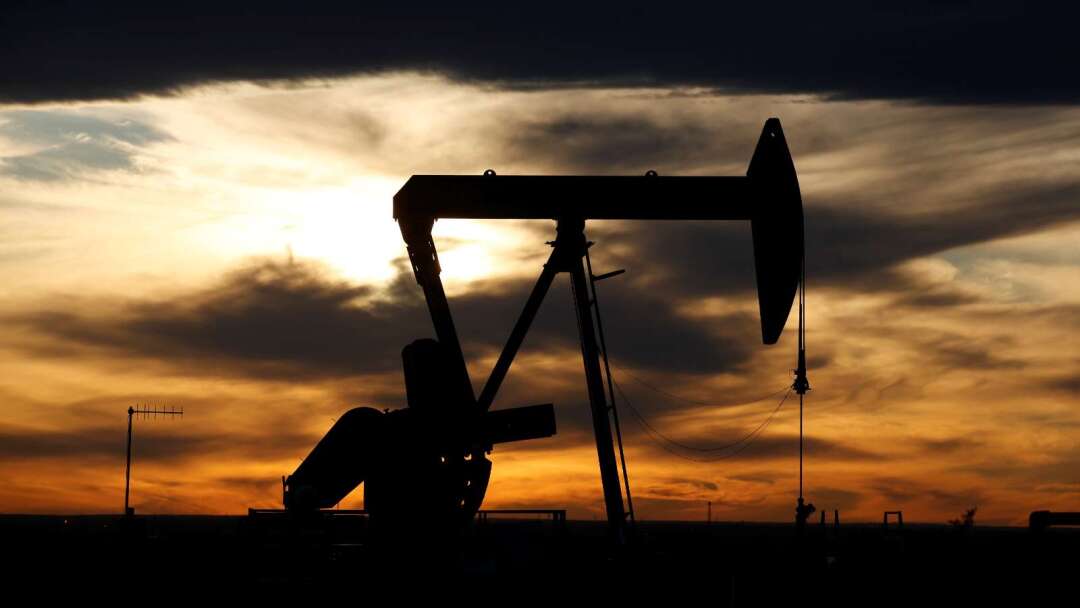
The United States and Saudi Arabia launched a new round of airstrikes against Iran-backed armed groups in Iraq, escalating Middle East tensions. Market concerns over further disruptions to regional crude oil supplies, combined with U.S. crude inventories falling to their lowest level since 2018, pushed international oil prices sharply higher on Wednesday (29th).
Brent crude futures surged $6.65, or 7.91%, closing at $90.74 per barrel. U.S. West Texas Intermediate (WTI) crude futures rose $5.20, or 6.56%, to settle at $84.46 per barrel.
The airstrikes followed the U.S. military’s earlier announcement that it had successfully thwarted an Iranian attack targeting American forces stationed in the Middle East. Iran, in turn, claimed it had launched attacks on vessels in the Strait of Hormuz and a U.S. military base in Jordan, further heightening regional tensions.
Additionally, an explosion occurred at a Mediterranean natural gas loading terminal in Egypt. British maritime security firm Ambrey reported that a U.S.-flagged floating storage tanker was struck by a drone, underscoring the growing security risks to Middle Eastern energy infrastructure.
John Kilduff, partner at Again Capital, said markets are rapidly repricing supply risks in the Middle East, with oil prices quickly reflecting a higher geopolitical risk premium.
Former U.S. President Donald Trump, in an interview with Fox News, stated that further military strikes against Iran are expected in the future, further amplifying intraday oil price gains.
Alongside military actions, the U.S. Treasury Department announced a new round of sanctions on Iran, targeting 10 entities and 8 oil tankers. Washington accused Tehran of attempting to generate revenue through the 'monetization of the Strait of Hormuz,' increasing pressure on Iran’s energy exports.
Markets are closely monitoring shipping activity through the Strait of Hormuz. Reuters, citing a senior Iranian official, reported that Tehran has formally rejected Oman’s proposal for joint regional management of the strait, raising further concerns about the security of approximately 20% of global seaborne crude oil supply.
Suvro Sarkar, Head of Energy Research at DBS Bank, said that with Middle East tensions repeatedly flaring and subsiding, Brent crude prices are expected to remain highly volatile in the short term, fluctuating between $80 and $100 per barrel.
Shipping data shows that commercial vessel traffic through the Strait of Hormuz remains sparse this week. The alternative Bab el-Mandeb Strait saw only five commercial vessels pass through on Wednesday, compared to 39 on Tuesday—the highest since July 19. At that time, Yemen’s Houthi rebels declared a maritime blockade on Saudi Arabia, severely disrupting the route.
Sources indicate that the Houthis are considering imposing tolls on commercial ships transiting southern Red Sea waters. There are also reports that China has initiated direct talks with the Houthi group to ensure safe passage for Chinese oil tankers through Red Sea routes.
Scott Shelton, energy expert at TP ICAP, noted that while the Houthis’ disruption of Bab el-Mandeb shipping remains far less impactful than potential Hormuz Strait disruptions, the number of vessels entering the strait still exceeds those exiting, indicating that shipping risks remain unresolved.
On the supply side, new bullish signals emerged. Reuters, citing OPEC+ sources, reported that after completing the voluntary production cut compensation phase, OPEC+ plans to pause production increases for three months starting in October. This move aims to respond to evolving Middle East tensions and shifting market demand, further tightening market expectations for future crude oil supply.
FACT BOX
- Source: PR Times
- Category: News
- Organizations: Again Capital / TP ICAP / Ambrey