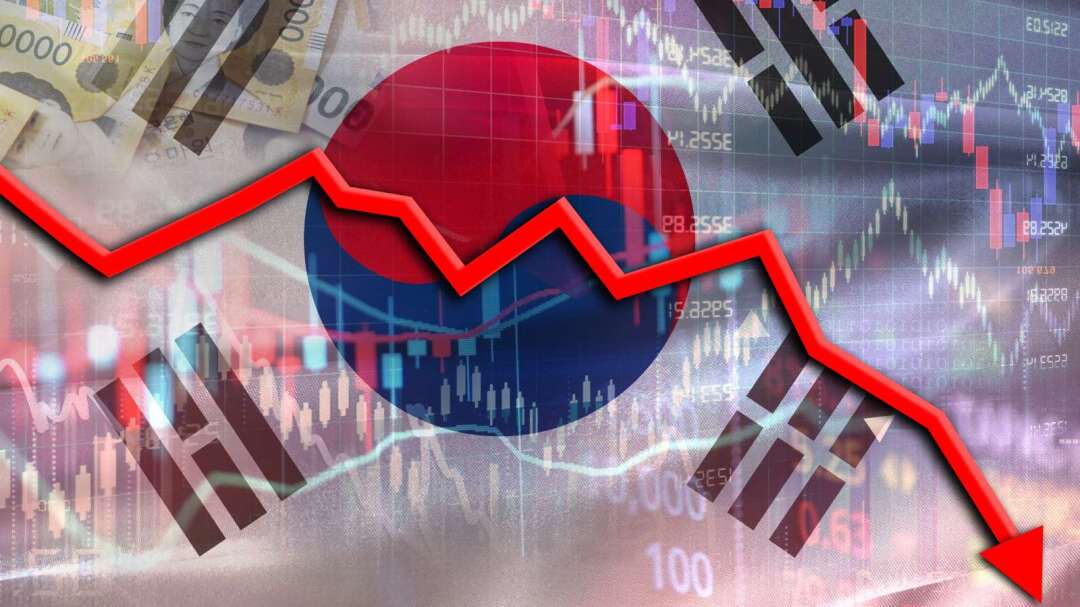
According to Nomura Securities' Korea equity strategy report released Tuesday (28th), the recent market plunge since late June is a 'liquidity-driven reset,' not a reversal in AI semiconductor fundamentals.
The Korea Composite Stock Price Index (KOSPI) fell 22% from its intraday peak of 9,115 on June 22 to 6,691 on July 24. The K-VIX surged to a historic high of 96.9 on June 29.
Nomura指出 that Korean equities are shifting from a 'leverage-driven bull market' to a 'buyback-driven bull market.' Corporate buybacks in 2024 are expected to reach a record 116 trillion won, with 90% coming from two memory giants—Samsung Electronics and SK Hynix. Supported by the AI earnings cycle and corporate governance reforms, Nomura maintains its KOSPI target range of 10,000–11,000 points.
Nomura breaks down the three main sources of selling pressure: First, foreign investors' mechanical deleveraging, with net selling of 158 trillion won (approximately $108 billion) year-to-date, triggered by Korean stocks exceeding weight limits in MSCI benchmarks, forcing funds to rebalance due to the 10% individual stock cap. Selling accelerated at key levels of 7,500 and 9,000 points. Second, among six leveraged ETFs, single-stock leveraged ETFs (fully concentrated on Samsung and SK Hynix) amount to 1.1 trillion won, representing 40% of total leveraged ETF assets. Since June 22, the net asset value of related 2x products has halved by 53%, more than double the index's decline, with retail investors holding 85% of these positions. Third, the National Pension Service (NPS) has increased its domestic equity allocation from 14.9% to 20.8%, but is nearing its overall capital allocation limit, significantly weakening institutional buying support.
Meanwhile, regulators have taken preemptive action. On July 16, the Financial Services Commission (FSC) suspended new single-stock leveraged ETFs and advertising, raised cash margin requirements from 10 million to 30 million won, and increased the minimum trading unit from 1 to 20 shares. FSC Chairman Lee Il-young warned Tuesday that if the new rules fail to cool the market by July 31, further regulatory tightening will follow.
Nomura also outlines the progress of Korea's market reset: foreign net selling dropped sharply from 48.4 trillion won in May and 44.5 trillion won in June to 9.8 trillion won in July; leveraged ETF assets have halved from a peak of $53 billion to $26 billion, reducing the 'ammunition' that amplifies volatility; margin call rates have declined to 0.7%; and JPMorgan estimates leveraged ETF liquidations are about 75% complete, with the most fragile segment already broken.
Nomura forecasts annual buyback volumes of 116 trillion won in 2026, 274 trillion won in 2027, and 328 trillion won in 2028. The 2024 figure of 116 trillion won represents 2.2% of KOSPI market cap, far exceeding the historical range of 0.2%–0.9% from 2018–2025.
Samsung plans to buy back nearly 90 trillion won (including employee stock bonuses), while SK Hynix is preparing a shareholder return program of up to 100 trillion won. Together, they account for 90% of annual buybacks—aligning directly with Nomura’s 'fundamentals + treasury stock cancellation' revaluation logic.
Nomura also highlights three key events in the second half of 2024: the government’s November release of a 'low PBR company list' to push for treasury stock cancellation and dividend proposals, tax reforms, tighter restrictions on dual listings, and KOSDAQ governance upgrades; continued AI capital expenditures providing support.
The firm concludes that Korea's market is not facing an AI narrative collapse, but a structural shift—from 'retail investors borrowing to buy 2x leveraged ETFs' to 'corporate giants using free cash flow to buy back their own shares.' As the $26 billion leveraged ETF market shrinks to reasonable levels and 116 trillion won in buybacks enter the market in stages, the current KOSPI level marks not the end of the leverage bull, but the beginning of the buyback bull.
FACT BOX
- Source: PR Times
- Category: Survey