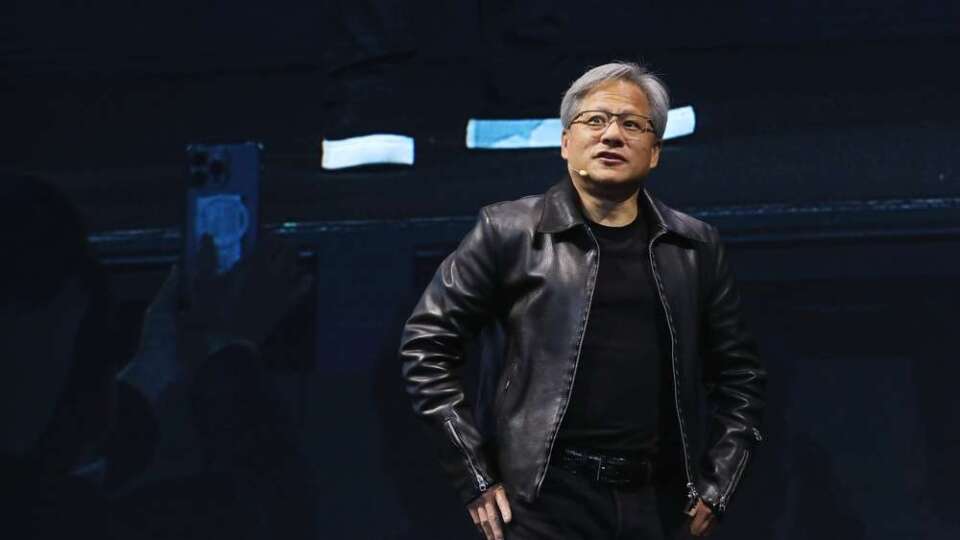
Chinese AI startup Moonshot has released the open-source model Kimi K3, sparking a new wave of competition in the global AI industry. This move has also prompted the U.S. government to reevaluate its regulatory approach toward open-weight AI models. In this high-stakes policy battle over AI technology direction and global competitiveness, NVIDIA (NVDA-US) CEO Jensen Huang has personally traveled to Washington, transforming from a Silicon Valley tech leader into a policy lobbyist advocating strongly for open-source models.
According to Bloomberg, Huang visited Washington on Wednesday (29th), holding intensive meetings with several members of Congress and U.S. Secretary of Commerce Gina Raimondo, aiming to persuade policymakers against imposing excessive restrictions on open-weight models.
After meeting with Democratic Senators Mark Warner and Adam Schiff, Huang emphasized that the U.S. AI industry needs open-weight models to ensure safety and maintain industrial vitality. He argued that open-weight models are a foundational element for securing America’s long-term competitive advantage.
This statement was no coincidence but a critical step in Huang’s escalating lobbying efforts following the official release of Kimi K3. As Kimi K3 is believed to rival certain products from OpenAI and Anthropic, Washington has begun reevaluating whether open-weight models should be restricted to reduce the risk of advanced AI technology leakage.
Huang’s timing is significant, as it coincides with the final stage of the U.S. Department of Commerce’s framework for reviewing advanced AI model safety. The market widely believes that AI regulation is entering a formal decision-making phase, and the tech industry is striving to influence the final policy direction before it is finalized.
NVIDIA stated that Huang’s visit focused on maintaining U.S. AI leadership, including promoting the development of open-weight models. As such, this trip is not just a routine executive exchange but is seen as a pivotal lobbying effort directly targeting core policy decisions.
Huang is not acting alone; he is representing the entire U.S. tech industry.
Last week, Huang joined Microsoft (MSFT-US) CEO Satya Nadella and dozens of other tech companies in issuing a joint open letter, urging the government not to restrict the development of open-weight models.
The letter states that open-weight models are a crucial component of AI infrastructure, making advanced AI more accessible while enhancing model adaptability and widespread adoption.
Huang even made this open letter his first post on his newly launched X account, underscoring his deep commitment to this issue.
Shortly after, on Monday, NVIDIA again joined forces with Microsoft, Palantir (PLTR-US), and Salesforce (CRM-US) to release a joint statement emphasizing that open-weight models help enhance cybersecurity capabilities. They warned that comprehensive restrictions could not only weaken defensive capabilities but also concentrate AI power among a few closed-system providers, increasing overall systemic risk.
Within just a few days, two joint letters and a series of congressional meetings demonstrate that Silicon Valley companies are engaging in this policy battle with unprecedented intensity.
Huang’s lobbying has already begun to win over some members of Congress.
Democratic Senator and Intelligence Committee member Mark Warner said Huang presented many persuasive arguments. He noted that as China continues to launch open-source models like Kimi, U.S. companies are also shifting toward open-source development—a trend that “is a genie that cannot be put back in the bottle.”
However, not everyone in Washington supports Huang’s stance. Democratic Senator Elizabeth Warren recently invited Huang to testify publicly before the Banking Committee, but he declined.
Warren later expressed public disappointment, stating that Huang couldn’t spare even an hour to appear before Congress, highlighting the significant divide between the tech industry and Washington on AI regulation.
Beyond national competitiveness and AI safety, Huang’s strong support for open-weight models also reflects a clear business logic.
Currently, U.S. AI companies like OpenAI rely primarily on closed models and paid services as their core business model. In contrast, Chinese firms such as DeepSeek have aggressively released low-cost open-source models in recent years, steadily expanding their market influence.
Analysts believe that open-source models lower the barrier to AI deployment, encouraging more enterprises and developers to enter AI application development. Ultimately, all these applications require substantial GPU computing power.
For NVIDIA, the global leader in AI chips, regardless of which model company prevails, the continued expansion of the open-source ecosystem means greater demand for inference and training, further driving GPU purchases.
Therefore, supporting open-weight models is not merely a technical philosophy but aligns closely with NVIDIA’s future hardware demand and long-term growth.
The emergence of Kimi K3 has extended the global AI competition from model capabilities to institutional and policy levels. Huang’s personal trip to Washington symbolizes how this rivalry has evolved from a technical race among Silicon Valley firms into a policy battle shaping the strategic direction of U.S. AI.
Going forward, whether the U.S. government imposes stricter limits on open-weight models will not only affect the pace of innovation in the U.S. AI industry but could also reshape the global competitive landscape between open-source and closed models.
FACT BOX
- Source: PR Times
- Category: New Product
- Organizations: OpenAI / Anthropic / Palantir
- Products / services: Kimi K3