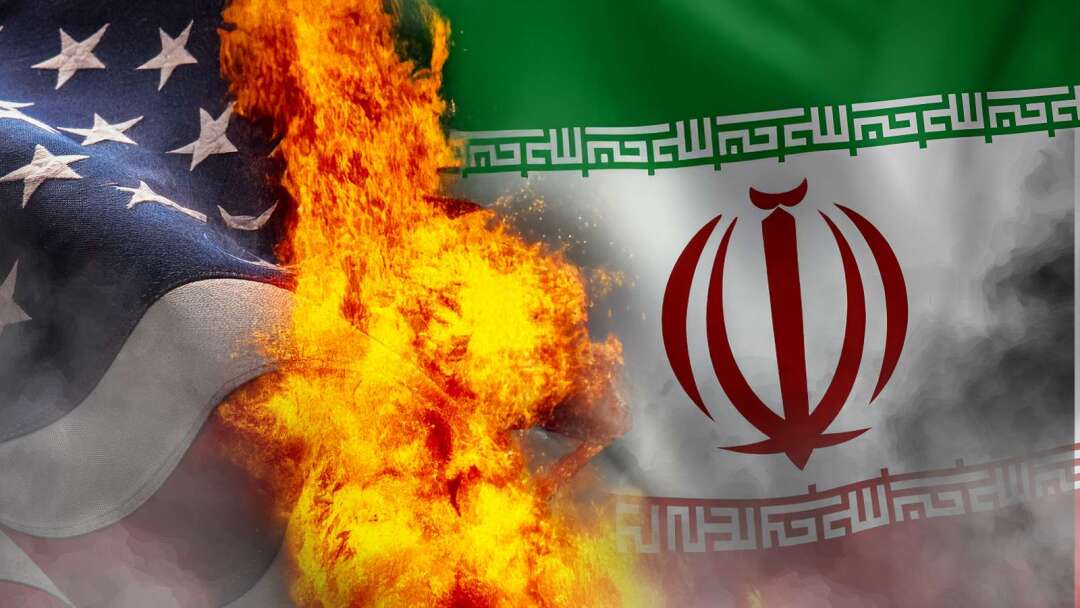
After the US military launched a new round of large-scale airstrikes on Iran, Tehran vowed retaliation on Friday (31st), reigniting tensions in the Middle East. Jordan, Kuwait, and Egypt have reported attacks or interceptions, signaling the conflict is spreading to neighboring countries and once again raising global risks to energy supply and maritime shipping.
The US Central Command (CENTCOM) stated that in response to Iran's surprise attack on US forces in the Middle East, it had carried out a concentrated wave of strikes within two hours, targeting dozens of facilities belonging to Iran's Islamic Revolutionary Guard Corps (IRGC), including military command centers, missile and drone bases, coastal surveillance and defense outposts, and maritime operations facilities.
Subsequently, airstrikes were reported in multiple Iranian cities.
Iran's state-run media IRIB reported that three IRGC members were killed in Zanjan Province in the northwest; three others, including a young child, died on Qeshm Island near the Strait of Hormuz.
The IRGC warned that 'aggressors will be punished today' following the US airstrikes, implying Tehran is preparing a new round of retaliatory actions. This statement indicates a reversal of the temporarily de-escalated US-Iran situation, undermining recent efforts to restore diplomatic contact and prevent further escalation.
President Donald Trump stated that following Iran's earlier attack on a US base in Jordan, the US would deliver a powerful strike against Iran. He said he had received a briefing on the incident and that the US would continue strong counterattacks.
The conflict is also spreading to other Middle Eastern nations.
Jordan reported intercepting a new wave of attacks from Iran; Kuwait said a building owned by a Chinese company was hit by an Iranian attack, killing one worker.
Egypt confirmed on Thursday that a drone attacked the port of Dumyat on the Mediterranean coast, setting fire to two natural gas vessels. One was a floating storage facility owned by a US company, the other an oil tanker owned by a Greek firm. The attacker's identity remains unconfirmed.
If Iran is later linked to the attack on Egypt's port, it would signify a further expansion of hostilities to a key US ally and regional mediator, increasing risks to energy infrastructure and international shipping.
Iranian Foreign Minister Araghchi denied any intention to threaten Egypt's security, calling Egypt an important friend and partner in the Middle East. He urged caution against possible 'false flag operations' aimed at undermining regional peace, pointing the finger at Israel.
Meanwhile, after Saudi Arabia and US forces jointly attacked pro-Iranian militias in Iraq, Saudi Defense Minister Prince Khalid bin Salman met with Trump and Vice President Vance to convey Crown Prince Mohammed bin Salman's stance against further escalation.
Insiders said Saudi Arabia views attacks by pro-Iranian militias on civilian infrastructure and energy facilities as having crossed a red line, necessitating a demonstration of self-defense. However, Riyadh emphasized that military participation does not mean support for full-scale escalation, as broader conflict could bring unpredictable risks and prolong the war.
With hostilities reigniting, international oil prices rose again, with Brent crude hovering near $90 per barrel on Thursday. Shipping safety through the Strait of Hormuz and the Bab el-Mandeb Strait in the Red Sea has once again become a market focus.
Before the war, about 20% of global oil shipments passed through the Strait of Hormuz, but ongoing attacks have slowed vessel traffic on related routes. The strait is not only a critical battlefield in the US-Iran conflict but also one of the most intractable issues in peace negotiations.
According to MarineTraffic ship tracking data, a liquefied natural gas carrier 'Al Areesh,' managed by a Qatari company, passed through the Strait of Hormuz from the Persian Gulf to the Gulf of Oman at night via an Iranian-controlled route. This may be the first Qatari-linked LNG vessel to transit the strait since a tanker was hit by a missile earlier this month.
Iran's semi-official Fars News Agency reported the vessel passed with Tehran's permission. Four other ships sailed along Iranian-controlled routes on Thursday, indicating the Strait of Hormuz remains partially operational, though vessel passage is affected by military deployments and controls from both sides.
Additionally, about 59 oil tankers or cargo ships passed through the Bab el-Mandeb Strait in the past 24 hours. While both critical energy waterways remain partially functional, the ongoing US-Iran retaliation and the involvement of more Middle Eastern nations continue to increase uncertainty in global oil and gas transportation and energy prices.
FACT BOX
- Source: PR Times
- Category: News
- Organizations: CENTCOM / Fars News Agency / MarineTraffic