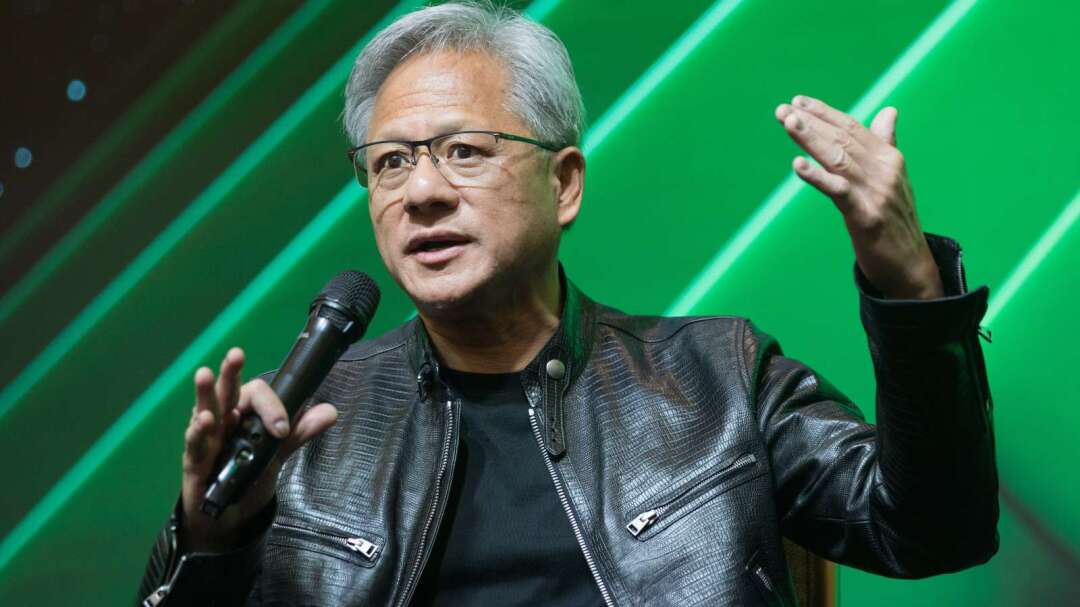
According to Benzinga, Nvidia's (NVDA-US) AI chips are driving the current wave of AI innovation. However, Seagate Technology (STX-US) believes that the next phase of AI performance breakthroughs may not come from more powerful computing capabilities.
The data storage company points out that smarter storage architecture can enable AI systems to accomplish more work with the same number of expensive GPUs, reducing infrastructure costs while boosting overall productivity.
AI Needs More Than Just Faster Chips
Seagate's argument stems from a white paper recently co-published with SK Hynix (SKHY-US), exploring how inference and agentic AI workloads are changing data management.
The report notes that modern AI applications are increasingly relying on storing reusable context—allowing subsequent interactions to directly retrieve information instead of regenerating it from scratch.
Dave Mosley, CEO of Seagate, stated during the company's Q4 fiscal 2026 earnings call: "Our latest white paper, co-published with SK Hynix, highlights the importance of tiered storage for inference and agentic AI workloads, which directly underscores the value of hard disk storage."
At the core of this architecture is the Key-Value Cache (KV Cache).
It stores context previously generated by AI, allowing models to read it directly during future interactions instead of re-computing it.
Mosley explained, "Key-Value (KV) caching effectively preserves and reuses these contexts."
Seagate believes this seemingly simple change can have a significant impact on AI's cost efficiency.
By managing and transferring context data across memory, SSDs, and traditional HDDs—rather than forcing GPUs to recompute every time—AI infrastructure can make far better use of its most expensive GPU resources.
"This will drive growth in hard disk storage demand while reducing GPU usage during the most compute-intensive stages of agentic AI applications," Mosley said. "As a result, GPU resources can be freed up to run more revenue-generating workloads."
GPUs Remain Central, But Storage Importance Is Rapidly Rising
Seagate emphasizes that this does not mean GPUs are becoming less important.
On the contrary, as AI inference workloads increase and models need to retain more and more context, storage systems are becoming a critical factor in AI performance.
In the future, in addition to computing power and memory, storage architecture will also become a key component of the AI stack.
Seagate believes AI is continuing to drive structural demand for high-capacity storage devices.
Management notes that cloud data centers currently account for about 90% of the company's exabyte (EB)-scale HDD shipments. As AI infrastructure continues to expand, customers are extending long-term supply commitments to 2029 and beyond.
For investors, Seagate's key message is clear: the next phase of AI competition may not be about building larger GPU clusters.
As enterprises seek to extract maximum value from every Nvidia AI accelerator, the systems that quietly operate behind the scenes—storage systems—may be what delivers the next wave of upgrades, not the GPUs themselves.
FACT BOX
- Source: PR Times
- Category: News
- Products / services: HDD / SSD