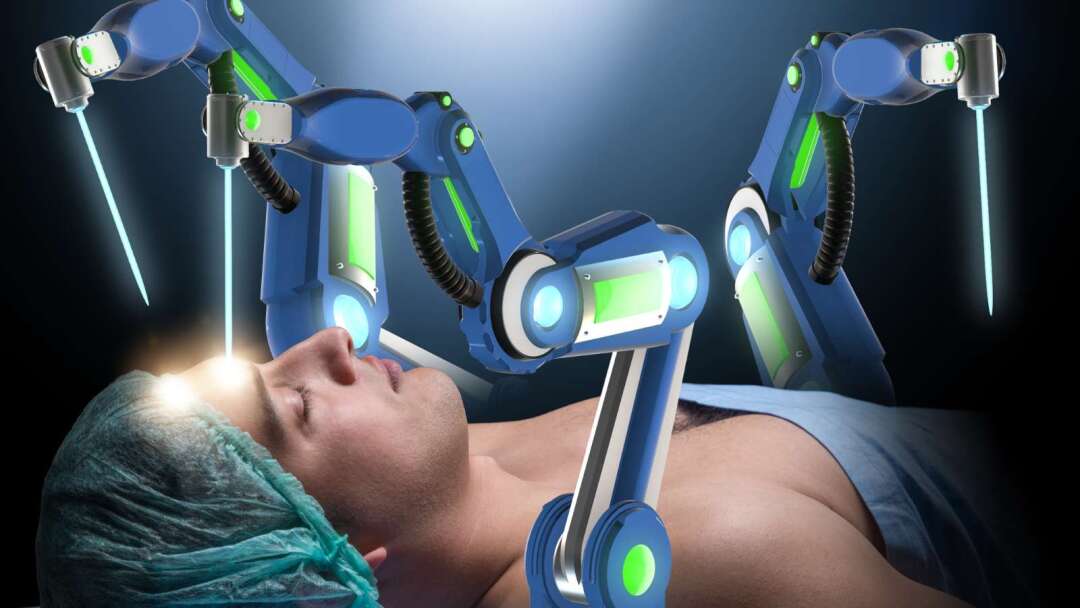
Vicarious Surgical, once a darling of the capital markets in the surgical robotics space, has come to an end in July 2026. The company’s board proposed dissolution, which was approved by shareholders, initiating asset liquidation proceedings.
At its peak, the company was valued at $1.1 billion and received investments from high-profile backers including Bill Gates and Jerry Yang. Its downfall signifies not just the end of a star startup, but also serves as a wake-up call for the entire medical robotics industry regarding the challenges of commercialization.
The Gap Between Technological Vision and Financial Reality
Founded in 2014, Vicarious Surgical aimed to develop a single-port robotic system for abdominal surgery. Its core technology involved miniaturizing large robotic arms—traditionally located outside the body—so they could enter the human body through a single small incision, offering surgical dexterity comparable to a human wrist. The company described this concept as "putting the surgeon inside the patient."
Compared to Intuitive Surgical’s market-leading multi-port "Da Vinci" system, Vicarious emphasized advantages such as smaller incisions, simpler device structure, and lower costs.
However, investor enthusiasm failed to translate into actual revenue. Financial reports show the company has been consistently losing money since inception. As of Q1 2026, its cash and cash equivalents stood at only about $3.65–3.7 million, while its net loss for the quarter reached $7.33 million.
Current CEO Stephen From attempted to meet technical milestones through layoffs and cost controls, but clinical trial progress was repeatedly delayed. Moreover, the company failed to obtain FDA’s traditional 510(k) clearance and was forced to switch to the more stringent De Novo application pathway. Ultimately, with no further equity financing or buyer in sight, the board concluded the company could no longer operate as a going concern.
The High Wall Built by "Da Vinci"
Market analysts point out that in the medical robotics industry, technological breakthroughs are merely an "entry ticket." The real battle lies in clinical validation, regulatory approval, and commercialization capability. Intuitive Surgical’s long-term market dominance stems not from the number of robots sold, but from its successful "device + consumables + services" business model.
In 2025, over three-quarters of Intuitive Surgical’s revenue came from consumables and service fees, not hardware sales alone.
The moat built by "Da Vinci" lies in its deep clinical data and physician training ecosystem. As more hospitals adopt the system and more surgeons become proficient, a powerful flywheel effect emerges. For new entrants like Vicarious, failing to quickly cross the threshold from "technology development" to "scaled commercial use" makes survival in the market nearly impossible, even with cutting-edge technology.
Despite Vicarious’s collapse, the global surgical robotics market is expected to continue growing, projected to rise from $18.36 billion in 2026 to $59.36 billion by 2034. Currently, major players like Medtronic and CMR Surgical are challenging market positions through modular designs and low-cost strategies.
FACT BOX
- Source: PR Times
- Category: News
- Organizations: Intuitive Surgical / Medtronic / CMR Surgical