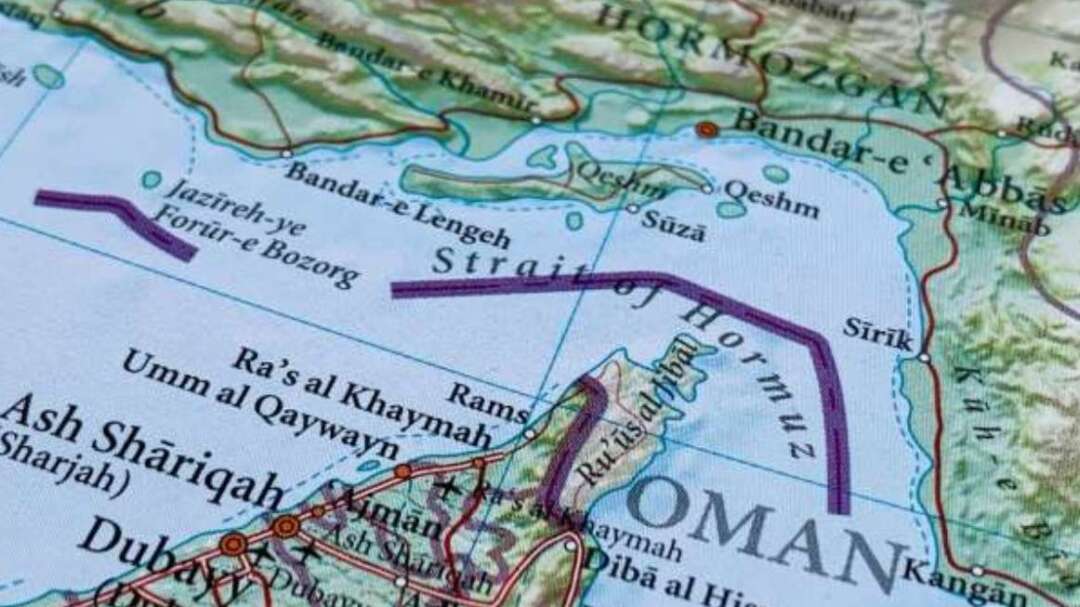
The Hormuz Strait has a massive impact on global trade, but in a new era where drones and missile attacks threaten economic lifelines, other important sea routes are also becoming frontlines of war, including the Red Sea and the Black Sea. Incidents of ships being attacked disrupt global trade, increase insurance and transportation costs, and force shipping companies to re-evaluate previously reliable routes.
The impact of chokepoint wars is significant because approximately 80% of global trade volume relies on maritime shipping. Any obstruction of a major route can cause cargo delays, supply shortages, and increased prices for energy, food, and consumer goods worldwide.
How Drones Are Changing Maritime Warfare
David Roche, President and Global Strategist at Quantum Strategy, stated in a July report, "We are facing new strategic chokepoints and a new war." He referred to Ukraine's continuous drone attacks on Russian oil tankers in the Sea of Azov and the Black Sea battlefield.
Roche noted that this is the first time a maritime offensive has been launched almost entirely by drones, combined with missiles. These weapons allow the militarily weaker side to threaten ships, ports, and other critical infrastructure at a lower cost. The disruption of these facilities can cause massive economic losses.
Quantum estimates that approximately 25% of Russia's grain exports and 25% to 30% of Black Sea oil exports could be disrupted. Russia accounts for over 20% of global wheat exports, potentially causing a significant impact on global grain prices.
Yevgeniya Gaber, a Senior Fellow at the Atlantic Council, pointed out that Russia's recent temporary suspension of shipping in the Kerch Strait effectively closed this important route connecting the Sea of Azov and the Black Sea.
Gaber stated, "Shipping in the Sea of Azov is gradually becoming an important alternative route connecting Russia with the occupied Crimea land corridor." The economic impact is equally significant, as the Sea of Azov not only transports sanctioned oil and petroleum products but also carries exports of grain, coal, and steel.
Gaber noted that Ukraine's strikes on Russia's maritime and economic vulnerabilities have become "one of the most significant blows to military and commercial fleets since World War II." Ukraine claims to have weakened about one-third of Russia's Black Sea Fleet's capabilities since 2022.
The Panama Canal Could Be the Next Flashpoint
In the Hormuz Strait, shipping companies are facing threats of attacks and any changes in information about the safety of the route. Even if the government announces that the route is open, shipowners will judge for themselves whether it is worth taking the risk of sailing, facing the possibility of ship attacks and crew casualties.
Lee Daejin, Global Research Director at Fertistream Freight, said, "We often treat the Hormuz Strait, the Black Sea, or the Bab el-Mandeb Strait as independent events, but that is not the case. These waterways are gradually becoming battlefields in the process of global new order transformation."
Currently, the next potential crisis is beginning to emerge. Lars Jensen, CEO of Vespucci Maritime, said, "If we're talking about the next flashpoint, I wouldn't look at Hormuz, but the Panama Canal."
This strategic route connecting the Pacific and North Atlantic, with a history of over a century, is now embroiled in geopolitical tensions between the United States, China, and Panama. Additionally, weather factors that may arise from the end of this year to early next year could further limit navigability and exacerbate tensions.
Impact on Shipping "Greater Than Most People Imagine"
For shipping companies, the biggest challenge is having to adapt to a new reality: before one route has recovered, the next chokepoint may already be in crisis.
Kevin O'Marah, Co-founder and Research Director at supply chain information company Zero100, noted that Iran has found that simply threatening Hormuz Strait shipping is enough to stop ships from passing, making it a critical part of the U.S.-Iran conflict.
Although Zero100's clients have not yet had ships attacked, some companies have reduced risk by adjusting inventory and changing routes. He said, "This has brought additional costs and delays to energy, food, and electronics industry customers."
He pointed out that the current traffic in the Hormuz Strait is only about half of normal levels. Although the recent breakdown of the ceasefire has worsened the situation, supply chain managers are not surprised. Companies like Martin Brower and Maersk have already established mature risk response mechanisms, including using pipelines to bypass the Arabian Peninsula, changing some cargo to Turkish land transport, and avoiding high-risk sea areas as much as possible.
O'Marah said that in the eyes of supply chain managers, the Middle East war does not necessarily mean that the conflict will escalate overall, but it means that the freedom of navigation in the Hormuz Strait may be long-term restricted. He said, "We are planning for a new normal, which is transportation full of uncertainty and must bear the costs of rerouting, increasing inventory, and additional freight charges."
Alain Bejjani, a Dubai investor and judge on "Shark Tank Lebanon," stated that shipping routes will continue to be a focus of war because the routes themselves are the core of the conflict.
He said, "War has shifted from territory to logistics. Straits are not closed because of missiles, but because insurance companies stop underwriting. This means the cost of disruption is low, but difficult to price, which is why this crisis continues to exist."
A spokesperson for Gallagher insurance brokers stated that war risk insurance is still available, but there are "only a few" shipowners and charterers who are actually willing to cross the Hormuz Strait. Due to the increased risk of maritime safety, insurance premiums have clearly risen above previous levels, with rates varying depending on the type of ship, cargo, and route. However, insurance companies continue to provide coverage to ensure that shipping can continue to operate with adequate insurance support.
Companies Building New Logistics Frameworks
Bejjani stated that the structural impact of maritime warfare is far greater than most people imagine, "The Persian Gulf is squeezed between the two chokepoints of Hormuz and the Mandeb Strait, and countries are now trying to reduce their dependence on these two routes as much as possible through land transport, alternative pipelines, and pre-positioned inventory facilities in neighboring markets."
This is a new situation where past crises have spawned avoidance measures, but now a new logistics framework is being built, including land transport corridors, alternative oil pipelines, and inventory stockpiles in nearby terminal markets.
Bejjani stated that this will cost a huge amount, require ten years of construction, and its impact will last for decades. Other regions that rely on strategic straits may follow suit in the future, but they may not have the same urgency and resources.
Bejjani pointed out that although maritime shipping will remain the largest mode of bulk cargo transportation globally, companies will no longer view maritime shipping as the only reliable mode of transportation as they did in the past.
When companies place more emphasis on supply chain certainty, other modes of transportation will receive more investment and development, and logistics backup will become a permanent and paid-for cost. He said, "The straits will eventually reopen, but the market will no longer assume that routes can be free and permanently open."
FACT BOX
- Source: PR Times
- Category: News
- Organizations: Quantum Strategy / Fertistream Freight / Vespucci Maritime