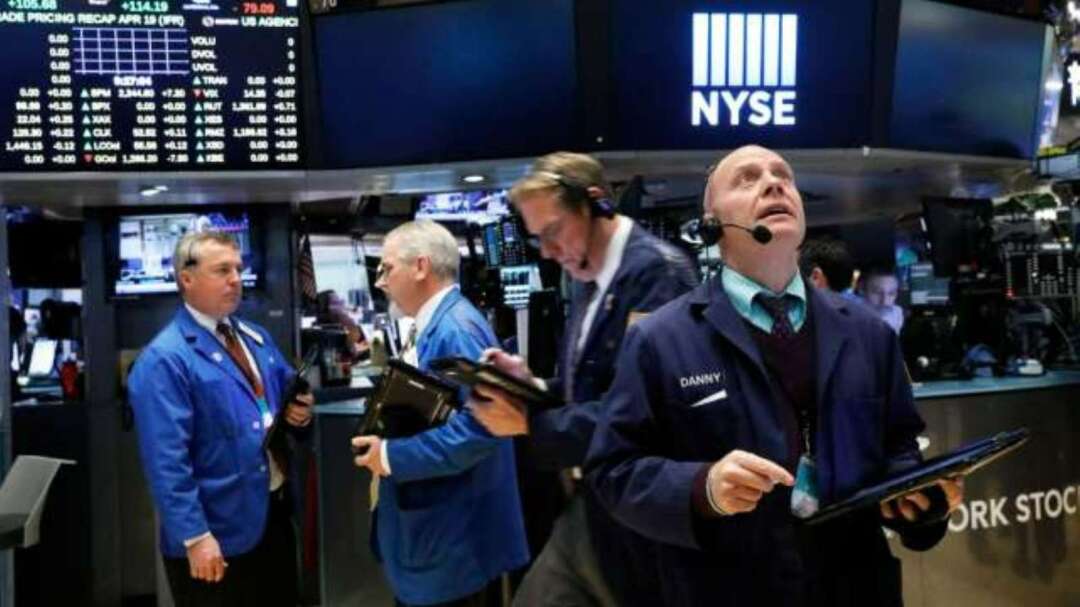
U.S. stocks rallied on Thursday (30th), recovering from the sharp sell-off triggered by the Federal Reserve's decision to hold interest rates steady in the prior session. Microsoft's better-than-expected earnings, coupled with a broad-based rebound in semiconductor stocks, propelled the Philadelphia Semiconductor Index to an 8.19% surge. The Nasdaq Composite jumped nearly 3%, ending a six-day losing streak, while the Dow Jones Industrial Average soared over 600 points.
Microsoft (MSFT-US) surged nearly 16%, marking its best single-day performance in 18 years and setting a new record for the largest single-day market capitalization increase in corporate history. The company's latest earnings showed continued growth in its Azure cloud business, reinforcing investor confidence in its returns on artificial intelligence and cloud investments.
Memory and chip stocks rebounded strongly. SK Hynix ADR (SKHY-US) jumped 17.52%, Micron Technology (MU-US) surged 18.36%, and SanDisk (SNDK-US) skyrocketed 25.99%.
The day before the rebound, the Dow had plunged over 1,100 points, its worst single-day drop since April 2025. After the Fed held rates steady, investors feared the central bank was behind the curve on inflation, driving long-term U.S. Treasury yields sharply higher. The 30-year Treasury yield remained near its highest level since 2007.
International oil prices declined amid volatile trading. On Thursday, U.S. Central Command reported that after intercepting Iranian missile attacks on U.S. forces, U.S. forces conducted a series of airstrikes on dozens of targets inside Iran within two hours. However, reports indicate that negotiations between Iran and Oman over the Strait of Hormuz are ongoing.
Meanwhile, Saudi Arabia is seeking to form a multinational maritime defense alliance with 14 countries, including Turkey, Pakistan, and Egypt, to enhance security cooperation in the Bab el-Mandeb Strait, the Red Sea, and the Gulf of Aden, in response to Houthi militant blockade threats.
Major U.S. indices on Thursday (30th):
- Dow Jones Industrial Average: +613.92 (+1.19%), closing at 52,208.06 - Nasdaq Composite: +679.24 (+2.78%), closing at 25,122.18 - S&P 500: +121.48 (+1.66%), closing at 7,437.63 - Philadelphia Semiconductor Index: +855.50 (+8.19%), closing at 11,302.99 - NYSE FANG+ Index: +479.70 (+2.91%), closing at 16,973.06
Key Individual Stocks:
Mixed performance among the tech giants in the NYSE FANG+ Index. Meta (META-US) plunged 7.95%; Apple (AAPL-US) fell 1.41%; Alphabet (GOOGL-US) dropped 0.91%; Microsoft (MSFT-US) soared 15.51%; Amazon (AMZN-US) rose 3.90%.
The Philadelphia Semiconductor Index showed strong momentum. AMD (AMD-US) surged 13.00%; Broadcom (AVGO-US) rose 4.73%; Nvidia (NVDA-US) gained 2.65%; Applied Materials (AMAT-US) jumped 14.97%; Qualcomm (QCOM-US) fell 2.62%; Micron (MU-US) rose 18.36%.
Taiwanese ADRs mostly closed higher. TSMC ADR (TSM-US) surged 7.64%; ASE (ASX-US) jumped 11.73%; UMC (UMC-US) rose 10.70%; Chunghwa Telecom (CHT-US) fell 1.04%.
Corporate News:
Microsoft (MSFT-US) surged 15.51%, closing at $451.10 per share. Its market cap increased by nearly $450 billion in a single day, surpassing Nvidia's previous record of $441 billion set on April 9, 2025, making it the company with the largest single-day market cap increase in history.
Microsoft's fourth-quarter revenue reached $90.01 billion, exceeding the market estimate of $87.62 billion. Azure revenue grew 43% year-over-year on a constant currency basis, surpassing StreetAccount's forecast of 40.2%. Microsoft also stated that Azure revenue will exceed $100 billion for the first time in its fiscal year 2026.
In contrast, Meta (META-US) plummeted 7.95% to $539.03 per share. Meta's latest quarterly EPS was $6.18, $1.04 below the analyst consensus from LSEG. The company projected Q3 revenue between $61 billion and $64 billion, with the low end falling short of the market estimate of $63.15 billion.
Lam Research (LRCX-US) soared nearly 18% to $297.72 per share, reporting better-than-expected results for its fourth fiscal quarter. Excluding special items, EPS was $1.82, and revenue reached $6.72 billion.
Qualcomm (QCOM-US) declined 2.62% to $151.60 per share. Adjusted EPS was $2.21, slightly below the market estimate of $2.23; revenue was $9.95 billion, exceeding the expected $9.67 billion.
Starbucks (SBUX-US) rose 1.64% to $105.85 per share. Same-store sales grew 7.9%, adjusted EPS was $0.85, exceeding the market expectation of $0.66; revenue reached $9.32 billion, also surpassing the estimated $9.16 billion, and the company raised its full-year outlook.
Wall Street Analysis:
Chip stocks had faced heavy selling pressure in recent weeks, partly due to excessive leverage by South Korean investors and the high correlation between U.S. and South Korean tech stocks, amplifying market volatility. However, South Korean authorities have recently taken measures to curb speculative trading.
JPMorgan believes that the de-leveraging by hedge funds and other large investors, who reduced their positions in tech, semiconductor, and memory stocks to lower leverage, may have largely been completed.
JPMorgan analyst Nikolaos Panigirtzoglou noted that the de-leveraging in these sectors has progressed faster than initially expected. The leveraged positions in equity hedge funds, which were built up in April and May, have mostly been unwound, limiting further downside pressure from additional stock reductions.
Andrew Rocco, stock strategist at Zacks Investment Research, stated that market bottoms often occur when over-leveraged players are forced to exit. He believes Thursday's rally was a result of de-leveraging and investors buying into attractively valued stocks.
(All figures are updated as of press time; please refer to actual quotes for accuracy.)
FACT BOX
- Source: PR Times
- Category: News
- Organizations: Meta / Apple / Alphabet
- Products / services: Azure / Xbox