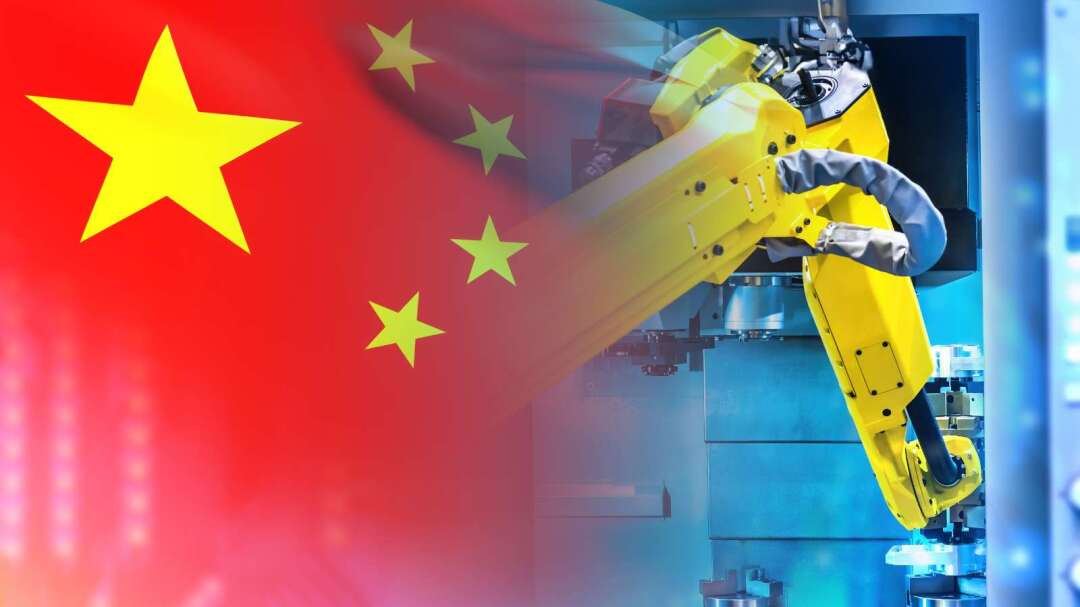
China's National Development and Reform Commission (NDRC) held a press conference on Friday (31st) to review the first-half economic performance and outline future policy directions. The NDRC stated that China's economy in the first half of the year showed a trend of shifting growth momentum toward innovation and structural optimization, with GDP growing 4.7% year-on-year. New-quality productivity contributed over 40% to economic growth.
Regarding emerging industries, Jiang Yi, Director of the Policy Research Office, highlighted strong performance in sectors such as integrated circuits, biomedicine, aerospace, and smart robotics.
He cited the integrated circuit industry as an example, noting continuous breakthroughs in core technologies and the release of the first Chinese-led integrated circuit technology roadmap, 'Tao Law'.
Jiang Yi compared the development of emerging industries to 'cultivating a forest', emphasizing four steps to achieve full-chain, scaled development: First, 'selecting quality seeds'—proactively investing in diverse technology pathways and supporting key R&D. Second, 'nurturing seedlings'—driving application scenarios to transform scientific achievements into productive capacity. Third, 'forming forests'—guiding patient capital such as venture and angel investment into hard-tech sectors. Fourth, 'rational layout'—encouraging regions to develop according to local conditions and prevent disorderly competition.
On expanding domestic demand, Zhou Hongwei, Deputy Director of the Department of National Economic Comprehensive Affairs, said the government is accelerating the formulation of the 'Implementation Plan for Expanding Domestic Demand Strategy (2026–2030)'. The next phase will involve stronger measures to boost consumption and stimulate endogenous investment momentum.
On the consumption side, Zhou proposed three directions: First, enhancing consumption capacity by increasing household income through employment-first strategies. Second, unlocking the potential of service consumption and expanding high-quality supply. Third, promoting smart product consumption by increasing the supply of next-generation smart devices such as AI smartphones, smart computers, smart wearables, and robots.
On the investment side, emphasis was placed on combining 'investment in physical assets' with 'investment in people', accelerating the implementation of 109 major projects outlined in the 15th Five-Year Plan.
In infrastructure, the NDRC emphasized advancing the coordinated development of six key networks: computing power networks, new-type power grids, next-generation communication networks, national water networks, energy-transport mega-networks, and modern logistics networks.
Jiang Yi stressed that these six networks are not independent but deeply integrated into an organic whole. For example, coordination between computing and power grids enables intelligent energy dispatch and green power absorption. During the 15th Five-Year Plan period, investment in new-type power grids is expected to exceed 5 trillion yuan, while computing network construction will attract 4 trillion yuan in new direct investment.
Looking ahead to the second half, Jiang Yi expects prices to remain stable as the AI industry accelerates and market competition improves. The NDRC will continue strengthening macroeconomic policies to enhance economic resilience.
FACT BOX
- Source: PR Times
- Category: News