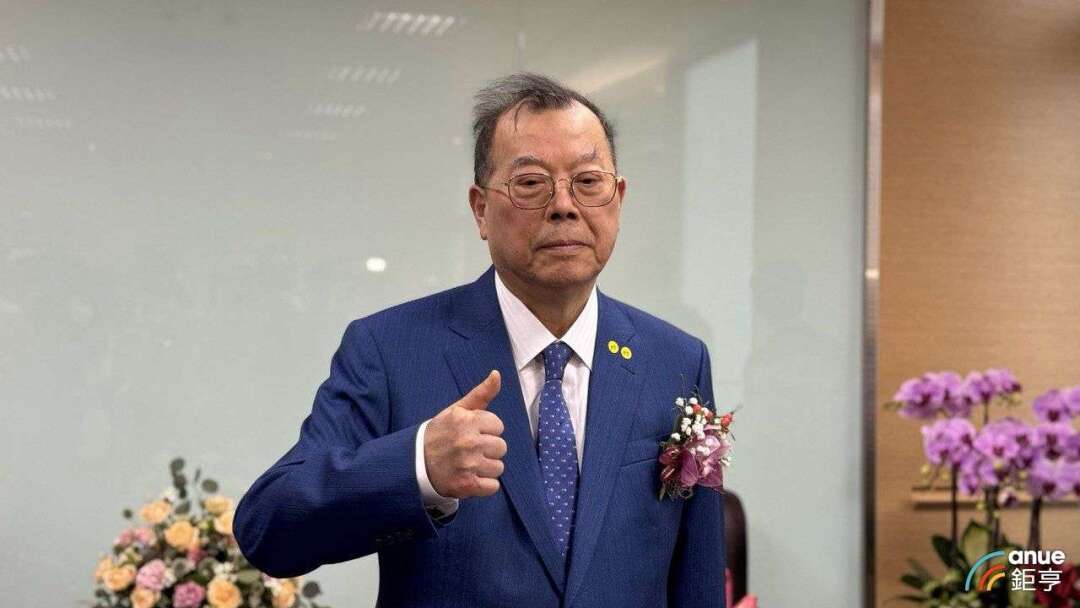
Powerchip (6770-TW) announced today (31st) that its chairman and founder, Dr. Huang Chong-ren, passed away peacefully in his sleep at home today at noon due to heart and lung failure. The company stated that Vice Chairman Hsieh Tsai-chu will legally assume the duties of chairman on an interim basis, and that production, sales, and business operations will continue to proceed smoothly according to established plans. All employees will remain committed to operations, continuing Chairman Huang's vision of pioneering new frontiers for Taiwan's high-tech industry.
Dr. Huang Chong-ren has been a prominent figure in Taiwan's semiconductor industry for decades. He is best known for surviving the DRAM market crash, company delisting, and over NT$120 billion in debt, ultimately transforming Powertech into Powerchip, a foundry-focused company. He has been described in the industry as a 'nine-lived cat' who repeatedly overcame crises and made comebacks, making him one of the most talked-about entrepreneurs in Taiwan's semiconductor sector.
Huang earned a medical doctorate from Mount Sinai School of Medicine in New York. After returning to Taiwan in 1980, he taught in the Department of Physiology at Taipei Medical College and the Department of Physics at National Taiwan University. As Taiwan's personal computer industry took off, he left academia to start businesses in computer peripherals, software, and information technology, later expanding into semiconductors.
To reduce Taiwan's electronics industry's reliance on imported key components such as DRAM, Huang negotiated a partnership with Japan's Mitsubishi Electric and founded Powerchip Semiconductor in 1994, becoming Taiwan's first Sino-Japanese joint-venture DRAM manufacturer. Powerchip completed its first 8-inch wafer fab in 1996 and began mass production of 16Mb DRAM, but immediately faced a global memory price crash, putting the company under severe pressure from the outset.
Huang continued to drive capital increases, production expansion, and process upgrades, leading Powerchip to build Taiwan's first 12-inch wafer fab. Through a combination of in-house construction and acquisitions, the company quickly secured three 12-inch fabs, briefly becoming the leader in Taiwan's DRAM industry. However, the 2008 financial crisis and global DRAM oversupply triggered a major industry shakeout. Qimonda, Elpida, and several Taiwanese DRAM manufacturers exited the market one after another. Powerchip, burdened by massive losses and debt, was delisted in 2012.
At that time, Powerchip carried approximately NT$120 billion in debt. Rather than exiting, Huang shifted the company's focus from standard DRAM to wafer foundry services, introducing a more flexible 'Open Foundry' strategy. By investing in both logic and memory processes, the company gradually improved its product mix and financial structure. After years of transformation, debt repayment, and organizational restructuring, Powerchip completed a business split and reorganization in 2019, with Powerchip Semiconductor taking over the wafer manufacturing business and relisting on the stock exchange in 2021—a move that sparked significant market interest.
At the time of relisting, Huang viewed this as fulfilling his responsibility to hundreds of thousands of Powerchip shareholders. The journey from trillion-dollar debt and delisting back to the capital markets became the most iconic turning point in his entrepreneurial career.
Facing the AI wave, Huang continued to push Powerchip's transformation. Just this month, he appeared at the company's earnings call, emphasizing that Powerchip is no longer a traditional mature-node foundry but is evolving into an 'AI Foundry' integrating memory, logic processes, and advanced packaging.
In recent years, Powerchip has invested in wafer stacking, silicon interposers, and silicon capacitors, and plans to enter the back-end wafer manufacturing services for HBM, aiming to establish new growth pillars amid the trends of AI chips and 3D integration. As recently as mid-March, Huang publicly explained the company's wafer stacking and silicon capacitor strategies, demonstrating his strong determination to drive Powerchip's transformation.
Powerchip stated that following Huang's passing, Vice Chairman Hsieh Tsai-chu will legally assume the duties of chairman. The company's production, sales, and operational plans remain unaffected and will continue to advance steadily in the established direction.
FACT BOX
- Source: PR Times
- Category: 人事
- Products / services: AI Foundry