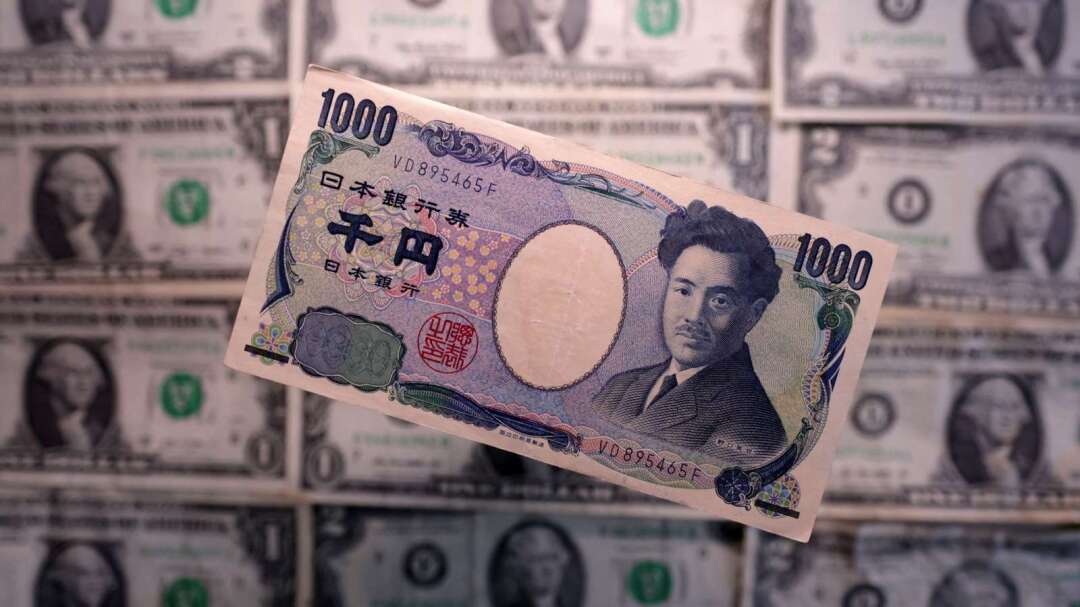
The United States and Japan are launching a decades-rare close collaboration to prevent the continued depreciation of the Japanese yen. Japanese authorities are reported to have spent approximately $53 billion buying yen on Thursday, while the U.S. Department of the Treasury, through the Federal Reserve Bank of New York, has notified multiple banks of a possible market intervention on Friday (the 31st), urging them to "prepare to cooperate with future actions."
According to sources familiar with the matter, the U.S. Treasury has issued notifications to several banks. Following the news, the yen strengthened temporarily against the dollar, reaching around JPY 159.61 per USD. If the U.S. takes actual action, it would mark the first time since the 2011 G7 joint market stabilization following Japan’s earthquake and tsunami that the U.S. has intervened to support the yen.
Global foreign exchange markets see daily trading volumes of up to $9.5 trillion. The U.S.-Japan joint effort to counteract yen depreciation signals a new stage in bilateral currency coordination.
Unprecedented U.S. Support for the Yen
Japan suddenly bought yen on Thursday, with the estimated scale of intervention at about $53 billion. At the same time, U.S. authorities inquired about real-time yen quotes from banks. Such "exchange rate inquiries" are typically seen as precursors to formal intervention and represent the second time this year the U.S. has taken such action, driving the yen to surge 3.3% against the dollar during New York trading hours.
U.S. Treasury Secretary Bessent subsequently intensified verbal intervention, stating the yen is "severely undervalued," its exchange rate significantly deviating from equilibrium levels, and excessive volatility is unhealthy. He also praised policies pursued by Prime Minister Sanae Takagi, expressing confidence they will strengthen Japan’s economic fundamentals.
Nobuyasu Aitoki, Chief Economist at Rakuten Securities Economic Research Institute and former Bank of Japan official, said Bessent’s influence is highly significant, indicating the U.S. is now clearly more willing to coordinate with Japan on forex market intervention.
Japanese officials declined to confirm intervention on Friday but deliberately emphasized Washington’s support. Jun Mimura, Japan’s Vice Minister of Finance, stated Japan is receiving more than just America’s "moral support." Finance Minister Satsuki Katayama noted that Bessent has clearly conveyed a message: once the Takagi administration’s policies reflect in economic fundamentals, markets will eventually recognize the yen’s undervaluation.
However, the extent of U.S. support for Japan remains unclear. When Japan sells dollars to buy yen, it may need to dispose of some U.S. Treasury holdings, potentially pushing up U.S. bond yields—an outcome Washington would likely oppose. Takagi’s large-scale fiscal plans, including increased defense spending and temporary cuts to food consumption tax, continue to pressure the yen.
Elevated Coordination on Exchange Rates and Monetary Policy
The timing of U.S.-Japan actions coincides between the Federal Reserve’s and Bank of Japan’s (BOJ) interest rate decisions, sparking market speculation that their cooperation may extend beyond forex intervention into tacit monetary policy coordination.
The BOJ held its key interest rate steady at 1% on Friday. Governor Kazuo Ueda stated that exchange rate fluctuations’ impact on Japan’s economy has expanded, and if financial conditions become excessively loose, the central bank might accelerate rate hikes. He also pledged to manage policy prudently to avoid falling behind in inflation control.
On Friday, Secretary Bessent posted on social media that he looks forward to meeting Governor Ueda during the upcoming G20 summit in Asheville, North Carolina, in August. He commended the BOJ’s firm commitment to maintaining monetary and financial stability and affirmed that U.S.-Japan relations remain close and well-coordinated.
In January, the U.S. similarly conducted yen exchange rate inquiries in coordination with Japan, prompting the yen to rise from 159 to 152 per dollar within hours. Aitoki believes the U.S. and Japan may be conducting undisclosed monetary policy coordination to prevent further yen weakening.
Nevertheless, Motonari Sakai, Head of Foreign Exchange and Financial Products Trading at Mitsubishi UFJ Trust Bank, said concerns over Japan’s fiscal expansion and delayed anti-inflation measures persist. While interventions can adjust the pace and level of depreciation, they are unlikely to reverse the yen’s downward trend entirely. The Fed will announce its next rate decision on September 16, followed by the BOJ on September 18—these meetings will serve as critical tests for the yen’s future trajectory.
FACT BOX
- Source: PR Times
- Category: News