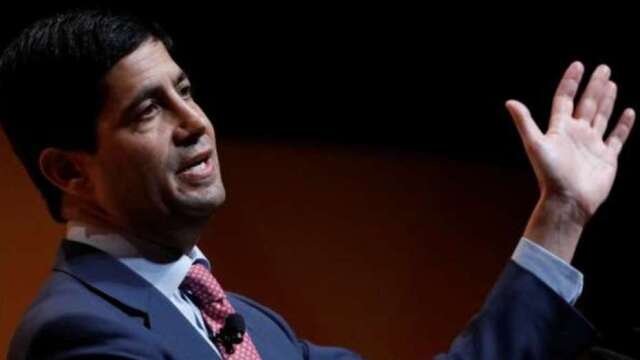
Federal Reserve (Fed) Chair Kevin Warsh held his second post-rate-decision press conference this week, leaving economists and investors deeply puzzled. Although he repeatedly emphasized the Fed’s determination to curb inflation, markets remain unconvinced that he will take necessary actions.
Warsh reaffirmed that he would not disclose when or whether the Fed might adjust interest rates. On Wednesday, he further declined to explain how policymakers would respond under different economic scenarios. Instead, he stated that rising Treasury yields since the Fed’s last meeting have helped suppress inflation and could even reduce the need for rate hikes. This prompted investors to sell 30-year U.S. Treasuries, sending yields to their highest levels since 2007, and led to downward revisions in near-term rate hike expectations.
According to Bloomberg analysis, here are several remarks by Warsh that triggered market volatility:
Market Movements Can Share the Burden of Tightening
Warsh said: "The committee didn’t adjust the policy rate—so what happened? Between meetings, market focus returned to real data and economic developments. Prices instantly reflect new information, possibly due to reduced forward guidance. Market participants are learning to 'play the ball, not the referee.' Prices are adjusting based on their own judgments of direction and magnitude. I believe this is a positive change—and it’s only just beginning."
This marks the first time Warsh has repeatedly referenced the U.S. Treasury market. He has long opposed "forward guidance"—where the Fed pre-announces future policy directions—and believes the current approach is proving effective.
However, market observers note that although Warsh avoids revealing his stance, other Fed officials continue to voice opinions, allowing investors to infer policy direction and reflect it in prices.
Ian Lyngen, Head of U.S. Rate Strategy at BMO Capital Markets, said Warsh seems to believe markets are already doing part of the Fed’s tightening work. But if the Federal Open Market Committee (FOMC) delays actual action indefinitely, markets cannot sustain this role forever.
Interest Rates Are Not the Only Tool
Warsh stated: "Over the past two days, the committee discussed whether rate hikes remain the primary solution if inflation stays elevated for some time. Rate hikes may be one solution, but not the only one."
Warsh previously pledged to reform the Fed, criticizing its overreliance on models and lagging data. At Wednesday’s press conference, he appeared to suggest that rate hikes are merely one component of the Fed’s toolkit.
Given his view that rising yields are already exerting a tightening effect, markets interpreted this as Warsh possibly believing inflation can be tamed without rate hikes.
While the Fed has other tools such as its balance sheet, and financial markets themselves influence the broader economy, the Fed has relied primarily on interest rate adjustments for years to control inflation or support employment. Thus, Warsh’s comments left markets even more confused: How exactly does he plan to achieve price stability without raising rates?
"The Fed Has No Magic Wand"
Warsh said: "But I don’t want anyone to misunderstand—we don’t have a magic wand. This won’t be resolved in days or weeks, but we will fulfill the responsibilities Congress has given the Fed."
Analysts interpret this as signaling Warsh isn’t急于 hiking rates and doesn’t see interest rates as the sole tool for curbing inflation.
Gregory Daco, Chief Economist at EY-Parthenon, noted that while inflation remains above target and the FOMC overall is turning more hawkish, Warsh himself appears relatively dovish. He seems to urge market patience, given that the new FOMC structure has been operational for only a few weeks.
PCE Remains Official Inflation Target—but Strategy May Shift
On the Fed’s use of the Personal Consumption Expenditures (PCE) price index as its 2% inflation target, Warsh said: "This is our current metric, and we’ll continue using it. As for how we discuss strategy after January next year—who knows? I expect the working group may propose some recommendations."
Still, he added: "To achieve our goal, the inflation data I monitor go beyond just PCE."
The Fed has used the PCE year-on-year rate of 2% as its inflation target for years. While central bankers naturally consult multiple indicators, downplaying PCE’s importance in the future could undermine the Fed’s credibility and weaken market confidence in its ability to control inflation.
Jackson Hole Meeting Will Focus on Broader Issues
Regarding the global central banking symposium—the Jackson Hole meeting—at the end of August, Warsh said: "Right now, it’s like a blank canvas to me. If possible, I’d like to discuss bigger issues in the mountain air of Jackson Hole, Wyoming. Markets today too easily get caught up in details like 25-basis-point hikes or cuts."
Past Fed chairs have often used the Jackson Hole meeting to deliver major policy speeches. Markets had expected Warsh to signal future rate hikes, especially as attention has shifted to whether hikes will occur by year-end.
However, Warsh hinted he’s more likely to focus on the Fed’s future reform agenda and macro-level themes rather than short-term policy operations.
Regular Press Conferences Continue This Year
Warsh said: "My predecessor committed to holding press conferences through year-end, and I will honor the remaining press conference schedule for this year."
While not particularly newsworthy, this carries special significance for Warsh. He previously expressed skepticism about the Fed holding regular policy press conferences and has established a working group to review the Fed’s overall communication strategy.
FACT BOX
- Source: PR Times
- Category: News
- Organizations: BMO Capital Markets / EY-Parthenon