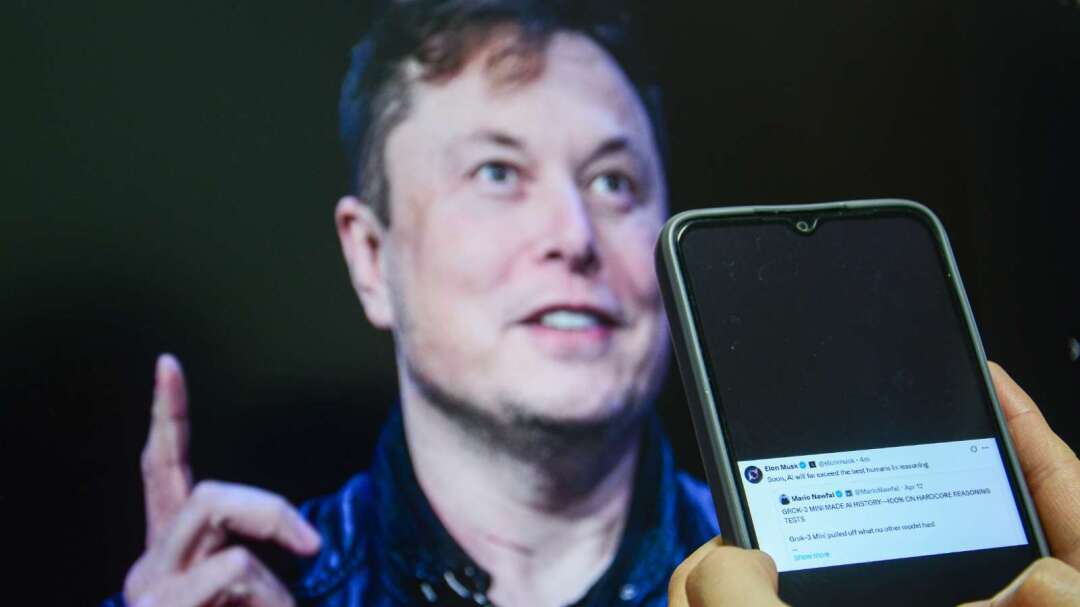
Elon Musk, CEO of Tesla, recently stated in an interview with Zanny Minton Beddos, editor-in-chief of The Economist, at the Texas Gigafactory, that artificial general intelligence (AGI) will likely surpass the combined intellectual capacity of all humanity within approximately five years, becoming capable of "almost anything except being human itself." He added that China has an extremely high probability of emerging as the ultimate leader in the AI domain.
Musk further predicted that by 2036, AI and robotics will enable a near-infinite supply of goods and services, rendering traditional currency "no longer important." Work will transform into personal hobbies akin to "growing vegetables in one's backyard," ushering humanity into a universal high-income era. He also forecast that within three years, robotic surgeons will exceed the skill level of top human physicians.
On U.S.-China competition, Musk criticized U.S. export controls on chips and AI models to China as "completely ineffective." He cited China’s complete manufacturing supply chain, electricity generation exceeding the combined output of the U.S., Europe, and India, rising computational efficiency, and rapid progress in lithography technology as key factors positioning China to lead globally in AI.
Musk identified power, cooling, and chips as the main bottlenecks in AI development. If space-based data centers solve power constraints, chip supply will become the next critical factor.
In response to Musk’s claim that "money won’t matter by 2036," 2024 Nobel laureate in economics, Daron Acemoglu, challenged him on X: "If money will be obsolete, why not pledge to donate your nearly $1 trillion net worth that year?"
Musk replied, "I actually do plan to do something similar," marking a notable shift from his past criticism of traditional philanthropy and sparking widespread public debate.
FACT BOX
- Source: PR Times
- Category: News
- Organizations: Tesla