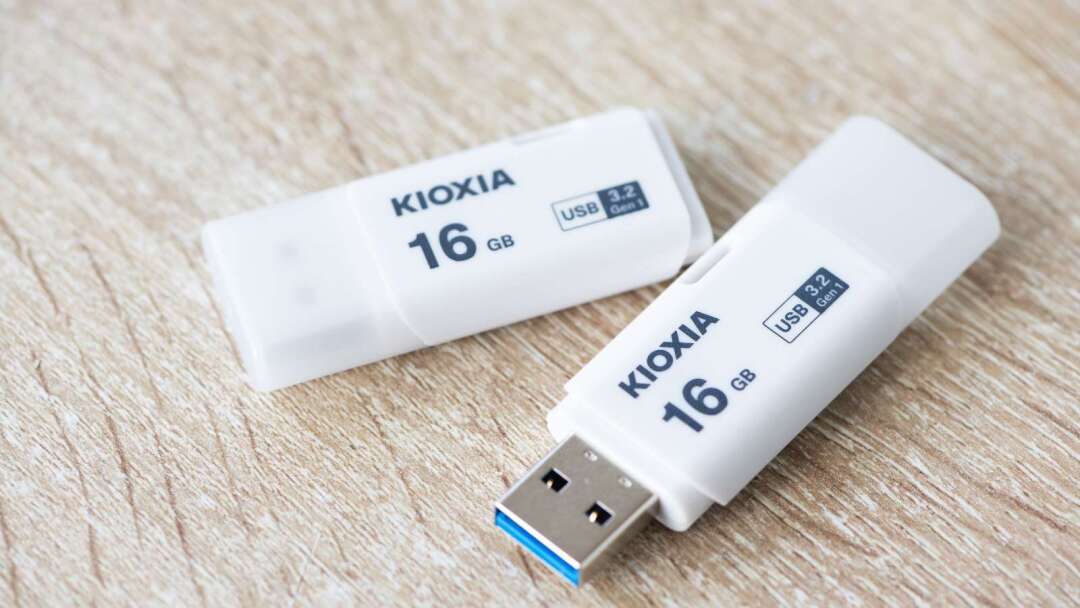
Japanese semiconductor giant Kioxia announced its financial results for the first quarter of fiscal 2026 (April to June) on Friday, June 31. Fueled by robust global demand for memory components in AI data centers, the company's quarterly net profit surged over 45 times compared to the same period last year, highlighting how the artificial intelligence wave is driving a recovery in the flash memory market.
Financial Performance: Profitability Reaches Historic Highs
According to financial data, Kioxia's net profit for the quarter jumped from 18.3 billion yen the previous year to 842.2 billion yen. Quarterly revenue reached 1.77 trillion yen, representing a year-on-year growth of approximately 4 to 5 times. On profitability metrics, operating profit reached 1.27 trillion yen (1.33 trillion yen on a Non-GAAP basis), a year-on-year increase of about 2,700%.
Kioxia attributed the performance growth primarily to rising NAND flash memory prices and increased shipment volumes. Notably, in the enterprise solid-state drive (Enterprise SSD) segment, sustained demand from AI servers drove quarterly revenue for this product to a record high. Despite the impressive profit figures, revenue slightly missed some market analysts' expectations of 1.84 trillion yen.
Market Drivers and Product Technology Advancements
The global investment boom in AI infrastructure by major tech companies has pushed memory component prices higher. Kioxia's core product, NAND flash memory, has become a sought-after commodity as AI agents require vast storage capacity.
The company observed that the global NAND market is currently in a state of supply-demand tightness. On one hand, demand for high-capacity drives from AI training is growing; on the other, major memory manufacturers have strictly controlled capital expenditures over the past two years, limiting the release of new production capacity.
In technology development, Kioxia has begun delivering sample chips of its ninth- and tenth-generation BiCS FLASH flash memory, expected to be used in smartphones, personal computers, and servers. The company stated that the read speed of its new server SSDs is more than eight times faster than earlier versions, indicating its technological positioning in the AI domain.
Outlook and Strategic Initiatives
For the second quarter (July to September) outlook, Kioxia forecasts revenue will further increase to 2.39 trillion yen, with operating profit expected to reach between 1.89 trillion and 1.9 trillion yen. Although this profit guidance is slightly below the 1.95 trillion yen expected by Bloomberg-surveyed analysts, the company anticipates continued increases in NAND average selling prices to support performance.
To enhance shareholder value and capital efficiency, Kioxia announced a series of strategic initiatives, including:
Stock Split: A 1-for-3 stock split will be executed on October 1, 2026.
Share Buyback: Plans to repurchase up to 800 billion yen worth of treasury shares between August and October.
Listing Plan: The company is considering a listing in the United States.
Market Sentiment and Shareholder Structure Changes
Yuji Sugimoto, Japan representative of major shareholder Bain Capital, expressed optimism about the company's prospects, stating, 'While the business is cyclical in the short term, in the medium to long term, Kioxia's corporate value will grow faster than GDP growth.'
Currently, Toshiba has replaced Bain Capital as the largest shareholder, holding approximately 15%. Meanwhile, South Korean chip giant SK Hynix indirectly holds about 14% of shares through a special purpose company, and its competitive and cooperative relationship is closely watched by the market.
Investment institutions such as Nomura Securities maintain a 'Buy' rating on Kioxia, arguing that AI-driven enterprise storage demand remains in a rapid growth phase and that the momentum behind NAND price increases may exceed market expectations.
FACT BOX
- Source: PR Times
- Category: 財務報告