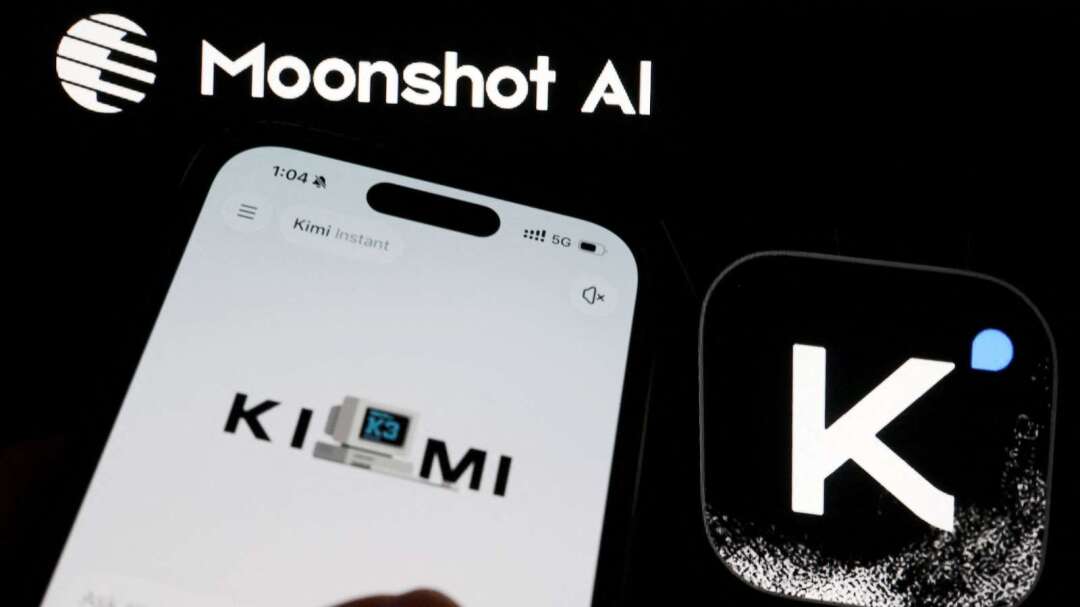
Chinese AI startup Moonshot AI has signed a computing power cooperation agreement with Alibaba Group (BABA-US)(09988-HK), enabling it to use approximately 20,000 Nvidia (NVDA-US) chips. A significant portion of this computing power is being used to develop the Kimi series of models, underscoring how China's AI industry remains heavily dependent on advanced Western semiconductors, even as the U.S. continues to tighten export controls.
On Friday (31st), foreign media citing informed sources reported that this hardware constitutes a major part of Moonshot AI's overall computing capacity. Earlier this month, Moonshot AI launched its open-source AI model Kimi K3, whose performance metrics in some areas have approached those of leading U.S. players such as OpenAI and Anthropic, drawing intense attention from Washington, Wall Street, and Silicon Valley. Markets are concerned that Chinese AI companies are rapidly closing the gap with top American research labs.
Moonshot AI, Alibaba, and Nvidia have all declined to comment on the collaboration.
Alibaba is one of Moonshot AI's largest investors and expects its portfolio companies to use its cloud services. However, the two are also competitors in the AI market. Now, Moonshot AI is leveraging Alibaba's infrastructure to develop Kimi, yet outperforming Alibaba's own Qwen (Tongyi Qianwen) model on several key performance metrics.
According to insiders, the two AI teams have access to similar training resources, making Kimi K3's superior performance a source of disappointment among some Alibaba insiders. This creates a delicate situation: Alibaba is simultaneously nurturing Chinese AI startups through investment and cloud services, while potentially cultivating a competitor that threatens its own products.
Kimi K3's breakthrough recalls the shock brought by DeepSeek last year and has reignited discussions about the return on investment in Western AI infrastructure. U.S. tech companies are investing hundreds of billions of dollars to build data centers packed with high-end AI accelerators. Meanwhile, Chinese firms, despite restrictions on acquiring advanced chips, are still developing products that approach the performance of top U.S. models, leading investors to question whether massive hardware spending necessarily translates into technological leadership.
White House tech policy chief Michael Kratsios last week accused Moonshot AI of illegally obtaining Nvidia's most advanced Blackwell chips, though he did not specify how many processors the U.S. government believes the company possesses. Trump had explicitly stated he did not want China to obtain Blackwell-series AI accelerators; U.S. officials also believe DeepSeek holds such chips.
However, current U.S. rules often allow Chinese companies to use the same chips through computing power leasing agreements. Kratsios claimed Moonshot AI obtained Blackwell computing power via an unnamed partner in Thailand and may have used it to train Kimi K3. He also accused Moonshot AI of using 'distillation' techniques, training K3 on outputs generated by Anthropic's Fable model to compensate for insufficient computing resources, though he provided no concrete evidence.
Sources familiar with Moonshot AI's procurement strategy confirmed the company does have channels to obtain Blackwell processors via Southeast Asia, but did not clarify whether this is through legal compute leasing or direct purchases that violate U.S. regulations. The Information reported this week that Moonshot AI is seeking more Blackwell chips to train its next-generation model.
As for the approximately 20,000 chips provided by Alibaba, insiders say they come from Nvidia's previous-generation Hopper architecture. Multiple sources close to Moonshot AI indicated the agreement involves the H200 chip, the most powerful in the Hopper series, but an Alibaba spokesperson denied providing H200-powered computing to Moonshot AI, while not denying the existence of a computing cooperation involving around 20,000 Nvidia chips, nor disclosing the actual chip models involved.
The U.S. has approved some direct sales of H200 to China, but senior U.S. officials have recently stated that actual shipments are negligible. Beijing has also been cautious about approving domestic companies' purchases of H200 and has pressured firms to switch to Chinese-made chips such as those from Huawei. Chinese cloud providers have previously used overseas subsidiaries to access restricted foreign-owned chips and then re-leased the computing power to Chinese customers. It remains unclear where exactly the computing power Alibaba is providing to Moonshot AI is located.
FACT BOX
- Source: PR Times
- Category: Partnership
- Organizations: NVIDIA / OpenAI / Anthropic
- Products / services: Kimi K3