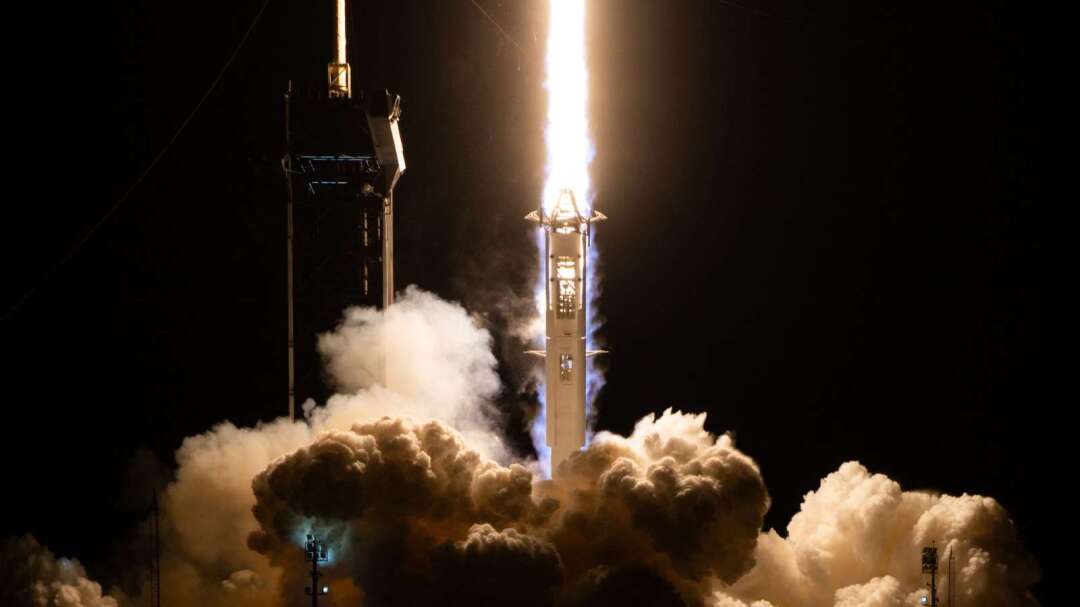
SpaceX (SPCX-US) will release its first post-IPO quarterly earnings on August 4, amid heightened market scrutiny as its stock price has sharply declined from its all-time high and a large-scale lock-up expiration approaches. Morgan Stanley warns this earnings report could be the 'most dangerous moment' SpaceX has faced since going public, emphasizing that market sentiment may hinge less on financial figures and more on management's commentary regarding AI, Starlink, and Starship.
SpaceX went public on June 12 at $135 per share, with its stock briefly surging to $225, pushing its market capitalization above $3 trillion—surpassing both Amazon (AMZN-US) and Microsoft (MSFT-US). However, after a market-wide reevaluation of valuations and AI-related themes, the stock has retreated to around $112, roughly 50% below its peak, making this first earnings report especially critical.
Another major market focus is the upcoming lock-up expiration on August 6, when approximately 911.5 million shares—worth around $100 billion at current prices—will become eligible for sale. This could unleash significant selling pressure and amplify stock volatility around the earnings release.
Morgan Stanley forecasts SpaceX's Q2 revenue at approximately $6.75 billion and an adjusted EPS loss of $0.35. The firm also expects Starlink's global consumer subscriber base to reach 12 million, with an average revenue per user (ARPU) of about $65.50.
However, Morgan Stanley stresses that investors are more interested in management's forward-looking statements than short-term financials. The earnings call is expected to mirror Tesla's (TSLA-US) style—light on specific financial guidance but heavy on strategic vision, particularly regarding Starship's development timeline, the pace of AI compute deployment, and the integration roadmap for Grok and Cursor AI models.
Investors are keen to learn about Starlink's progress in expanding enterprise customers, whether SpaceX will outline a plan to exceed 2GW of AI computing capacity by 2027, and the latest developments in the joint AI model development with Cursor.
Although the Cursor acquisition is expected to close later this quarter, it won't be reflected in Q2 financials. Still, investors anticipate clarity on SpaceX's broader AI strategy.
Despite the recent stock correction, Morgan Stanley maintains its $300 price target, asserting that the market continues to undervalue SpaceX's AI business. The firm estimates that within SpaceX's valuation, space operations contribute $8 per share, network and Starlink operations $128, the X platform and Grok AI $12, and enterprise AI operations a substantial $152—accounting for over half of the total valuation. This underscores AI as the primary future growth driver.
Another potential catalyst is the planned Starship Flight 14 mission, expected between late August and early September. A successful upper stage recovery would mark a major breakthrough in fully reusable rocket technology, reinforcing confidence in SpaceX's long-term business model.
In the short term, however, market sentiment remains cautious. Morgan Stanley notes that over two-thirds of investors in recent conferences expressed bearish views on SpaceX's stock performance through year-end, citing a lack of strong earnings catalysts and the looming supply overhang from unlocked shares.
Many early investors facing lock-up expiration have already achieved tens of times return on investment, creating strong incentives for profit-taking. As a result, with earnings and lock-up expiration converging, SpaceX's near-term stock volatility is expected to rise significantly. The market will closely watch whether management can re-energize investor confidence in the company's long-term growth through a compelling vision for AI, Starlink, and Starship.
FACT BOX
- Source: PR Times
- Category: News
- Organizations: Amazon (AMZN-US) / Microsoft (MSFT-US) / Tesla (TSLA-US)
- Products / services: Starlink / Starship