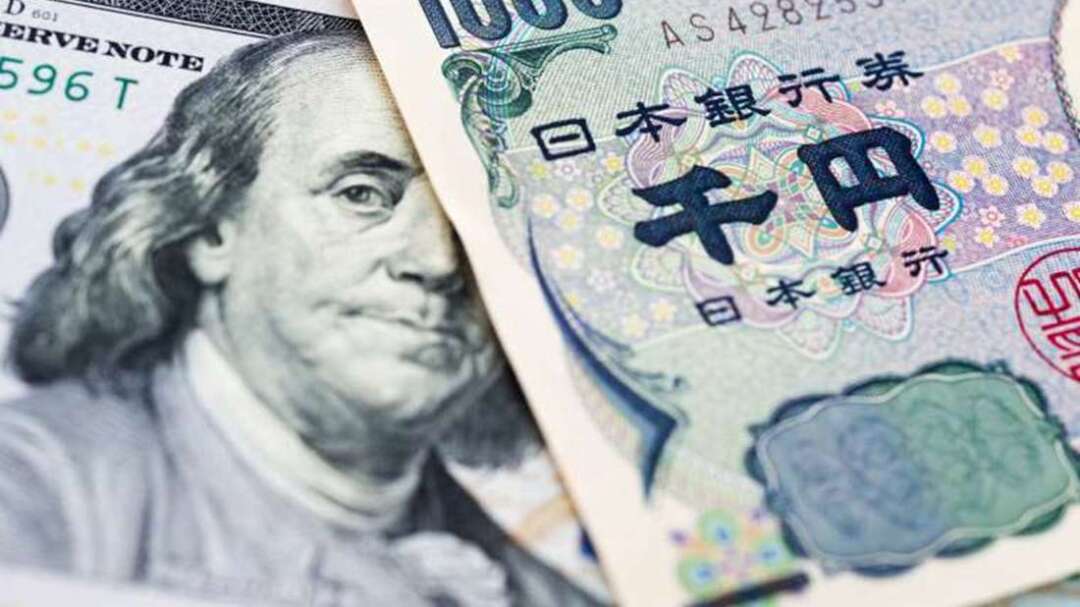
Japan's latest round of efforts to stabilize the yen is having significant and potentially concerning impacts on the US Treasury market.
The yen surged 3.3% against the US dollar on Thursday (30th), leading foreign media to speculate that the Japanese government intervened in the currency market to prop up the yen. Based on account data and forecasts from currency market brokers, the scale of Japan's intervention could approach $53 billion. While the Japanese government has not confirmed whether it entered the market, an informed source revealed that Japan did indeed take action to support the yen, which had fallen to its weakest level against the dollar in over 40 years. US authorities also conducted exchange rate inquiries around 2:30 AM Tokyo time.
The yen strengthened again on Friday, and the Bank of Japan (BOJ) kept interest rates unchanged as expected, but hinted at the possibility of further rate hikes to curb inflation and energy costs.
Amid the yen's sharp rise, US Treasury yields spiked. The yield on the US 10-year Treasury rose more than 9 basis points on Friday to 4.735%, marking its highest level since 2023.
Robin Brooks, senior fellow at the Brookings Institution, stated, "To obtain US dollars, Japan must sell US Treasuries and use the proceeds to sell dollars and buy yen, thereby preventing further yen depreciation."
He added, "With global bond markets already under immense pressure, Japan's debt issues are spilling over into global markets by pushing up US Treasury yields."
He noted that for years, the BOJ has suppressed interest rates and stimulated the economy by purchasing large amounts of government bonds—this very policy, however, has weakened the yen. This has forced Japan to repeatedly intervene in the foreign exchange market, spending over $125 billion cumulatively, yet with limited effectiveness in supporting the yen. Brooks bluntly called this "a textbook case of government failure."
The US Treasury market itself is also under pressure, as Federal Reserve (Fed) Chair Kevin Warsh refuses to disclose the next policy move, leaving bond traders to guess the direction.
After the Fed announced its rate decision on Wednesday, the yield on the US 2-year Treasury declined while longer-term yields rose, widening the yield spread to its largest since the mid-1990s.
The yield on the US 30-year Treasury climbed further on Friday to 5.265%, hitting its highest level since the onset of the 2007 financial crisis.
According to the Nikkei newspaper, Japan's intervention also included conducting so-called 'rate checks' through the New York Federal Reserve Bank—a form of 'soft intervention' where dealers are asked to quote exchange rates to test market liquidity.
Jonas Goltermann, chief market economist at Capital Economics, called this "a completely new and quite significant development." He said, "Following Warsh's confusing press conference, the dollar suddenly weakened, and combined with Japan's intervention, this makes the nature of this intervention different from the brief one in late April."
Goltermann suggested that if market confidence in US policy credibility is questioned again, the effects of this intervention could last longer than the previous one.
For the US Treasury market, this is a noteworthy outcome, as Japan remains the largest foreign holder of US Treasuries, with holdings exceeding $1.4 trillion. If Japan continues intervening to defend the yen and selling Treasuries to raise funds, it could further push up US Treasury yields, potentially bringing the 10-year yield close to 5% by year-end.
Market focus has therefore returned to the outlook for BOJ interest rate policy. Charalampos Pissouros, senior market analyst at Trading Point XM, said that if Prime Minister Fumio Kishida appoints a more dovish new BOJ board member in the future, the BOJ's rate hikes could be delayed, and policy projections might be downgraded.
He argued that with markets already facing widening debt and fiscal deficits, rising inflation, and uncertainty over Fed policy, the new variable introduced by Japan comes just before a series of upcoming rate decisions, economic data releases, and fiscal forecasts in the autumn—making matters worse for bond markets.
FACT BOX
- Source: PR Times
- Category: News
- Organizations: Trading Point XM