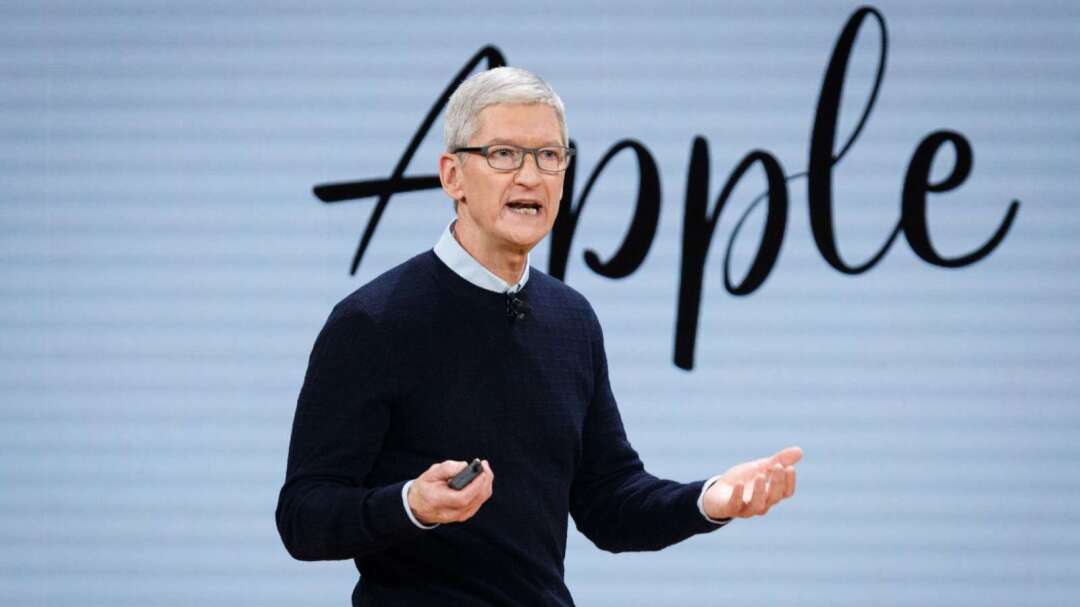
According to Benzinga, Apple (AAPL-US) reported strong highlights in its June quarter earnings, including record iPhone sales and progress on Apple Intelligence. However, one of the most notable remarks came during the earnings call Q&A, when CEO Tim Cook described the surge in memory prices as a 'century flood' and suggested the DRAM industry needs more suppliers.
This commentary also rarely reveals how AI demand is reshaping one of the most concentrated markets in the semiconductor industry.
When asked about product pricing, Cook said Apple had little choice but to pass on some of the increased costs to consumers.
'We've reluctantly raised prices,' he said. 'The reason is, I believe memory prices are currently experiencing a “century flood,” with memory prices rising exponentially.'
Cook added that Apple expects memory costs to climb further, stating, 'We expect to pay higher memory costs.'
He noted that while rising DRAM prices are being partially offset by declining prices for some non-memory components and inventory purchased at lower prices earlier, these factors are not enough to fully compensate.
Memory Costs Are the Biggest Pressure on Gross Margin
Apple CFO Kevan Parekh further emphasized that memory costs have become a significant factor affecting the company's profitability.
He said that without the impact of rising memory prices, Apple's gross margin would have been notably higher.
Parekh pointed out that the increase in memory costs accounted for the entire decline in adjusted gross margin from the March quarter to the June quarter, and he expects it to remain the biggest cost pressure for the company in the September quarter.
Cook: It Would Be Better If There Were More DRAM Suppliers
One of the most striking moments of the earnings call was when Cook was asked about Apple's supply chain strategy. Rather than discussing negotiations with existing suppliers, he directly addressed the market structure of the DRAM industry itself.
'There are currently only three main suppliers in the DRAM market,' Cook said. 'It would certainly be beneficial if there were more suppliers, which would help us on the supply side, even on pricing... We are evaluating all possible options.'
The market views this statement as highly significant, as Apple rarely publicly comments on supplier concentration issues.
Currently, the global DRAM market is dominated by three companies: Samsung Electronics, SK Hynix (SKHY-US), and Micron (MU-US).
With rapidly growing demand for AI servers and high-bandwidth memory (HBM), overall DRAM supply remains tight, giving memory manufacturers stronger pricing power compared to past economic cycles.
Cook did not disclose whether Apple plans to add new DRAM suppliers, but his remarks indicate that the company would welcome additional capacity entering the market.
Memory Is Becoming the Next Bottleneck in the AI Industry
Apple's comments also reflect a major shift occurring in the semiconductor industry.
In the past, market focus centered on AI chips from companies like NVIDIA (NVDA-US), but now memory has become an indispensable key resource for running large AI models.
As AI model sizes continue to expand, memory supply is becoming increasingly strained, and prices are rapidly climbing across the industry.
Cook's remarks show that soaring memory costs are no longer just a tailwind for memory makers—they are beginning to affect product pricing strategies and profitability for major chip buyers like Apple.
For investors, this once again highlights that DRAM suppliers remain in a highly favorable market position as demand continues to outstrip supply.
FACT BOX
- Source: PR Times
- Category: News
- Organizations: NVIDIA
- Products / services: iPhone / Apple Intelligence