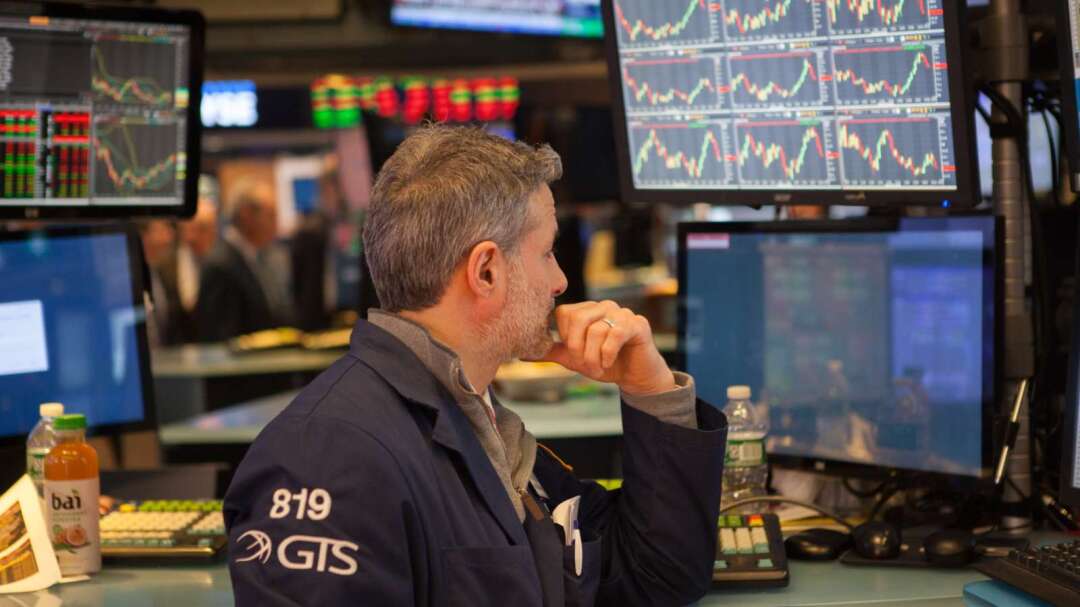
In the final two trading days of July, Wall Street staged a dramatic comeback. High-momentum stocks, which had been under prolonged pressure, posted a rare two-day rally. South Korea's KOSPI index, heavily weighted with semiconductor giants, surged over 18% in a single day, while the U.S. semiconductor sector recorded its strongest two-day gain since June. Yet, whether this seemingly encouraging rebound is merely a technical bounce after overselling or a sign that the market has truly found its bottom remains hotly debated on Wall Street.
Extending the timeline, the Nasdaq Composite Index fell about 3% in July, marking its worst monthly performance since March and the second consecutive month of losses.
Goldman Sachs' high-beta momentum stock basket posted its worst single-month decline since November 2000.
The trigger for this turmoil was a leveraged incident at a single institution. Situational Awareness, a hedge fund led by Leopold Aschenbrenner, reportedly suffered major losses on leveraged bets in AI-related assets, triggering margin calls and forcing the fund to liquidate its public market stock positions during the market downturn, which in turn exacerbated the overall decline.
This spiral of selling pressure was only temporarily halted when Citadel, one of the world's largest hedge funds, stepped in to acquire the vast majority of Situational Awareness's stock portfolio.
However, multiple market participants believe the Situational Awareness blow-up was merely the tip of the iceberg, revealing deeper and more systemic deleveraging pressures beyond a single fund's risk exposure.
From a data perspective, the scale of this deleveraging is indeed staggering. Global tech stocks have faced their most intense wave of selling in over five years:
As of July 30, the assets under management (AUM) of leveraged and inverse ETFs listed in the U.S. had dropped to just under $150 billion, down nearly $60 billion from their June peak;
South Korea's leveraged equity ETFs saw their AUM plummet from a June peak of $53 billion to around $15 billion.
Several quantitative factors recorded their most volatile single-day swings in four years.
Adding to the woes, just as the AI sector weakened amid investor skepticism over capital expenditure returns, a seemingly routine Federal Reserve (Fed) rate meeting unexpectedly raised concerns about incoming Chair Kevin Warsh's commitment to fighting inflation, pushing long-term U.S. Treasury yields higher.
The slope of the yield curve from five to thirty years widened more in a single week than at any time since August 2025.
Yin Luo, a quantitative analyst at Wolfe Research, noted that the rise in long-end yields reflects less economic strength and more inflation expectations and a higher term premium demanded by investors for holding long-dated Treasuries.
'Most Brutal in Four Years,' Then 'Strongest Single-Day' Rebound for Momentum
From a quantitative factor perspective, the intensity of this market volatility is particularly striking. The so-called 'momentum strategy'—betting on recently strong-performing stocks—first endured its most severe four-day rout since 2020, only to record its strongest single-day rebound in the same period immediately afterward.
The data contrast is equally dramatic: this week, the S&P 500's average daily volatility was under 1%, while Goldman Sachs' flagship momentum index saw average daily swings approaching 10%.
Some analysts warn that until such extreme volatility signals subside, it may be premature to expect a broad-based market recovery.
Looking at July as a whole, Goldman Sachs' high-beta momentum basket delivered its worst monthly performance since November 2000. Previously favored long positions in the basket broadly collapsed, while software stocks, which had been heavily shorted, rose逆势.
Meanwhile, long-underperforming value, quality, and low-volatility factors rebounded clearly, preliminarily reversing the market style hierarchy that had prevailed during the AI-driven rally.
The S&P 500 Equal Weight Index, Low Volatility Index, and the S&P 500 index excluding AI-related components all hit new all-time highs this week.
Wai Lee, head of systematic equity research at Allspring Global Investments, believes the recent weakness in momentum appears more like a style rotation than a full-blown market crash or correction, with the market now rewarding companies with better returns on investment and stronger free cash flow.
Has the Market Truly Bottomed? Analysts Are Divided
Analysts note that the weekend rebound has indeed bought the market some breathing room.
Semiconductor stocks posted their best two-day gain since June, South Korea's KOSPI index briefly surged 18.5%, the S&P 500 reclaimed its 50-day moving average, and the VIX index, a gauge of market fear, fell from above 20 earlier in the week to 15.99.
However, Michael Dickson, research director at Horizon Investments, posed a more cautious question: 'Has this momentum rotation truly bottomed out?'
Lewis Grant, senior portfolio manager at Federated Hermes, believes that after the sharp pullback in momentum stocks and the valuation correction in AI leaders, 'the most intense phase of rotation is likely behind us.'
Mike Shell, CIO at Shell Capital, also pointed out that data from their broker suggests the momentum unwinding is nearing its end, and the risk-reward profile is becoming more attractive. However, he emphasized this does not mean the market has confirmed an exact bottom.
In contrast, JPMorgan's quant team remains notably conservative. Led by Khuram Chaudhry, the strategist team stated in a Friday report that with market sentiment continuing to deteriorate and money supply growth potentially peaking, this style rotation has further to go. 'This month feels different from previous ones,' they advised investors to overweight quality factor stocks.
Paisley Nardini, head of asset management at Simplify, offered a broader warning: the lesson from July is that the passive 'buy the index' strategy may no longer be sufficient in the current environment, and the value of active stock-picking is re-emerging.
Seasonal factors add further uncertainty. Historically, August and September are the weakest months of the year, and the market now wonders whether the usual late-summer volatility has already started early this year.
Pasquariello, a strategist at Goldman Sachs, offered a relatively optimistic overall assessment in his latest weekly report. He believes the current economic fundamentals are solid, corporate earnings growth is strong, capital flows continue to improve, and over $1 trillion in AI capital expenditure continues to pour into the market, so the overall outlook for U.S. equities remains positive, and the fundamental foundation remains intact.
However, he did not shy away from warning of tail risks, particularly urging close attention to the direction of long-term yields in global bond markets. 'This is especially important for stocks with longer durations,' he said.
He expects the S&P 500 to continue a pattern of 'volatile upward movement,' but with an increased frequency of sharp swings. Combined with thin summer market liquidity, this could make capital reallocation and risk transfer more difficult.
Based on this, he advises investors to adopt a strategy of 'increasing liquidity and reducing position complexity' over the coming weeks.
FACT BOX
- Source: PR Times
- Category: News
- Organizations: Citadel / Situational Awareness / Allspring Global Investments