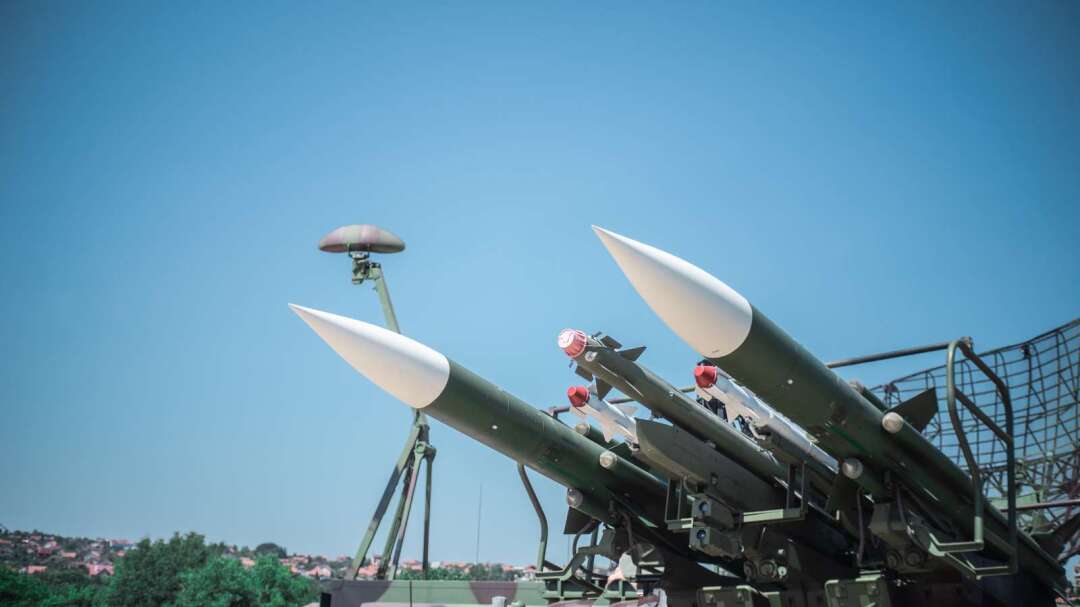
Despite ongoing Middle East hostilities and escalating global geopolitical risks, defense stocks should logically be entering a bullish phase, especially given strong financial results. However, U.S. defense-related equities have recently shown widespread weakness, moving counter to their fundamental trends. Analysts argue that after this correction, valuations for some large defense contractors have become attractive, with L3 Harris Technologies (LHX-US) drawing particular favor on Wall Street.
According to Barron’s, L3 Harris shares plunged nearly 9% the day after reporting its second-quarter earnings on Wednesday (29th). At first glance, this might suggest a disappointing performance, but the reality is quite the opposite.
Excluding one-time items, L3 Harris’ earnings per share (EPS) rose 28% year-over-year, surpassing Wall Street expectations. The company also raised its full-year financial outlook.
The only negative news was the company’s announcement to delay the initial public offering (IPO) of its missile-related business, citing 'market conditions.'
Analysts suggest that 'market conditions' likely refers to the significant decline in valuation multiples for defense technology stocks. L3 Harris currently trades at about 20 times forward 12-month estimated EPS, down from around 30 times during the peak of the Iran conflict.
The impact of the Iran conflict on defense stocks has been paradoxical. Despite strong demand for missiles and drones and robust business growth, related stock prices have moved downward.
This appears to stem from market concerns that once this unpopular war ends, momentum for defense spending growth could slow.
Yet, there are no signs of spending slowdown. In fact, spending on drones and missiles continues to rise, making valuations for large defense contractors especially noteworthy.
According to FactSet, the average analyst target price for L3 Harris is around $366, up significantly from $302 a year ago. With the current share price at approximately $277.06, this implies about 32% potential upside.
This makes L3 Harris the largest gap between current price and analyst target among major U.S. defense contractors, including Northrop Grumman (NOC-US), Lockheed Martin (LMT-US), General Dynamics (GD-US), and Huntington Ingalls Industries (HII-US).
Over the past year, average analyst target prices for these defense stocks have risen 23%, while share prices have only increased by an average of 13%. L3 Harris and Northrop Grumman have both declined over the past 12 months.
As a result, the average potential upside implied by analyst targets has expanded from about 7% a year ago to roughly 17% today.
Moreover, L3 Harris is the most favored defense stock among analysts, with 71% assigning a 'Buy' rating. In comparison, the average 'Buy' rating for S&P 500 components is about 55% to 60%, and for other large defense contractors, it’s around 56%.
While analyst views may evolve and target prices are just one indicator, Wall Street currently sees L3 Harris as the most favored pick in this defense stock correction—though investors have yet to fully embrace it.
Additionally, Kratos Defense & Security Solutions (KTOS-US), a smaller company focused on autonomous systems and drone technology, is also worth watching.
Its average analyst target price has been raised from about $57 a year ago to $106, yet its stock has fallen 21% over the past year and remains about 57% below the average target. This suggests a potential upside of up to 130% if the target is reached.
Before the Iran conflict, Kratos’ P/E ratio exceeded 160x; it has now dropped below 50x, highlighting the extreme volatility in defense sector valuations recently.
FACT BOX
- Source: PR Times
- Category: News
- Organizations: L3 Harris Technologies / Northrop Grumman / Lockheed Martin