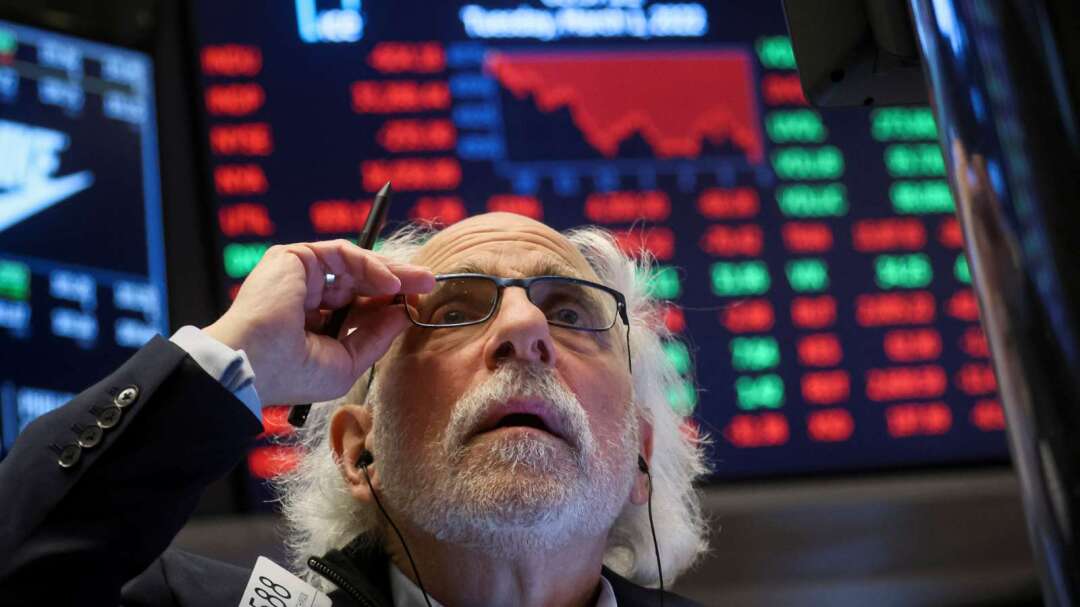
US stocks dramatically concluded a six-week period of turbulence last Friday (31st). Recently battered momentum stocks surged strongly for two consecutive trading sessions, temporarily halting the downturn and prompting the market to debate whether this correction has reached its bottom.
According to MarketWatch, the rebound was triggered by market rumors that an aggressively managed, highly leveraged hedge fund focused on artificial intelligence (AI) themes had liquidated its stock positions.
Upon this news, semiconductor stocks surged. Dow Jones market data shows this was the strongest two-day gain for chip stocks since June.
However, despite the last-minute counterattack, chip stocks and other popular momentum names ended July with heavy losses. Analysts point out this reveals a significant individual stock sell-off hidden beneath the surface calm of the indices.
The Nasdaq Composite Index fell about 3% in July, marking its worst monthly performance since March and the second consecutive month of decline. The S&P 500 Index also closed lower for two consecutive months, though the drop was relatively mild and remains not far from its record high set in early June.
Bloomberg data shows the Goldman Sachs High Beta Momentum basket, which tracks high-volatility momentum stocks, recorded its worst monthly performance since November 2000. Within this basket, many previously long positions were severely hit, while short positions—including several heavily battered software stocks—rose逆势.
Michael Dickson, Research Director at Horizon Investments, noted that forced liquidation pressure appears to have ended after the collapse of Situational Awareness, an AI-focused hedge fund managed by Leopold Aschenbrenner. However, he said it remains to be seen whether chip stocks can now sustain a continuous rebound.
He said: 'The real question is, have we reached the bottom of this momentum stock rotation?'
Fundamentals sidelined as capital shifts wildly
The unraveling of this AI trade can be traced back to June. Previously, memory-related stocks including Micron Technology (MU-US) had surged in April and May, and concerns about overheating gradually emerged.
The market had hoped the Q2 earnings season would inject new momentum into the AI theme, but the results were deeply disappointing. Even though cloud giants like Alphabet (GOOGL-US), Google's parent company, confirmed they would continue investing hundreds of billions of dollars in AI infrastructure, semiconductor, power, and industrial stocks—sectors benefiting from AI construction bottlenecks—remained weak.
As fundamental factors like corporate earnings and capital expenditure plans were increasingly ignored by the market, capital began shifting en masse—exiting chip stocks and flowing into relatively out-of-favor sectors like software, finance, and real estate.
At the same time, rising oil prices drove strong gains in energy stocks in July. Apple (AAPL-US) was another notable stock—its share price surged in July but gave back most of its gains on the final trading day of the month due to disappointing earnings.
HSBC strategist Max Kettner bluntly stated in a report: 'For the past six weeks, fundamental factors have been completely thrown out the window.' However, he also noted that technical indicators for the stock market are improving, suggesting the recent rebound in chip stocks and overall momentum factors could continue this week.
The S&P 500 Index closed back above its 50-day moving average last Friday. The index had briefly dipped below this key support level earlier.
Meanwhile, the market's fear gauge, the VIX, also cooled rapidly—rising above 20 earlier in the week but falling to 15.99 by Friday. A VIX level of 20 is above the long-term average, indicating the July momentum stock sell-off finally began to impact volatility at the broader index level.
During this period, the divergence between market winners and losers widened to historically rare levels, with performance dispersion among S&P 500 components reaching record-high ranges.
However, whether the market can return to a broad-based rally next month remains unknown.
Some strategists see turning signals
Mark Hackett, Chief Market Strategist at Nationwide, believes the market has shown signs of bottoming. For example, the average daily volatility of the Goldman Sachs High Beta Momentum basket spiked to its highest level since 2020 in July.
Hackett pointed out that this volatility indicator had similarly spiked at several key turning points in the past, including the pandemic sell-off, the peak of the dot-com bubble, and when markets bottomed after the 2008 financial crisis.
Mike Shell, Chief Investment Officer at Shell Capital, said that based on data from major brokers he works with, the de-leveraging pressure on momentum stocks may be nearing its end rather than just beginning.
He emphasized this doesn't mean prices have definitely bottomed, but the risk-reward balance is indeed starting to shift in a more favorable direction.
Shell said: 'The real question now is whether this de-leveraging exposed fundamental problems or was simply cleaning out an overcrowded trade position.'
He added: 'If AI demand, corporate earnings, and capital spending remain solid, I would view this pullback as an opportunity to buy the strongest AI companies at lower prices.'
Nonetheless, investors should not be complacent about stock market performance over the next one to two months. Ryan Detrick, Chief Market Strategist at Carson Group, reminded on social platform X that August and September are traditionally the weakest two months of the year.
Therefore, the next question for the market is whether the usual summer-end volatility has already played out early in July?
FACT BOX
- Source: PR Times
- Category: News
- Organizations: Alphabet / Apple / Micron Technology