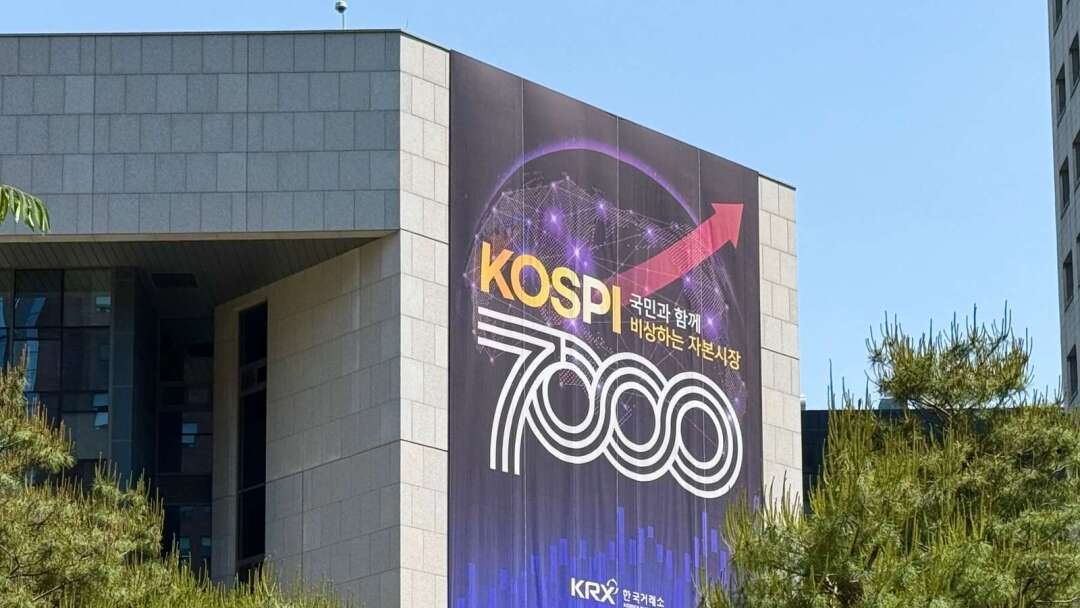
Over the past 40 days, South Korea's stock market has staged an extreme drama. From June 23 to July 30, the Korea Composite Stock Price Index (KOSPI) fell nearly 40%, wiping out over 2800 trillion KRW in market value—an amount exceeding South Korea's projected 2025 annual GDP. Some 2x leveraged products on individual stocks plunged more than 80% from their peaks.
A dramatic turnaround occurred last Friday (July 31), when KOSPI rebounded nearly 18% in a single day. Samsung Electronics surged 26.81%, and SK Hynix briefly hit the 30% daily limit. Some 2x bull leveraged ETFs soared over 60% in one day, marking the largest single-day gain in history. Yet this rally only heightened market anxiety: Is this a dead-cat bounce at the tail end of deleveraging, or a prelude to fundamentals taking over pricing?
The seeds were sown in May, when South Korea launched 2x leveraged ETFs tracking the daily performance of Samsung Electronics and SK Hynix. While these products attracted inflows during rallies due to their profit amplification, they triggered mechanical deleveraging during downturns to maintain fixed leverage ratios. Combined with margin call liquidations, this pushed the market into a negative feedback loop.
According to data from the Korea Financial Investment Association, from early May to July 29, forced selling by brokers on unsettled balances totaled approximately 2.6 trillion KRW.
Goldman Sachs data from Saturday (August 1) showed that as of last Friday, South Korea's leveraged ETF assets had shrunk from a peak of $53 billion to $24 billion. Leveraged positions now account for 1.9% of free-float market cap. However, after recent outflows, retail investors have begun re-entering, and although potential daily rebalancing flows have halved from peak levels, their "impact remains significant."
Huatai Securities stated that Korea's deleveraging is entering the "final mile," but tail risks remain: First, leveraged ETF positions are still high—U.S. leveraged products on Nvidia and Tesla account for about 0.4% of free float, while Korea's exposure is clearly excessive. Second, the reduction in size has been driven more by falling prices than redemptions, and secondary market demand hasn't cooled. Third, the KOSPI 200 Volatility Index (VKOSPI) was at the 99.6th percentile since 2005 as of last Thursday.
Huatai estimates that leveraged ETFs still account for 11.4% of the 30-day average trading volume of Samsung and Hynix—making them a core source of high volatility. The market is likely to remain highly volatile until policy clarity arrives in mid-August.
Following the market turmoil, Seoul regulators shifted from "risk warnings" to "controlling new inflows and digesting existing positions." New single-stock leveraged products are suspended, and advertising is banned. Starting last Friday, retail investors must maintain at least 30 million KRW in cash (up from 10 million) to buy or add to domestic or foreign single-stock leveraged products; stocks, bonds, and regular ETFs no longer count toward this threshold. Individual investment caps, simulation trading, and higher transaction costs for excessive trading are under discussion.
Last Friday's sharp rebound gave the market a breather, but leveraged products down over 80% from their highs need a 400% gain just to break even. Investors are now more concerned about whether the AI and semiconductor narrative has been shaken.
FXTM senior analyst Huang Jun noted this downturn is a combination of "valuation normalization and rapid leveraged trading." If the selling pressure eases, Korean equities could stabilize. He forecasts global AI net profits to reach $637 billion by 2026, benefiting Korea's memory stocks.
Goldman Sachs also reported that South Korea's industrial production rose 6.4% month-on-month in June, beating expectations, with semiconductor output up 4.5%, contributing 40% of total industrial growth alongside automobiles.
Multiple institutional investors believe the recent decline has been primarily "valuation compression." If liquidity stabilizes and it doesn't evolve into "logic destruction" or "earnings downgrades," the market could gradually return to fundamentals. Nomura views the current deleveraging as a "reset" rather than a trend reversal, expecting Korean equities to shift from a "leverage-driven bull" to a "buyback-driven bull." Corporate buybacks in Korea are expected to hit record highs in 2026, with the two major semiconductor firms accounting for 90%, and the KOSPI 10,000 target remains intact.
The past 40 days have revealed a critical truth: when a nation's index is held hostage by two semiconductor stocks and their leveraged derivatives, rallies become liquidity miracles, and sell-offs become liquidity traps. The question is no longer "will it rise another 18%?" but whether, after retail deleveraging, Samsung and Hynix's HBM profits, corporate buybacks, and global AI capital spending can take over the baton of price discovery.
FACT BOX
- Source: PR Times
- Category: News