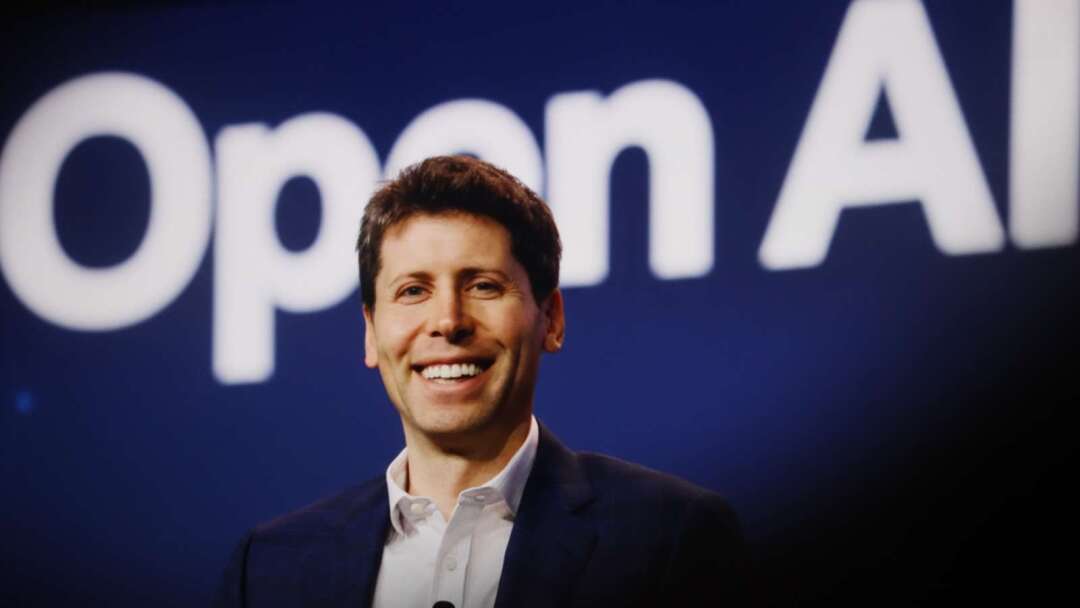
OpenAI is developing a new family of models codenamed 'Astra,' designed to enable multiple artificial intelligence (AI) agents to work together over extended periods to solve highly complex problems. If successfully launched, this technology could become a pivotal milestone in the company's pursuit of Artificial General Intelligence (AGI), and may also be among the first products subject to the new AI regulatory framework under the Trump administration.
According to The Information, citing three sources familiar with the matter, OpenAI CEO Sam Altman personally traveled to Washington, D.C. this week to demonstrate Astra's capabilities to policymakers and regulatory officials.
The presentation emphasized the model's ability to orchestrate multiple intelligent agents to work in parallel over long durations, tackling complex tasks ranging from project management to advanced mathematical proofs.
At the same time, OpenAI released a report announcing that its most advanced AI system has successfully solved ten long-unsolved mathematical problems, spanning cutting-edge fields such as high-dimensional geometry, programming theory, group theory, quantum complexity, and extremal combinatorics.
Each of these problems had remained unresolved in academia for over a decade, yet OpenAI reportedly solved all of them at a computational cost of approximately $2,000.
Lijie Chen, a researcher who joined OpenAI in January, confirmed on social media that the proofs for these ten problems were generated by the flagship model Astra.
According to insiders, Astra will form its own independent model category, standing alongside OpenAI’s existing Sol, Terra, and Luna series.
The company has not yet finalized the release timeline or naming convention for the model. Whether it will be launched as the highly anticipated GPT-6 or merely as a sub-version of the GPT-5 series (e.g., GPT-5.7) remains unknown.
Notably, despite the model already being in testing, its public release may be constrained by the regulatory environment. Sources indicate that Astra is likely to be among the first products required to undergo review under the Trump administration’s new AI framework.
Under this framework, AI companies must submit their models for federal pre-deployment registration. The Trump administration has set this deadline for this weekend.
According to OpenAI’s published details, Astra has achieved ten major breakthroughs in mathematics and theoretical computer science, including: upper bounds on high-dimensional sphere packing density, improved bounds for binary and spherical codes, proof of the existence of non-pure Sophie groups, refutation of the Connes rigidity conjecture, new lower bounds in arithmetic circuit complexity, the quantum parallel repetition theorem, proof of polynomial-factor approximation hardness for the closest vector problem, the Ehrhart volume conjecture, super-exponential lower bounds for multicolor Ramsey numbers, and the extremal number conjecture.
Many of these results directly address classic open problems left by the late mathematician Paul Erdős.
In terms of research methodology, OpenAI explained that the Astra model generated the mathematical arguments, while human researchers used the same model to assist in drafting papers, and then converted the proofs into Lean code for formal verification.
The company emphasized that all ten mathematical proofs were entirely generated by the AI system, with human researchers limited to assisting with manuscript preparation, formal verification, and ensuring the correctness of the final results.
This is not OpenAI’s first achievement in mathematics. In May, during testing of an unreleased model, the company enabled AI to successfully refute the 'unit distance problem,' followed by subsequent academic research published by the broader scientific community.
As AI systems play increasingly critical roles in scientific research, debates over credit attribution have surfaced. In response, OpenAI stated it understands and respects the concerns of scholars who signed the 'Leiden Manifesto on AI and Mathematics,' while also emphasizing that attributing fully AI-generated proofs to humans not only distorts the actual contribution of AI systems but also blurs the boundaries of human intellectual work.
Notably, OpenAI has recently launched a ChatGPT initiative for academia, offering free access to its most powerful models for 100,000 scientists and mathematicians, and continues to use open mathematical challenges as testing benchmarks during model development.
FACT BOX
- Source: PR Times
- Category: New Product
- Organizations: OpenAI
- Products / services: Astra / ChatGPT