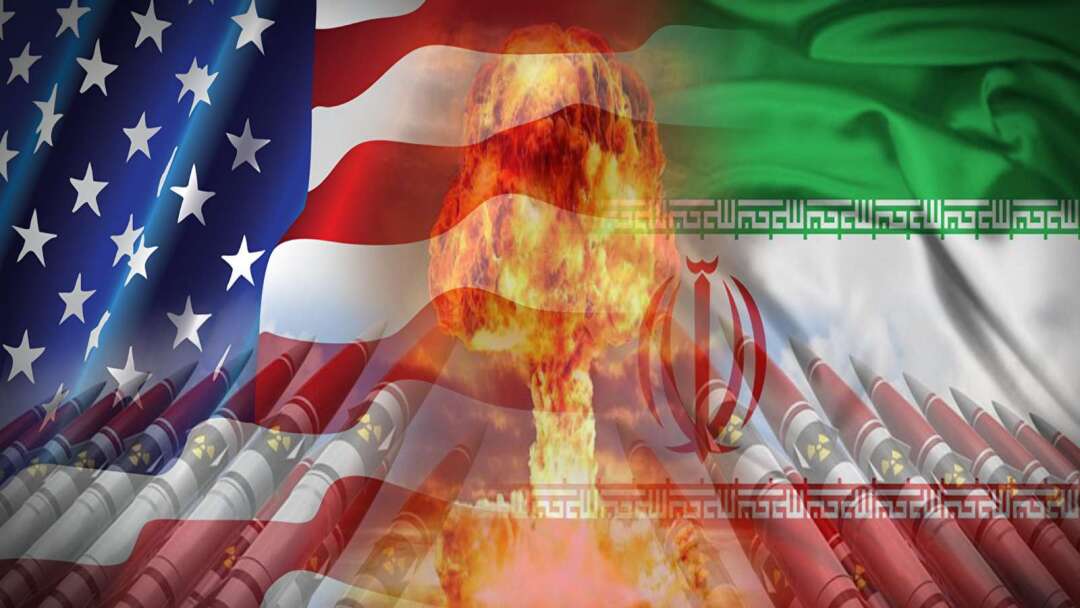
U.S. President Donald Trump said on Monday (3rd) that negotiations between the United States and Iran are currently underway, warning the Iranian government that this is the "last chance" to sign an agreement and end the five-month-long war. However, the Iranian government swiftly denied any ongoing negotiations or scheduled meetings, underscoring a stark divergence in how both nations perceive diplomatic progress and indicating limited prospects for short-term conflict resolution through diplomacy.
Speaking to reporters in the Oval Office at the White House, Trump stated that U.S.-Iran talks were "in progress," adding that these contacts were initiated at the request of Iran, Saudi Arabia, the United Arab Emirates, and Qatar.
Trump emphasized, "This is Iran’s last opportunity to sign a good agreement," though he did not disclose specific details of the negotiations.
His remarks followed his weekend announcement canceling a previously authorized "large-scale attack" on Iran. He claimed military action was paused due to imminent negotiations, continuing a pattern seen over recent months—repeatedly threatening escalated military strikes before abruptly withdrawing them.
Nonetheless, Iranian Foreign Ministry spokesperson Esmail Baghaei earlier clearly stated there are no ongoing talks with the U.S. nor any planned meetings. Iran has no plans to host foreign delegations or send negotiation representatives abroad in the coming days.
Baghaei noted all Iranian negotiation representatives remain within the country, except Foreign Minister Abbas Araqchi, who temporarily left for a religious pilgrimage in Iraq. He added that the only current discussions involve Oman over management of the Strait of Hormuz.
A senior Iranian source also told Reuters there are no arrangements for U.S.-Iran talks, and Araqchi will not engage in related contacts until at least the end of the week.
Analysts believe Iran is attempting to increase the cost of intervention for the U.S. and its allies by controlling key nodes in Middle Eastern shipping routes, energy infrastructure, and maritime transport—aiming to force Western acceptance of Iran’s stance on the Strait of Hormuz.
Michael Knights stated that Iran’s greatest advantage lies in its ability to disrupt regional and global economies, which remains Tehran’s most critical bargaining chip.
Later, Trump posted again on Truth Social, criticizing Iran’s leadership as "extremely hypocritical" and claiming Iran had requested the meeting, with more negotiations to be arranged soon.
He reiterated that the U.S. Navy has full control over the Strait of Hormuz, stating, "Nothing goes into Iran unless we allow it; nothing passes through unless there is an agreement or total surrender."
Since Trump and Israel jointly launched 'Operation Epic Fury' over five months ago, U.S.-Iran relations have been trapped in a cycle of alternating military escalation and diplomatic rhetoric. Trump has repeatedly threatened expanded military strikes, only to pause them citing diplomatic engagement.
However, after the June memorandum of understanding aimed at ending the conflict collapsed in early July, Iran has openly refused formal negotiations with Washington.
To date, none of the three original objectives set by the Trump administration—destroying Iran’s nuclear program, weakening Iran’s ability to attack regional adversaries, and toppling the theocratic regime—have been achieved.
Moreover, each time the U.S. increases military pressure, Iran responds by intensifying attacks on U.S. forces, Middle Eastern allies, and commercial vessels, further escalating tensions—yet Trump has repeatedly chosen to avoid full-scale military escalation.
The Strait of Hormuz remains the central point of contention. Washington argues that the June MOU required Iran to reopen this vital global energy corridor, while Tehran insists the agreement explicitly preserves Iran’s authority over maritime traffic management.
If Iran retains control over the Strait post-conflict, its strategic position would be stronger than before, potentially marking a major diplomatic failure for the Trump administration.
So far, the U.S. has failed to compel Iran to relinquish control of the Strait, which prior to the conflict handled about one-fifth of global crude oil and liquefied natural gas (LNG) shipments, contributing to sustained high energy prices and elevated gasoline costs in the U.S.
Markets remain optimistic about potential de-escalation. Following Trump’s comments on diplomatic talks, international oil prices dropped sharply on Monday, with Brent crude futures plunging around 7% to close at $83.77 per barrel. U.S. equities rose simultaneously, with the Dow Jones Industrial Average setting a new record closing high.
FACT BOX
- Source: PR Times
- Category: News