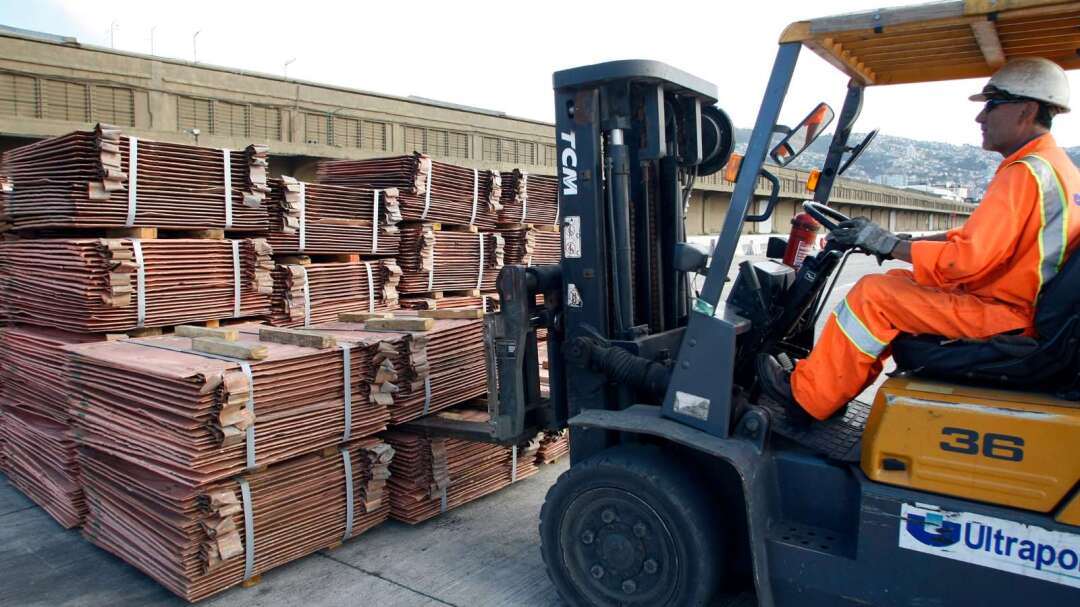
On Monday (3rd), foreign media reported that refined copper imports into the United States are rising at the fastest pace in at least 12 years. Traders are rushing to transport overseas copper materials to the U.S. before President Trump decides whether to impose additional tariffs on refined copper, driving local inventories to historic highs—but also intensifying supply strains in other regions.
Shipping data compiled by IHS Markit since 2014 shows that approximately 200,000 tons of refined copper arrived in the U.S. in July, setting a new monthly record. Of this, about 110,900 tons are stored at U.S. ports but have not yet been registered as deliverable inventory on the London Metal Exchange (LME).
The U.S.'s massive absorption of global copper supply has led to a significant decline in LME warehouse stocks outside the U.S. this year. Since copper prices on the New York Commodity Exchange (COMEX) have consistently remained higher than those on the LME, traders can profit through arbitrage, prompting them to reroute metal supplies to the U.S. market.
In July, the average price difference between COMEX's nearby futures copper and LME's spot copper exceeded $350 per ton—enough to cover transportation and other costs, attracting overseas supply. Official COMEX copper inventories have increased by over 40% this year alone, reaching a record high. Market estimates widely suggest that the total volume of copper stockpiled within the U.S. has already far exceeded one million tons.
U.S. Commerce Secretary Lutnick was originally scheduled to submit a recommendation on copper tariffs by June 30, but no results have been announced since the deadline passed. The White House is currently evaluating whether to extend the existing 50% tariff on semi-finished copper and copper-derived products to include raw materials such as refined copper.
Supporters argue that tariffs would encourage investment in domestic mining and processing industries in the U.S. Opponents warn that the measures would raise costs for manufacturers reliant on imported copper, undermining the competitiveness of American-made products.
Last July, Trump instructed Lutnick to study a phased imposition of tariffs on refined copper imports starting January 2027, with an initial rate potentially set at 15%. If the White House decides to implement tariffs, another surge in pre-emptive shipments could occur before they take effect. Conversely, if the plan is abandoned, traders might unwind positions accumulated over the past 18 months, reversing the flow of copper.
As the U.S. rapidly accumulates copper, signs of supply tightness are already emerging in the London market. The LME's nearby copper price is trading at a premium of about $65 over its three-month futures—the widest gap since January. This 'backwardation' structure, where near-term prices exceed longer-dated ones, typically reflects short-term supply constraints.
With copper growing increasingly vital in power grids, AI, electric vehicles, and defense applications, the threat of tariffs has paradoxically helped the U.S. build strategic reserves—while further fragmenting the global copper market.
FACT BOX
- Source: PR Times
- Category: News
- Organizations: IHS Markit