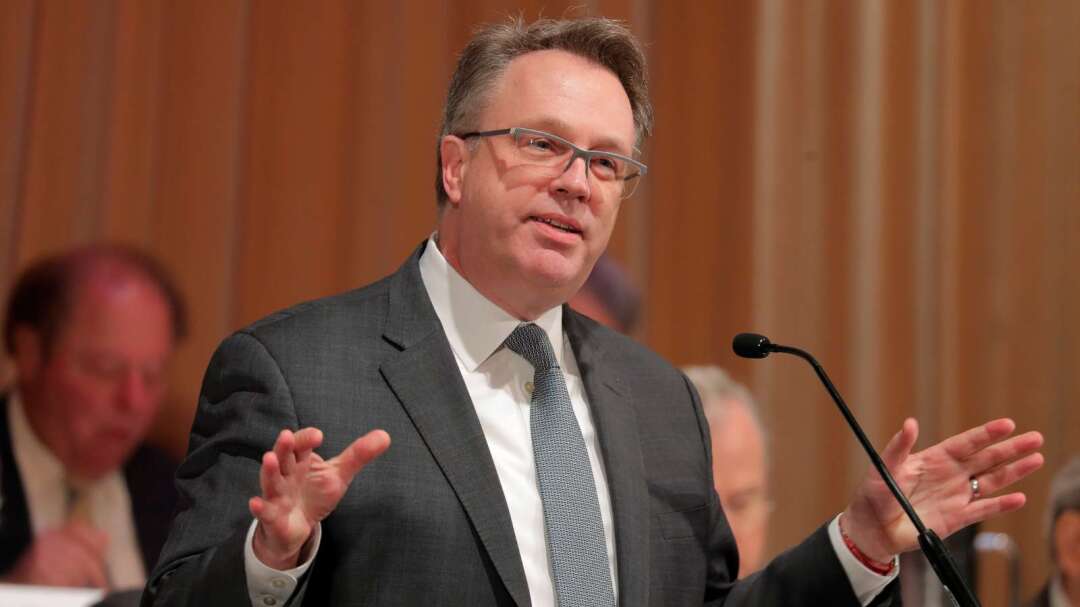
New York Federal Reserve President John Williams stated he remains optimistic that U.S. inflation will gradually ease, but emphasized the Federal Reserve (Fed) will act without hesitation—including through further rate hikes—if price pressures fail to move toward the 2% target.
In an interview with Reuters last Friday, Williams noted that if energy prices and tariff impacts have peaked and the U.S. economy remains robust, some of the key factors that drove inflation over the past year and a half may gradually fade, and previously suppressed disinflationary forces could re-emerge.
He expects U.S. inflation to decline in the second half of this year, slow further next year, and sustainably return to the Fed’s 2% target by 2028. However, he said his current focus is on upcoming core inflation data over the next few months, to see whether price increases are truly entering a downward trajectory aligned with the 2% goal.
Williams reiterated that the current interest rate level is "appropriately positioned" to guide inflation gradually lower. But he stressed that if economic developments fail to bring inflation down to 2%, it would be entirely appropriate for the Fed to take action and bring prices back on track.
The Fed held its Federal Open Market Committee (FOMC) meeting last week, voting 9 to 3 to keep the federal funds rate target range unchanged at 3.50% to 3.75%. Williams said he strongly supported the decision to hold rates steady.
Inflation has remained above 2% for over five years. The Fed’s preferred inflation gauge rose 3.7% year-on-year in June, pressured not only by the Iran-Iraq war, energy supply shocks, and tariffs under the Trump administration, but also by strong corporate demand from massive investments in artificial intelligence (AI).
Three Fed officials dissented at last week’s meeting and issued statements on Friday, arguing for higher short-term borrowing costs to curb inflation. Cleveland Fed President Beth Hammack said inflation has stubbornly remained above 2% for over five years, and she lacks confidence that price pressures will return to target on their own.
Markets are also beginning to price in the possibility of another Fed rate hike. As investors worry inflation may remain elevated for longer, U.S. long-term Treasury yields continue to rise. Interest rate futures now indicate a non-negligible probability that the Fed could hike rates before year-end.
Williams acknowledged that the economic outlook remains highly uncertain, with renewed Middle East conflict making it difficult to predict when energy prices might fall. However, he noted that once the conflict resolves and shipping normalizes, energy markets could improve rapidly.
His baseline forecast assumes the Middle East conflict will not continue to push up inflation in the second half of this year or next year, though actual outcomes could change depending on how the war evolves.
Regarding financial markets pricing in a potential Fed rate hike before year-end, Williams emphasized the Fed will "absolutely not" be held hostage by market pricing. While policymakers closely monitor financial markets, they must conduct independent analysis and comprehensively assess all factors affecting the economy and outlook before making monetary policy decisions.
New Fed Chair Lael Brainard has reduced the use of "forward guidance," making it harder for markets to predict the Fed’s next move, thereby increasing the potential for economic data and official comments to trigger market volatility.
On the AI boom, Williams remains optimistic about the sector’s long-term prospects and said recent sharp price swings in AI-related stocks and assets are not surprising. During periods of rapid technological innovation and fast-changing industry dynamics, significant market volatility is common, as seen during past tech booms.
As for whether corporate borrowing to expand AI infrastructure could pose financial stability risks, Williams said current leverage levels differ significantly from those that triggered the financial crisis about two decades ago. He noted that most companies investing in AI are highly profitable, and he is not particularly concerned at this stage about borrowing and leverage expansion related to AI. However, the Fed will continue to monitor the broader economic impact of AI investment, asset price volatility, and corporate financing.
FACT BOX
- Source: PR Times
- Category: News
- Organizations: Federal Reserve (Fed) / Cleveland Fed