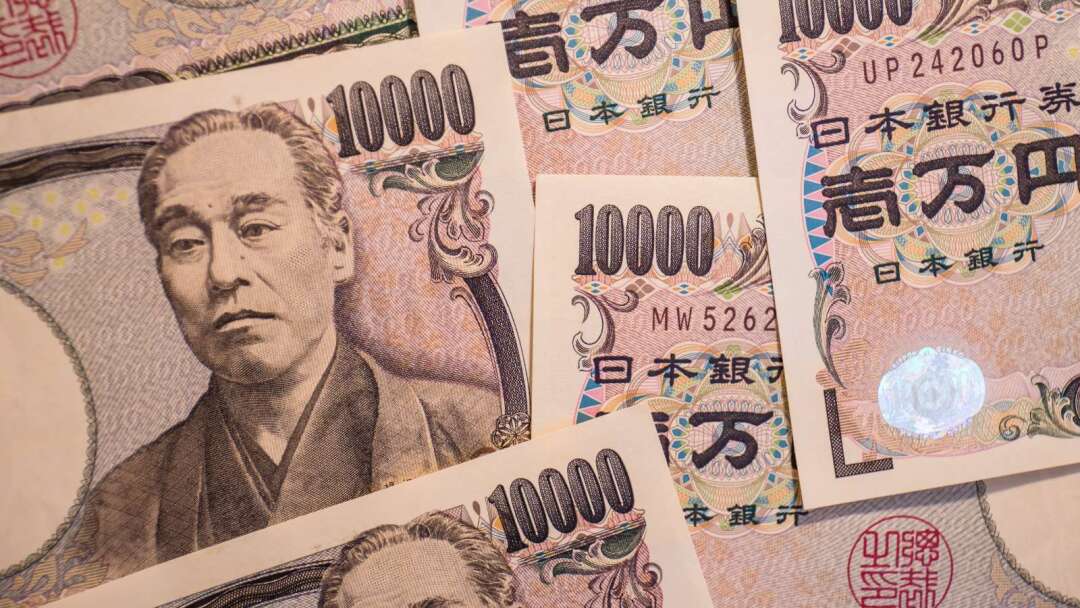
U.S. President Donald Trump confirmed that the United States participated last week in a Japan-led foreign exchange market intervention to help support the yen exchange rate, describing the move as a 'signal of friendship' to Japan. He stated that the U.S. supports its ally in stabilizing financial markets and also expects to gain economic benefits from the arrangement.
Trump said on Sunday (April 2) while aboard Air Force One that Japan had recently sought U.S. assistance, and that the U.S. has always supported Japan, maintaining a strong bilateral relationship.
He added that aside from the historical attack on Pearl Harbor, Japan has long been an important partner for the United States, making this cooperation symbolically significant for bilateral friendship.
Regarding what economic returns the U.S. might receive, Trump only mentioned 'economic benefits,' citing last year’s currency swap agreement with Argentina as an example. Despite domestic criticism at the time, Argentina has since repaid the funds, allowing the U.S. to ultimately 'earn $25 billion.'
U.S. Treasury Secretary Scott Bessent later publicly endorsed the coordinated action, emphasizing that recent yen movements were excessive and disorderly, prompting joint U.S.-Japan forex interventions to maintain financial stability.
He noted that the U.S. Treasury remains in close contact with Japan’s Ministry of Finance and the Bank of Japan, and does not rule out further joint interventions if necessary. He also supports expanding the Federal Reserve’s 'Foreign and International Monetary Authorities Repo Facility' as a backstop for market liquidity.
Japan’s Ministry of Finance stated that the recent intervention aimed to curb abnormal yen fluctuations and will continue cooperating with the U.S., not ruling out further joint actions when needed. It will continue utilizing the Fed’s liquidity tools and maintain close communication with U.S. authorities.
Rare U.S.-Japan Joint Yen Support Sparks Market Alert for Further Interventions
Fueled by coordinated intervention and a weaker dollar, the yen extended gains early Monday (April 3) in Asian trading, with markets closely watching whether both countries might intervene again.
Earlier, Trump announced a pause in new military actions against Iran, triggering a dollar sell-off. The USD/JPY pair dropped nearly 100 pips rapidly, falling to around 156, marking a daily decline of over 1%.
Following the U.S.-Japan joint intervention last week, the yen has rebounded significantly. USD/JPY closed around 157.40 on Friday, marking its best performance since May; prior to intervention, the yen had approached its weakest level since 1986, with USD/JPY nearing 164.
Market participants note that while daily global forex trading volume reaches about $9.5 trillion, official interventions may not fully reverse long-term yen trends, but have successfully reversed months of yen weakness in the short term.
In addition to direct yen purchases, U.S. and Japanese authorities have pressured markets by requiring banks to report exchange rate quotes and through public statements by officials, increasing risks for those betting against the yen.
Goldman Sachs analysts suggest that if the yen reverts recent gains, officials may intervene again in the coming days, similar to May’s scenario. They believe that without fundamental improvements, intervention remains an effective tool for authorities to buy time and stabilize market expectations.
Yen Weakness Ripples Through Global Finance; U.S. Worries Over Treasury Market Impact
Analysts point out that the yen has faced sustained pressure in recent years due to rising energy prices, Japan’s widening fiscal deficit, and persistently high U.S.-Japan interest rate differentials.
While yen depreciation boosts Japan’s export competitiveness, it raises import costs, burdening businesses and households. Moreover, volatility in Japan’s financial markets could affect other economies through global capital flows, drawing growing U.S. attention.
Mizuho Bank strategist noted that the significance of this event lies not just in the intervention itself, but in the market’s growing belief that excessive yen weakness is no longer just Japan’s problem—it could threaten global financial stability.
Markets also speculate that U.S. support for Japan’s intervention has another motive: if Japan acted alone to support the yen, it might need to sell more U.S. Treasuries for dollar funding, pushing up Treasury yields and increasing U.S. financing costs. Thus, joint U.S. action helps reduce pressure on Japan to conduct large-scale Treasury sales.
Rebecca Patterson, senior fellow at the Council on Foreign Relations, pointed out that Japan has already sold some U.S. Treasuries to fund interventions. If larger portfolio adjustments occur in the future, they could severely impact the U.S. Treasury market—making it in America’s interest to persuade Japan against continued Treasury sales.
Meanwhile, a photo published by Reuters has drawn market attention. It shows Treasury Secretary Bessent’s notes during a Cabinet meeting at Camp David, where he wrote 'Buy $5–10 billion yen' under his to-do list—an apparent sign of active U.S. involvement in the intervention.
BOJ Holds Steady; Markets Watch for Policy Coordination
Notably, last week’s forex intervention occurred during the Bank of Japan’s monetary policy meeting.
The BOJ decided 8-to-1 to keep policy rates unchanged. Although it raised rates to 1% in June—the highest since 1995—this remains far below U.S. policy rates.
BOJ Governor Kazuo Ueda stated post-meeting that further rate hikes remain possible but gave no signal of accelerating the pace soon, leaving markets uncertain whether monetary policy can effectively support the yen.
Multiple institutions believe official intervention may drive short-term yen rebounds and trigger short-covering, but without stronger monetary policy alignment, the yen’s long-term bearish trend may persist.
According to Japanese media and the Financial Times, Japan’s government and central bank conducted yen-buying interventions for two consecutive days ending Friday. The U.S. side was represented by the New York Federal Reserve, executing a historic intervention on behalf of the Treasury, and requested at least two major banks to provide yen-related quote data.
Bloomberg estimates Japan deployed approximately ¥8.45 trillion (about $52.8 billion) in the intervention—one that could set a record for Japan’s largest single-day forex operation.
Markets widely expect that if the yen weakens rapidly again, further U.S.-Japan joint interventions may follow to stabilize exchange rates.
FACT BOX
- Source: PR Times
- Category: News