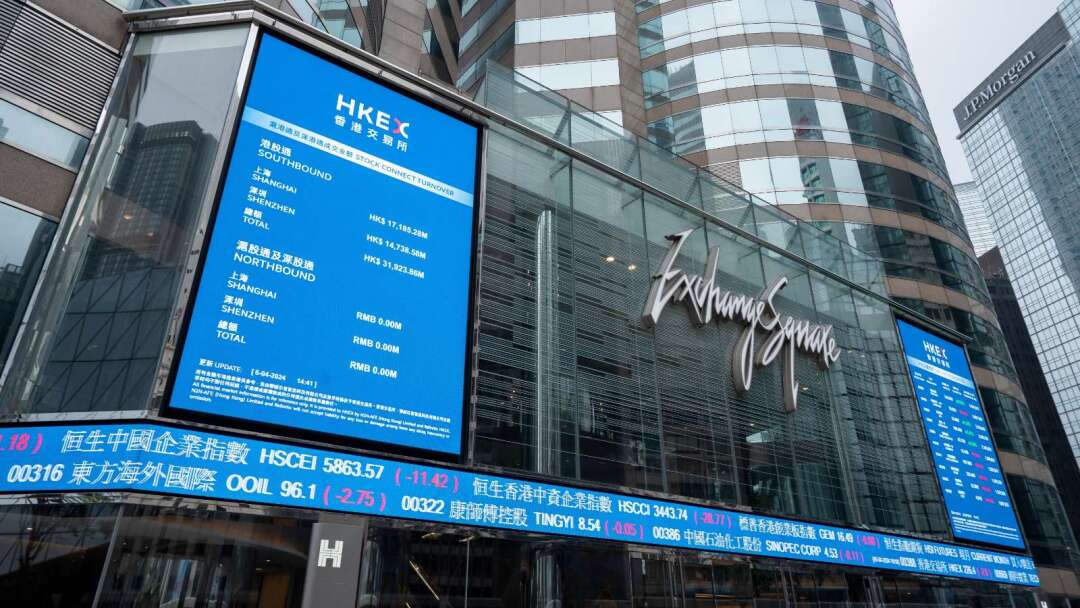
Hong Kong's major stock indices closed higher on Monday (3rd), signaling a significant recovery in market sentiment. By the close, the Hang Seng Index stood at 26,009.40 points, up 124.97 points or 0.48%. The Hang Seng Tech Index rose 46.39 points to 4,875.61, a 0.96% gain, while the H-share Index increased by 0.46%. Total market turnover reached HK$255.179 billion, reflecting strong investor appetite.
Tech stocks led the rally, with Alibaba-W delivering the most impressive performance. The stock surged 7.01% to close at HK$125.20, with a massive daily turnover of HK$23.935 billion. Analysts attributed the rally to Alibaba Cloud's launch of the Qwen3.8 model and strengthened AI capabilities that could boost profit margins, along with speculation around potential computing power trading. Other tech giants also posted strong gains: Tencent Holdings, Baidu Group, and Kuaishou all rose over 3%.
However, some auto stocks weakened. Xiaomi Group fell 2.85%, while Li Auto and XPeng Motors each declined by around 3%.
The photovoltaic sector surged collectively. Xinyi Solar soared 13.41%, and GCL Technology gained over 11%. This rally was driven by regulatory efforts to enforce pricing compliance, encouraging the industry to shift from price-based competition to quality-focused strategies to counter 'involution'-style rivalry. Meanwhile, AI application stocks continued to strengthen, with MiniMax rising over 7% and SenseTime gaining 3.79%.
Conversely, memory-related stocks underperformed. Southern Double Long SK Hynix plunged over 16%, Southern Double Long Samsung Electronics dropped nearly 14%, and Zhaoyi Innovation fell over 7%. This weakness stemmed from negative sentiment spillover after South Korea's KOSPI Index tumbled 5.12%, coupled with market concerns over the sustainability of earnings among memory leaders.
From an institutional perspective, BOCOM International noted that after a period of correction, Hong Kong equities still have room to rise, supported by improving liquidity and earnings recovery. CITIC Securities advised adopting a 'barbell strategy' amid rising structural volatility—allocating to both high-beta tech stocks and stable dividend-yielding assets.
FACT BOX
- Source: PR Times
- Category: News
- Organizations: MiniMax