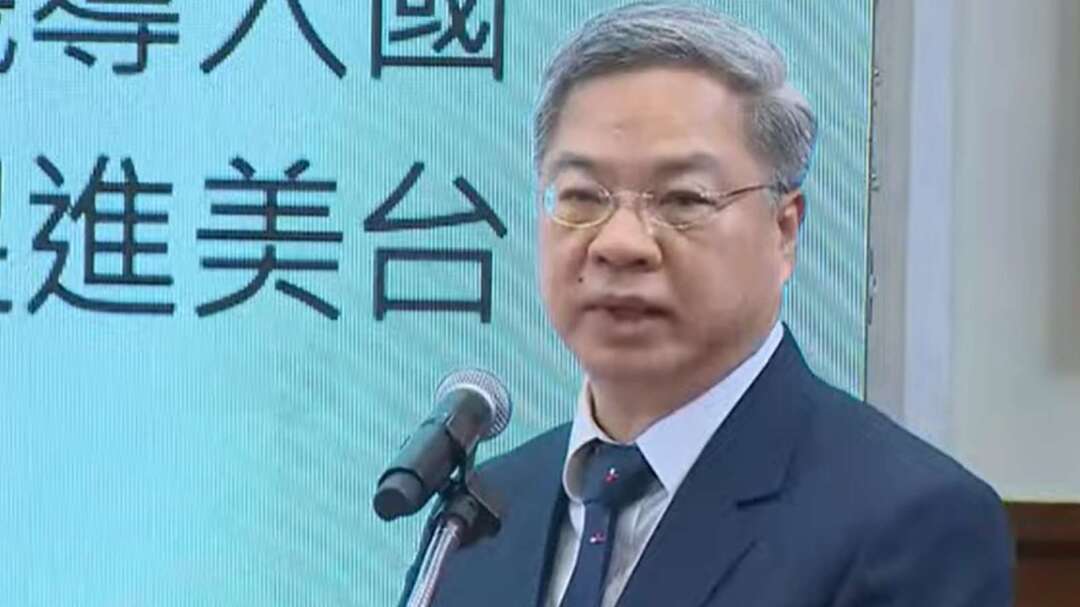
The '2026 Taiwan-Japan Semiconductor Technology Forum' opened today (3) in Taipei, where Minister of Economic Affairs Kung Ming-Hsin shared insights on the latest progress in Taiwan-Japan semiconductor cooperation. He noted that economic and trade relations between Taiwan and Japan have reached a historic high, with bilateral trade totaling $84.8 billion in 2025. Japan is currently Taiwan's fourth-largest trading partner, while Taiwan ranks as Japan's third-largest, with close collaboration in semiconductors forming a core pillar of the global supply chain.
Regarding the highly anticipated TSMC Kumamoto investment, Kung shared first-hand information from his visit to Japan on July 14. He stated that TSMC's subsidiary JASM is performing exceptionally well, with the 'first fab having already reached break-even.' This milestone serves as a strong confidence booster for multinational high-tech investments, demonstrating the commercial success of Taiwan's foundry model in Japan. As for the under-construction second fab, Kung confirmed progress is on track, despite minor delays caused by earthquakes in the Kumamoto region. Recovery efforts are underway, aiming to return to normal schedules as soon as possible.
Kung further observed that Taiwan-Japan cooperation has expanded from isolated investments to a full industrial cluster. Beyond TSMC, numerous semiconductor material and equipment suppliers are now establishing operations in Kumamoto. He coordinated directly with Kumamoto Prefectural Government, emphasizing that 'while TSMC is important, the suppliers following must receive equal support.' The prefectural government responded positively, pledging to set up a dedicated liaison office to assist Taiwanese SMEs in overcoming operational hurdles and ensuring smooth operations for the entire Taiwan-affiliated cluster.
Simultaneously, Japanese companies are increasingly investing in Taiwan. Kung cited Nitto Denko, a major Japanese materials firm, which last week announced a 4.5 billion TWD investment to build an R&D center in southern Taiwan, located in Kaohsiung. This reflects a healthy, two-way strengthening of semiconductor collaboration, where Taiwan's manufacturing strength combines with Japan's materials R&D advantages to form a powerful foundation for the AI industry.
Additionally, addressing global developments, Kung mentioned concerns over South Africa's potential chip retaliation. Preliminary data shows a decline in chip exports from Taiwan to South Africa, though the full impact requires further investigation. He concluded by emphasizing that Taiwan-Japan semiconductor cooperation is the best example of mutual benefit, and the government will continue efforts to make this partnership a key driver of global technological advancement.
FACT BOX
- Source: PR Times
- Category: Partnership
- Organizations: JASM