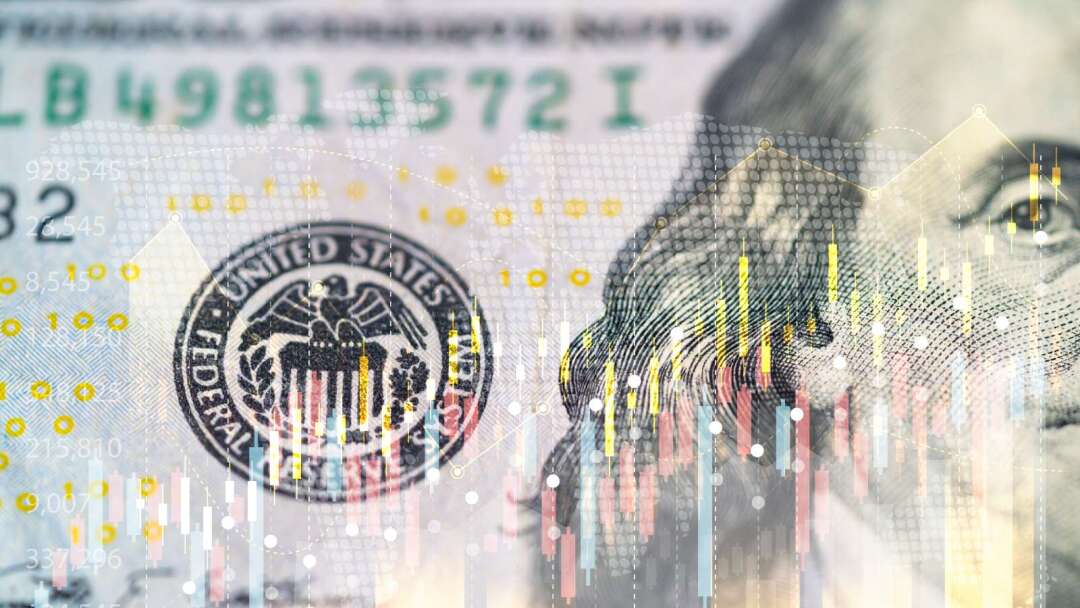
The U.S. dollar changed little on Monday (3rd), as markets continued to digest the Federal Reserve’s (Fed) latest monetary policy decision, the confirmation by the U.S. and Japan of joint intervention in the yen market, and falling oil prices driven by easing geopolitical tensions—further alleviating recent inflation concerns.
In late New York trading, the U.S. Dollar Index (DXY), which tracks the dollar against six major currencies, was flat at 99.90.
The dollar index had already fallen 1.5% last week after the Fed announced it would hold interest rates steady and sent unclear signals about the future path of monetary policy.
Pressured by the confirmation of U.S.-Japan joint intervention in the yen market, the dollar-yen pair declined 0.3% to 157.18, briefly touching 155.23 during the session.
The euro-dollar pair fell 0.2% to 1.1508.
Markets also focused on lower oil prices, which helped reduce short-term inflationary pressures. This trend was further supported by news from U.S. President Trump over the weekend—announcing that the U.S. would begin talks today with Iran on shipping and denuclearization in the Strait of Hormuz, signaling a clear de-escalation in the Middle East.
U.S. Treasury Secretary Scott Bessent said on Sunday that the U.S. firmly supports Japan’s efforts to correct the yen’s severe undervaluation and explicitly warned that the U.S. Treasury would not hesitate to participate in any further joint market interventions.
This intervention marks the first time in decades that the U.S. and Japan have jointly bought yen. The two countries decided to step in after the yen briefly fell below 162 against the dollar in late July, hitting a 40-year low.
The intervention also marked the end of a volatile July for the yen. Ultimately, the yen appreciated 1.6% against the dollar in July, marking its best monthly performance since October last year. Market intervention, combined with hawkish signals from the Bank of Japan (BoJ), triggered massive short-covering, pushing the yen higher.
Markets also digested the Bank of Japan’s monetary policy decision released last Friday. As expected, the BoJ kept its benchmark interest rate unchanged at 1.0%.
However, BoJ Governor Kazuo Ueda maintained a hawkish stance. He warned that high energy import costs could push up inflation risks and hinted that the central bank remains prepared to raise rates further later this year.
Overall foreign exchange market movements remain influenced by developments in the Middle East. U.S. President Trump announced that U.S. and Iranian officials would resume direct talks on Monday.
Strategists at Bank of America Global Research noted that although markets remain generally pessimistic about the yen due to continued Japanese capital outflows and policy risks under Minister Sanae Takaichi’s government, the U.S.-Japan joint intervention is a significant turning point.
Bank of America believes the 155 level in USD/JPY could become a key “pivot point” in the foreign exchange market. Strategists pointed out that earlier this year, during several official interventions, USD/JPY consistently found strong support around 155, leading markets to widely believe that official interventions had limited effectiveness.
However, once the exchange rate clearly breaks below 155, trading patterns could shift from “buying the dip in dollars” to “selling the rally in dollars,” and dollar-selling pressure from corporate hedging demand could further accelerate this shift.
Shusuke Yamada, foreign exchange and interest rate strategist at BofA Securities, said, “The U.S. joining coordinated intervention raises market expectations for a broader policy framework aimed at stabilizing the yen exchange rate.”
He added, “With U.S. participation, the practical constraint of one-sidedly depleting foreign exchange reserves is effectively eliminated, making it harder for speculative funds to go against official actions.”
To minimize the impact of dollar sales on the U.S. Treasury market, Japan’s finance minister and U.S. Treasury Secretary Bessent said they would use the Federal Reserve’s “Foreign and International Monetary Authorities (FIMA) repo facility” to provide liquidity support.
Bank of America also noted that the joint intervention has increased market expectations for the BoJ to accelerate its rate hike pace. While markets had initially expected a 25-basis-point hike in October, it may now be brought forward to September.
Meanwhile, Trump confirmed the cancellation of previously planned military strikes, opting instead for diplomatic negotiations to reopen the Strait of Hormuz, causing international crude oil prices to plunge over 4%. Global markets’ short-term concerns about energy-driven inflation have therefore significantly cooled.
With geopolitical risk premiums slightly receding, foreign exchange markets will now shift focus to a series of key U.S. economic data due this week to assess the Fed’s September rate policy direction. The most closely watched will be a string of labor market data, culminating in the July non-farm payrolls report.
As of around 6:10 a.m. Taiwan time on Tuesday (4th), prices:
Dollar Index at 99.9947. +0.0301%
EUR/USD at 1.1507. -0.0087%
GBP/USD at 1.3428. -0.0298%
AUD/USD at 0.6998. -0.0286%
USD/CAD at 1.4047. +0.0214%
USD/JPY at 157.3900. +0.1400%
FACT BOX
- Source: PR Times
- Category: News