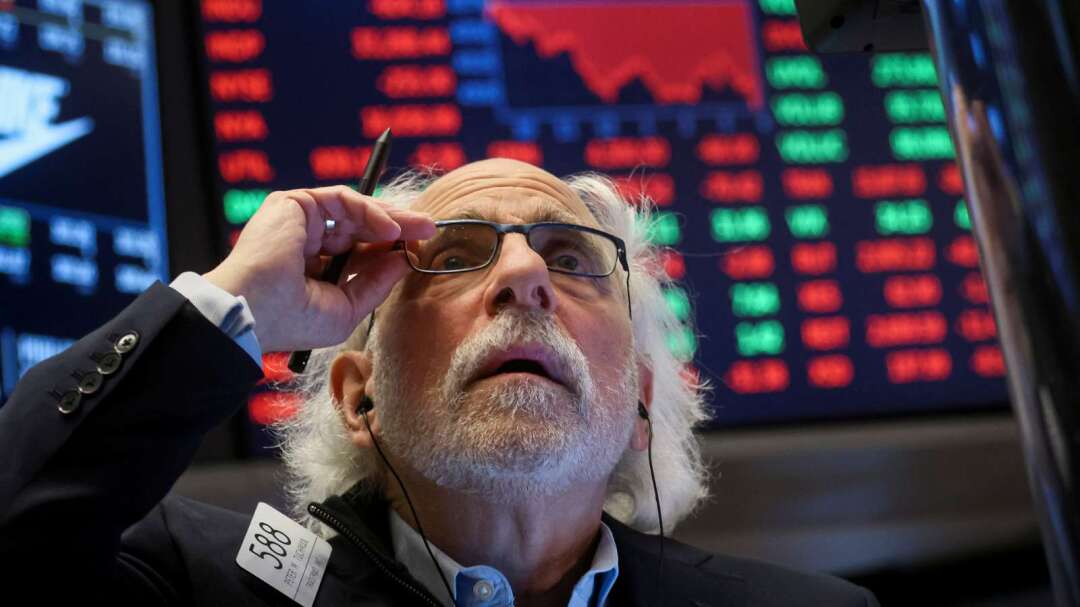
As US stocks have just navigated one of their most turbulent stretches in months, investors are questioning whether the worst of the market’s struggles is behind them or just beginning. While none of the three long-time market strategists and fund managers surveyed here are predicting an outright market crash, all three share a common concern: the resurgence of inflation, stubbornly high interest rates, and a new wave of market volatility just getting underway.
According to a report by MarketWatch, US stocks closed out July on Friday (31st). However, the month nearly erased all the gains tech stocks had made since the summer.
Data from FactSet shows the Nasdaq Composite Index dropped 3.2% in July, its worst monthly performance since March. The S&P 500 edged down 0.1%, while the Dow Jones Industrial Average barely managed a 0.3% gain.
Technology stocks faced heavy selling pressure this month, as investors grow increasingly anxious about the staggering pace at which AI infrastructure is burning through cash. Questions are mounting over when cloud providers’ massive capital expenditures will finally translate into profits.
Volatility in energy markets has further unsettled investors. Rising military tensions between the US and Iran have caused oil prices to swing wildly, sparking fears that conflict could spread across the Middle East.
Meanwhile, the Federal Reserve’s decision to hold interest rates steady failed to calm markets. This week, long-term yields, including those on 10-year and 30-year US Treasuries, surged significantly—reflecting investor bets that the central bank may adopt a more hawkish stance later this year.
Below are the views of three Wall Street experts and where their perspectives diverge.
Inflation Returns to Center Stage
Callie Cox, Chief Market Strategist at Ritholtz Wealth Management, believes investors must prepare for more market turbulence, with inflation re-emerging as a key force shaping market direction.
"I'm not saying this will definitely happen, but the current environment is already exhausting enough, and many indicators are at historical highs. If the market does rebound, the recovery process could be even more difficult," she said.
Cox added, "It's essential to understand that inflation is currently the biggest risk facing equity portfolios. Looking ahead to year-end, economic growth momentum also appears fragile."
Recent economic data, including the latest Consumer Price Index (CPI) and Personal Consumption Expenditures (PCE) reports, show inflation cooled at least in June. However, rising oil prices in July could erase some of those gains.
Cox emphasized that the current inflationary drivers are unlikely to replicate the 2022 crisis, which was fueled by pandemic-related supply chain disruptions and massive fiscal stimulus. Yet, after nearly four years of a bull market, uncertainty around interest rates and inflationary pressures may be enough to "continuously shake" the foundation of stock valuations.
AI Boom Fuels Inflation, High Rates Pose New Risks for Tech
Beyond rising energy prices, surging AI demand could also stoke inflation.
Brian Kersmanc, a fund manager at GQG Partners, pointed out that rising prices for components like memory chips—widely used in data centers and AI infrastructure—will increase corporate costs, which could eventually be passed on to consumers.
"Inflation is, to some extent, an emotion-driven phenomenon. As long as people believe inflation will happen, their spending behavior will align with that expectation. The longer inflation persists and becomes entrenched, the more self-fulfilling it becomes," Kersmanc said.
As a result, interest-rate-sensitive tech sectors—especially chipmakers—could see overvalued companies hit hardest by rising rates. That’s because a significant portion of their projected revenue and earnings comes from the distant future. When discounted at higher interest rates, the present value of those future cash flows shrinks dramatically.
Still, Kersmanc noted that inflation isn’t all bad for the tech industry—it could even bring a secondary benefit. Higher rates not only compress stock valuations but may also prompt companies to reassess and potentially reduce or slow capital spending.
"I actually think, in the current context, inflation could be a good thing for cloud giants, because the market has been worried about how much money they’re burning through," he said.
War Shadows Loom, Sector Rotation Intensifies
July’s overall market performance was lackluster, masking intense sector rotation beneath the surface.
While large-cap tech and semiconductor stocks were sold off, FactSet data shows the S&P 500 Equal Weight Index rose 1.3% during the same period—far outperforming the market-cap-weighted index, which dipped 0.1%.
Jay Hatfield, CEO and Chief Investment Officer at Infrastructure Capital Advisors, said, "With the shadow of war looming, all the market can do right now is keep rotating."
According to FactSet, seven of the S&P 500’s 11 major sectors posted gains in July, with only information technology, industrials, materials, and utilities underperforming.
"Typically, July sees broad gains due to strong earnings reports," Hatfield said in a phone interview. "But this time, with war fears lingering, we believe some hedge funds may still be experiencing blow-ups, and their unwinding sell pressure may not be fully over—continuing to fuel market volatility."
FACT BOX
- Source: PR Times
- Category: News
- Organizations: Ritholtz Wealth Management / GQG Partners / Infrastructure Capital Advisors