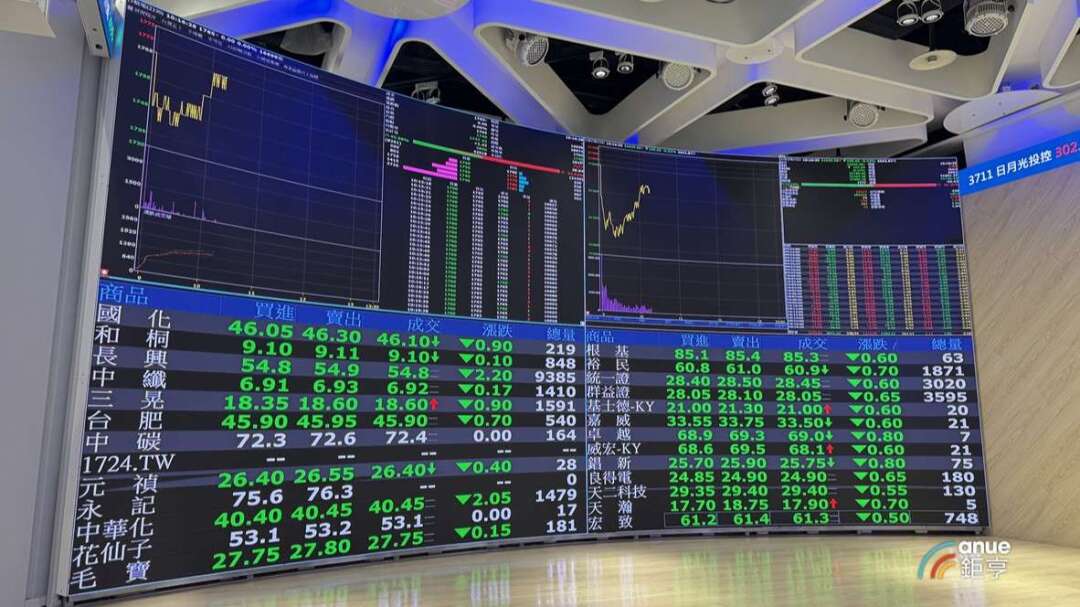
This year, Taiwan's stock market has seen robust trading activity, prompting the first significant overhaul in 30 years of its trading suspension mechanism. The revised rules, which substantially relax the suspension duration and matching intervals, officially took effect on August 10. In response to concerns that the changes were rushed, TWSE Deputy General Manager Tu Hui-juan stated that the reform was backed by rigorous big data simulations, over six months of internal research and discussions, and no fewer than ten revisions—emphasizing it was not a hasty decision. She reiterated that the trading suspension mechanism is neutral and does not favor either bulls or bears.
On August 3, the TWSE announced that, starting August 10, securities undergoing their first or second (and subsequent) suspension will have their suspension period shortened from the previous 10 trading days to 5 trading days. The matching frequency will also be uniformly accelerated from the current 5-minute or 20-minute intervals to every 2 minutes, significantly enhancing market liquidity.
Recently, Taiwan's stock market experienced sharp corrections, briefly falling below the 40,000-point mark. Many suspended stocks faced situations where investors could not sell due to the combination of '20-minute matching' and 'pre-collection of securities and funds.' In response, Tu emphasized that the suspension mechanism is neutral, designed to alert investors to trading risks during extreme volatility. The criteria for both 'sharp rises' and 'sharp declines' are identical, ensuring no bias toward either side of the market.
According to TWSE's internal historical analysis, while the 'pre-collection of securities and funds' during suspension periods does reduce trading volume by lowering risk exposure, historical data shows no instances of stocks being completely unsellable. With the matching interval now shortened to 2 minutes, liquidity is expected to improve further.
In response to external criticism questioning whether the intraday monitoring and suspension system allows for human discretion, Tu firmly stated, 'All monitoring criteria are publicly available on our official website, and there is absolutely no room for human discretion.'
A TWSE executive added that every rule—whether turnover rate, day-trading ratio, or price fluctuation—has clear 'quantitative data' already embedded into computer programs for automatic execution. 'The calculated figures are fixed; even I might not get the same result if I recalculated manually. The system automatically generates the outcomes,' he emphasized, underscoring that the monitoring mechanism is highly objective and data-driven.
The TWSE stressed that after the announcement, transition-period suspension comparison tables have been provided to brokers and investors for reference. The new standards will be fully implemented starting August 10. Going forward, the TWSE will establish a 'semi-annual review' routine mechanism, continuously optimizing Taiwan's capital market trading environment based on domestic and international financial developments and big data analytics.
FACT BOX
- Source: PR Times
- Category: News