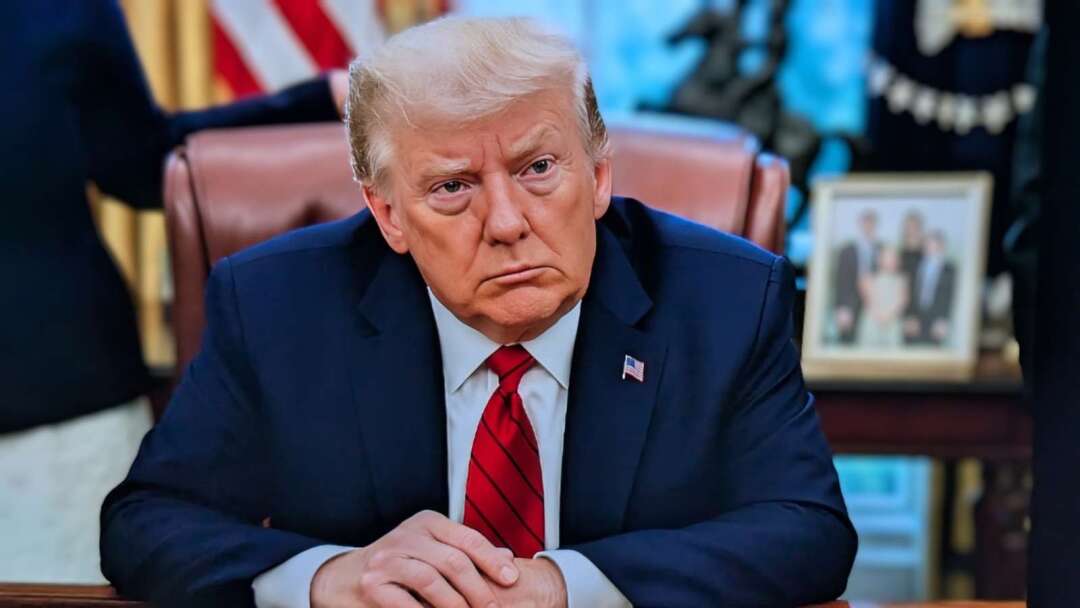
Twenty-five states led by Democratic governors filed a lawsuit on Monday (the 3rd) against the Trump administration, arguing that the president’s latest move to impose new tariffs on goods from 60 trading partners exceeds statutory authority, just like previous broad-based tariffs.
The states filed their complaint in the U.S. Court of International Trade in New York, seeking an immediate injunction to stop the new tariffs, a declaration that the measures are illegal, and an order requiring the government to refund tariffs already paid. Multiple U.S. small and medium-sized businesses also sued the government on the day the new tariffs took effect.
The Trump administration has imposed new tariffs of 10% to 12.5% on 60 trading partners, including the European Union. The affected economies collectively account for 99.4% of total U.S. imports, and the tariffs took effect just as the previous 10% global tariff expired. Democratic state governments and small businesses had previously succeeded in challenging the 10% global tariff.
The suing states, including Oregon and New York, are governed by Democratic governors or attorneys general. Oregon Attorney General Dan Rayfield said, "Even after repeated losses in court, Trump is once again trying to create more chaos for working families and Oregon businesses."
White House spokesperson Kush Desai defended the new tariffs as a legal response to unfair foreign trade practices. He stated, "When foreign governments fail to ban and effectively enforce prohibitions on forced labor products, it constitutes unreasonable behavior that harms U.S. commercial interests and workers’ rights, and must therefore be addressed."
However, the states argue that U.S. Trade Representative Jamieson Greer completed investigations into the 60 economies in just about two and a half months—skipping legally required individual country consultations—and failed to explain why nearly uniform tariff rates apply to countries with vastly different policies.
The complaint states, "There is no rational connection between the issue of forced labor and the broad-based tariffs imposed by the U.S. Trade Representative (USTR)."
Plaintiffs argue that Section 301 only permits action after completing specific country investigations into unfair trade practices, and that any resulting tariffs must be tailored to end those unfair behaviors.
According to the complaint, USTR divided the 60 economies into four categories, but the two main tariff rates differ by only 2.5 percentage points. No evidence was presented linking tariff levels to the proportion of forced labor goods in each country, nor were specific, achievable improvement benchmarks established for countries to meet in order to have tariffs lifted.
The plaintiffs also cite exemptions to challenge the government’s position. USTR listed Brazilian frozen beef as one of three goods linked to forced labor, yet excluded it from the new tariffs.
New York Governor Kathy Hochul stated that the new tariffs amount to a tax on working families, driving up prices for food, household goods, building materials, and other everyday items.
The complaint further notes that the new tariffs were announced on July 23—deliberately one day before the expiration of temporary tariffs under Section 122 of the Trade Act—ensuring a seamless continuation of the Trump administration’s tariff regime.
The Supreme Court previously ruled that the International Emergency Economic Powers Act (IEEPA) did not authorize the prior global tariffs, and the Court of International Trade later rejected the government’s use of Section 122 to impose tariffs. However, those rulings are currently on hold due to government appeals.
The states also cite public statements by government officials as evidence that the new tariffs were pre-planned. After the Supreme Court ruling, Greer stated the administration would accelerate the use of other trade authorities to "ensure policy continuity," and Treasury Secretary Scott Bessent later said tariff rates would return to being "exactly the same as before."
FACT BOX
- Source: PR Times
- Category: News