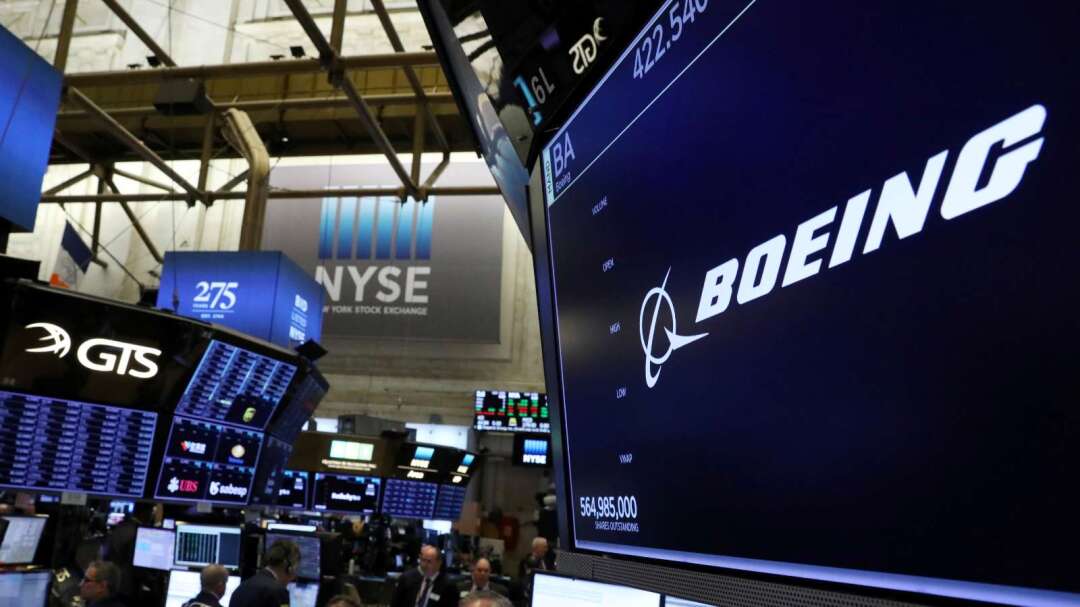
According to international media reports, Boeing's 737 Max 7 has officially received certification from the U.S. Federal Aviation Administration (FAA) after nearly a decade of rigorous review, marking the end of a prolonged process marred by two fatal crashes and quality issues. Concurrently, BNP Paribas, the only major bank previously bearish on Boeing, significantly upgraded its investment rating, projecting the stock could reach $450 by 2030, sending Boeing (BA-US) shares up 6.8% during Monday’s (March 3) trading session.
The FAA announced it has issued a revised type certification for the 737 Max 7, reflecting years of collaboration between regulators and Boeing to resolve complex technical challenges and complete a comprehensive review of the aircraft’s design and safety analysis.
Boeing stated it is now working with Southwest Airlines (LUV-US) to prepare for the delivery of the first 737 Max 7. The aircraft can carry 135 to 160 passengers with a maximum range of approximately 3,800 nautical miles, and its primary customer is Southwest Airlines. Boeing’s official website shows there are currently 282 unfilled Max 7 orders.
Stephanie Pope, CEO of Boeing Commercial Airplanes, told employees that certification marks a pivotal moment in the company’s recovery and positions Boeing more favorably for future growth.
Boeing expects to obtain certification for the 737 Max 10 this year. Bloomberg previously reported that the Max 10, capable of carrying up to 210 passengers, could be approved as early as this fall. Certification of both models is critical to completing the 737 product line, increasing cash flow, and strengthening the balance sheet.
BNP Paribas analyst Matthew Akers upgraded Boeing’s rating by two levels on the same day, from “Underperform” to “Outperform,” and raised the price target to $300—matching Baird as the highest among Bloomberg-tracked analysts.
Akers noted that market expectations for Boeing’s free cash flow have fallen too low. With the Max and certain 777 models progressing through certification and the company reducing debt, operational risks are expected to decline significantly over the next year. He believes Boeing has moved past the era of post-pandemic uncertainty and that the stock may break out of its 150–250 dollar range that has persisted since early 2020.
He forecasts Boeing’s net leverage will return to pre-pandemic historical levels within the next year, and one-time defense segment expenses dragging on cash flow will substantially decrease. Akers raised his 2027 free cash flow forecast for Boeing to $7 billion, above the market average of $6.23 billion.
As R&D costs, customer compensation, and legacy defense spending gradually decline, he projects Boeing’s free cash flow could reach approximately $16 billion by 2030, implying a share price of around $450—nearly double the current level and potentially the highest since 2019.
Boeing’s stock has risen only about 4.2% year-to-date, underperforming the S&P 500’s 10.6% gain. However, with BNP Paribas turning bullish, over 80% of Bloomberg-tracked analysts now recommend buying Boeing, with the remainder holding neutral ratings.
FACT BOX
- Source: PR Times
- Category: New Product
- Organizations: Baird
- Products / services: 737 Max 7 / 737 Max 10