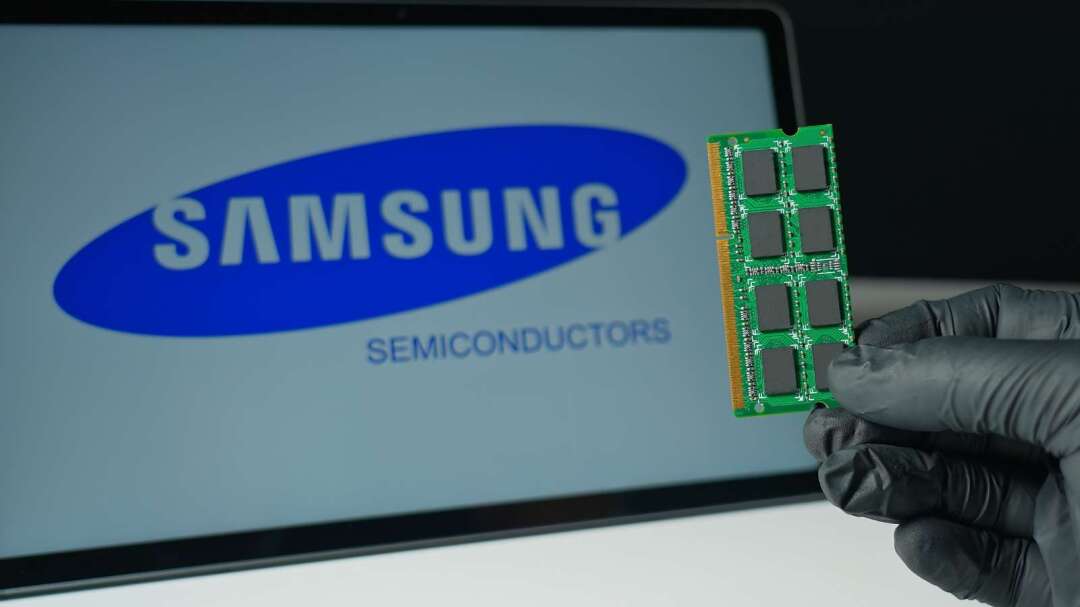
According to Bank of America Merrill Lynch's memory industry research report released last Saturday (August 1), sustained demand growth from AI servers is pushing DRAM and NAND prices into a new upward cycle, with major manufacturers regaining significant pricing power on the supply side.
Samsung, in particular, has incorporated 60% to 70% of its sales into long-term agreement (LTA) frameworks. The contract terms exhibit a distinctly 'supplier-friendly' nature, capping quarterly price reductions at 5% while allowing price hikes of 10% to 20%, or even without an upper limit. For large U.S. tech clients, Samsung employs a five-year rolling renewal model.
Per the latest data from TrendForce, DRAM contract prices rose approximately 10% month-on-month last month and surged 30% to 50% quarter-on-quarter.
In DRAMeXchange quotations, the spot price for 16Gb DDR5 reached $51, up 733% year-on-year; 16Gb DDR4 hit $85.2, up 896% annually; and 1Tb NAND wafers stood at $26.4, up 415% year-over-year. Meanwhile, the contract price for 64GB DDR5 server modules surpassed $1,480, setting a new historical high.
Bank of America anticipates that spot prices will continue to rebound ahead of the peak season in the fourth quarter this year, driven by three factors: customer inventory restocking, OEM preparations for new product launches, and slow ramp-up of production capacity.
The underlying driver is the massive capital expenditure wave from cloud giants. BofA estimates that Amazon, Microsoft, Alphabet, Meta, and Oracle will collectively spend around $730 billion in capital expenditures by 2026, representing a roughly 100% year-on-year increase. From 2027 to 2028, this figure could exceed $1 trillion annually.
Memory is transitioning from a 'cyclical commodity' to a 'must-have infrastructure component for AI.' Original equipment manufacturers are prioritizing new production capacity toward HBM and server DRAM, passively compressing supply for general-purpose memory.
Analysts point out that Samsung’s strategy of locking in volume via LTAs and securing profits through asymmetric terms signals a structural shift in the memory industry—from 'cyclical volatility' to 'price rigidity.' Short-term risks include cloud vendors’ strained free cash flows and the renegotiation of LTAs in 2028. However, this upcycle, fueled by AI compute demand, long-term contract structures, and tight supply-demand fundamentals, is far from over.
FACT BOX
- Source: PR Times
- Category: Survey
- Organizations: Samsung / Amazon / Microsoft
- Products / services: DRAM / HBM