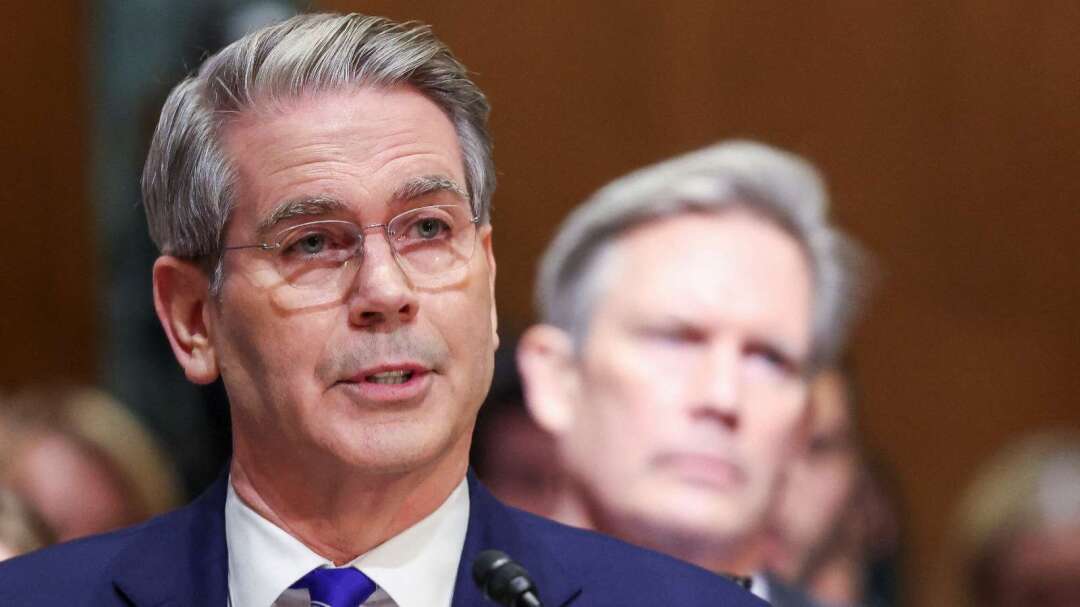
The United States and Japan recently conducted their first joint intervention to buy yen in decades. President Donald Trump described the move as a 'symbol of friendship,' and Treasury Secretary Jay Bessent stated that the Trump administration is willing to assist trusted partners. However, multiple analysts argue that the U.S. action is not merely about aiding Japan—it also involves complex calculations around U.S. Treasury yields, Bank of Japan rate hikes, a $550 billion investment pledge to the U.S., and negotiations over trade and defense spending.
Jonathan Fortun, Senior Economist at the Institute of International Finance (IIF), bluntly stated that Trump never offers a 'free lunch.' While helping stabilize the conservative-leaning administration of Japanese Prime Minister Sanae Takagi, the U.S. may simultaneously be pressuring Japan to accelerate investments in America and make further concessions in upcoming trade and defense talks.
The Real Concern: The U.S. Treasury Market
Analysts point out that the clearest reason the U.S. joined Japan's yen-buying intervention last Friday was to prevent financial turmoil in Japan from spilling over into the $31 trillion U.S. Treasury market. Bessent has consistently treated the 10-year U.S. Treasury yield as a key indicator, and that yield rose to its highest level since he took office—coinciding exactly with the day of the currency intervention.
Japan is the largest foreign holder of U.S. Treasuries. On Sunday, Bessent emphasized that Japan can obtain dollars through specific mechanisms to buy yen without selling its U.S. Treasury holdings. This helps avoid a scenario where Japan sells U.S. debt to defend the yen, which would further drive up U.S. borrowing costs.
Charles Lichfield, Head of Analysis at the Atlantic Council, said preventing a sharp rise in U.S. Treasury yields is likely a higher priority for Washington than geopolitical considerations. Back in January, when Japanese bonds were sold off and spilled over into U.S. Treasuries, Bessent publicly urged Japanese Finance Minister Shigeyuki Kashiwagi to contain market volatility.
Economists believe Bessent will almost certainly push the Bank of Japan for further rate hikes to support the yen and reduce spillover effects from rising Japanese yields onto U.S. Treasuries. Yosuke Matsuo, Senior Market Economist at Mizuho Securities, noted that coordinated currency intervention and pressure on the BOJ to raise rates can be seen as parts of the same policy package—the ultimate goal being to stop rising Japanese yields from pushing up U.S. Treasury yields.
Bessent criticized the Bank of Japan last year for lagging behind in fighting inflation and urged the Japanese government to give the central bank room to raise rates. Last Friday, he reiterated his intention to meet with BOJ Governor Kazuo Ueda in August. The U.S. Treasury’s latest currency report also stated that Japan’s move toward monetary policy normalization would help stabilize inflation expectations and reduce excessive exchange rate volatility.
Markets have already priced in rate hikes: overnight swap markets show nearly a 50% chance of a BOJ rate hike in September and about a 90% chance by October. However, Prime Minister Takagi, a long-time supporter of monetary easing, may pose political resistance to rapid rate increases.
Washington May Use This Moment to Collect on Investment and Defense Promises
Beyond financial stability, the U.S. may leverage this rare currency cooperation to urge Japan to accelerate fulfillment of its $550 billion investment commitment to the U.S., pledged in September last year. That agreement was a key condition for Japan to secure lower U.S. tariffs, but project signings have been slow—such as the $33 billion Ohio gas power plant backed by SoftBank Group.
Lichfield noted that if the U.S. wants sustained Japanese investment, it must ensure Japan can afford it. An excessively weak yen increases the cost for Japanese firms and the government to convert into dollars and execute investment plans. Thus, supporting the yen helps stabilize markets and enables Japan to fulfill its investment commitments.
Japan will revise three key national security documents later this year, potentially giving Washington an opening to pressure Tokyo for higher defense spending. Japan currently targets defense spending at about 2% of GDP, while the U.S. has repeatedly urged NATO and other allies to raise it to around 3.5%. Similar demands on Japan cannot be ruled out in the future.
Analysts believe the U.S.-Japan joint yen buying provides short-term breathing room for the BOJ’s next rate hike, preventing disorder in currency and bond markets. But by offering support, Washington gains more negotiating leverage. This currency cooperation, dubbed 'friendship' by Trump, may ultimately come at the price of rate hikes, investment, trade, and defense commitments.
FACT BOX
- Source: PR Times
- Category: News