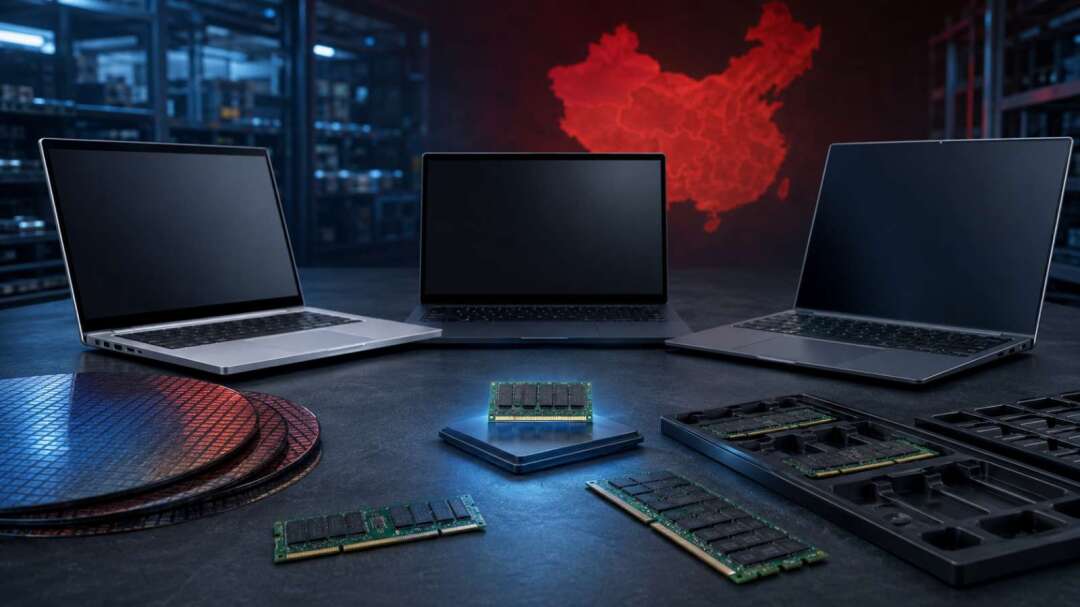
According to the Nikkei Asia, the world's top three personal computer (PC) brands—HP (HPQ-US), ASUS (2357-TW), and Acer (2353-TW)—have completed verification of DRAM chips from China's memory manufacturer ChangXin Memory Technologies (CXMT) and have begun limited integration into certain laptop products.
Ongoing global memory supply shortages are pushing PC brands to expand their search for alternative sources, including CXMT.
However, CXMT's chip penetration in the laptop market remains limited, with only a few models adopting them, and related products are primarily sold in markets outside the United States.
Currently, CXMT prioritizes allocating its production capacity to Chinese clients such as Huawei, leaving only a limited volume available for overseas PC brands.
In addition to capacity constraints, PC brands are deliberately controlling the scale of their procurement from CXMT to avoid damaging relationships with major suppliers such as Micron (MU-US), Samsung Electronics (SSNLF-US), and SK Hynix (SKHY-US).
Insiders indicate that the top three global memory manufacturers collectively hold over 90% of market share, and the current supply-demand balance clearly favors sellers. Under heavy reliance on these key suppliers, brand manufacturers are hesitant to make large-scale shifts to CXMT, fearing unfavorable positions in future pricing negotiations or supply arrangements.
The report notes that some PC manufacturers have already secured sufficient central processing units (CPUs), making memory supply their most urgent challenge. As a result, they are more willing to source from any capable supplier, including CXMT, which was previously less integrated into their supply chains. Since late last year, the PC and smartphone industries have continued to face shortages of memory and processors, further accelerating brands' search for alternative supply sources.
HP, ASUS, and Acer have not responded to the report.
For CXMT, adoption by international PC brands helps elevate its market position, but cooperation with U.S. firms may still face political and national security hurdles. CXMT has been placed on the U.S. Department of Defense's '1260H List,' accused of ties to the Chinese military; CXMT denies these allegations and is not currently on the U.S. trade blacklist.
Meanwhile, a bipartisan group of U.S. senators recently sent a letter to Apple (AAPL-US) CEO Tim Cook, urging Apple to avoid using memory chips from CXMT and Yangtze Memory Technologies (YMTC), citing concerns over potential links to the Chinese military.
Earlier reports indicated that amid global memory shortages and rising component costs, Apple had tested CXMT's DRAM chips for potential use in devices sold in the Chinese market.
FACT BOX
- Source: PR Times
- Category: News
- Organizations: HP